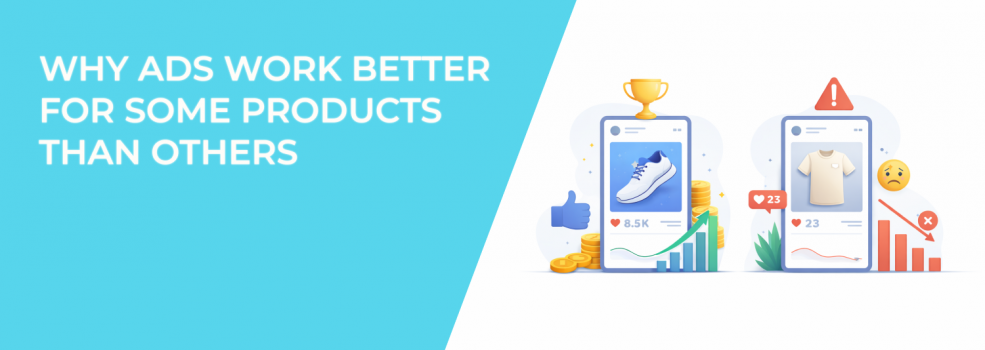
Even with the same ad spend, same targeting, and same creative formats, results can vary wildly. Some products just seem to click with paid social — others don’t.
If you’ve ever had a high-performing campaign fall flat for a new offer, it’s not always the ad that’s the problem. Sometimes, it’s the product’s fit for the channel, the funnel, or the way people consume content.
Let’s break down why certain products convert faster and more efficiently and how to adjust when yours isn’t one of them.
What Makes a Product Perform Better in Ads?
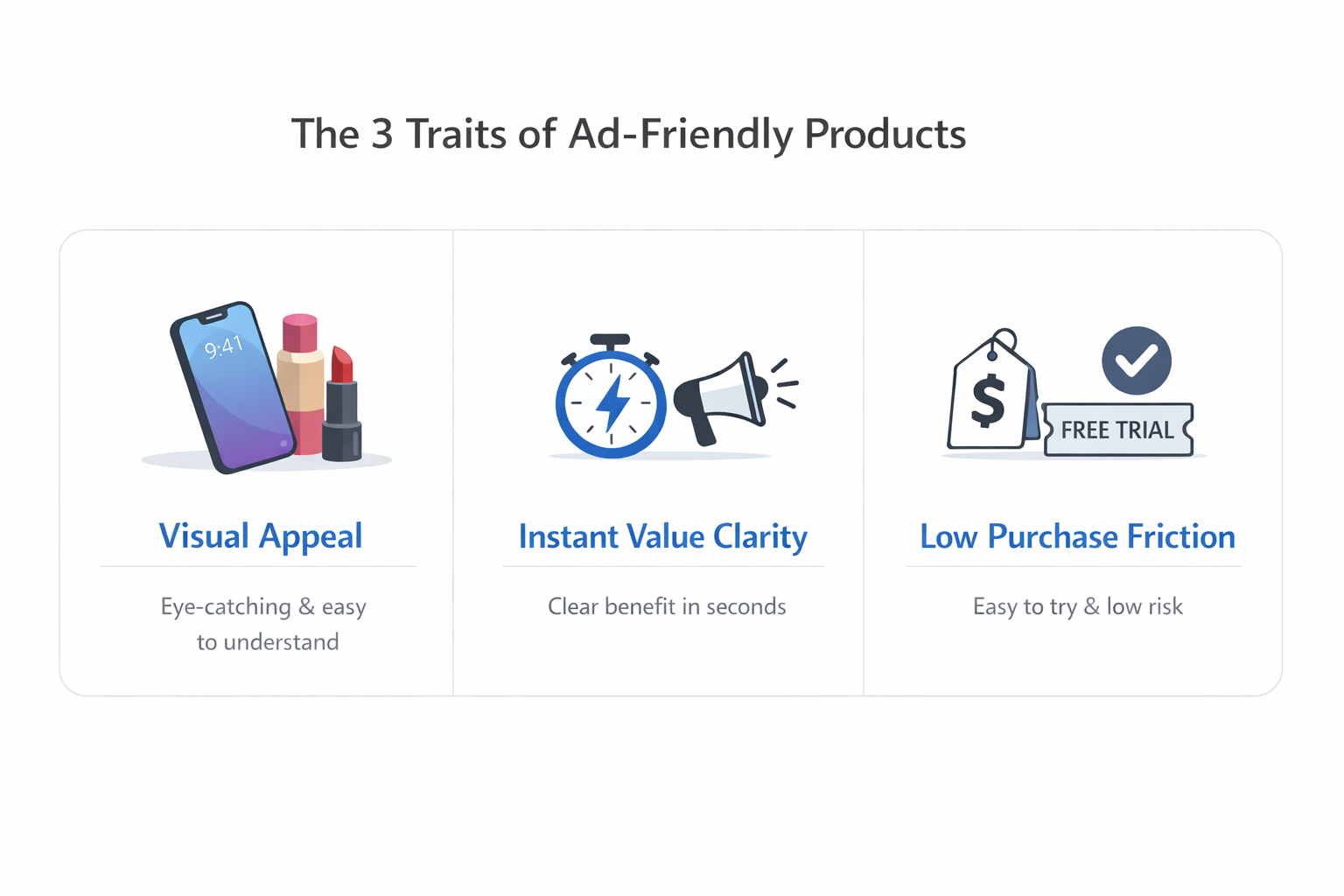
Products that succeed in Facebook and Instagram ads often have three key traits: strong visuals, instant clarity, and low resistance to purchase.
Let’s unpack those.
1. Strong Visual Context
Products that are easy to understand visually get better results on platforms like Instagram and Facebook. These are not places where people want to read long descriptions. You have seconds — often less — to make sense.
What works well:
-
A cleaning product that shows before-and-after in one swipe;
-
A coffee gadget shown in use on a kitchen counter;
-
A hair tool that visibly transforms frizz into sleek styles.
These examples make the value obvious without needing much copy. Visual context reduces friction.
When visuals underperform, it’s often not about quality, but clarity. Poor framing, weak contrast, or unclear focus can quietly suppress engagement. If that sounds familiar, check out Why Your Product Images May Be Hurting CTR (and How to Fix Them).
Products that are invisible (like backend software) or intangible (like coaching) require more strategy to work in visual-first environments.
2. Immediate Value Recognition
People scrolling social feeds don’t have time to figure out what your product does. The best-performing ads make the benefit clear within seconds.
High-converting examples:
-
“Get 10,000 steps without leaving your desk” — Specific and surprising;
-
“Organize your whole team in one shared dashboard” — Solves a clear problem;
-
“Get glowing skin in 5 days” — Offers a concrete timeline.
If your value proposition takes too long to explain, or sounds generic, your ad will likely be ignored — especially by cold audiences.
Misalignment between offer and objective is one of the top reasons ads fail. This article on aligning your offer to campaign goals breaks it down with practical frameworks.
3. Low Friction to Try or Buy
In feed-based ads, the lower the commitment, the higher the conversion rate. Products that feel easy to try tend to perform better, especially when sold to new audiences.
What this looks like:
-
Products priced under $50, with a clear use case;
-
Free trials or “try now, pay later” offers;
-
Bundles or first-time discounts that feel low-risk.
High-ticket or complex products can still work — but not if you treat them like impulse buys. They need a slower funnel and a different set of campaign goals.
When Products Struggle in Paid Social (and What to Do Instead)
Not every product is naturally “ad-friendly.” That doesn’t mean you can’t advertise it — but you’ll need to rework how it’s positioned and measured.
1. Commoditized Products Without Differentiation
If you’re selling something widely available, and your ad doesn’t show what’s different, you’ll likely get lost in the noise.
Examples:
-
Drop-shipped phone accessories;
-
Off-the-shelf skincare with no clear USP;
-
Supplements that look like everything else.
What to try instead:
-
Focus on a unique formulation, origin story, or use case;
-
Use real customer testimonials to build trust;
-
Show the product in a specific lifestyle setting, not on a white background.
As covered in Why Your Facebook Ads Look Great But Still Don’t Sell, beautiful creative isn’t enough without context and contrast.
2. High-Ticket or Long-Sales-Cycle Products
Some offers — like $500+ items or B2B software — won’t convert on the first touch. Ads aimed at direct purchase often underperform here.
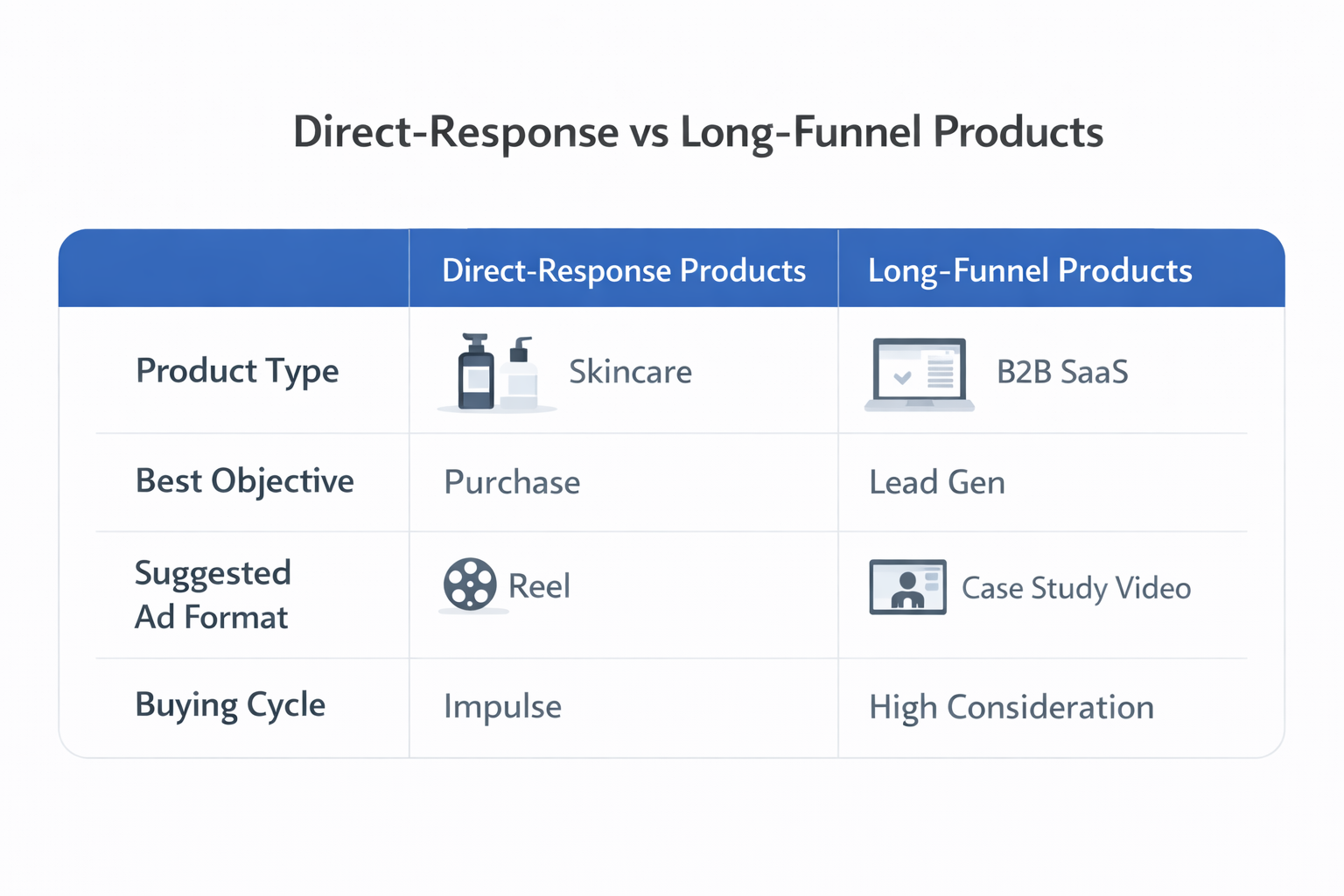
What to focus on instead:
-
Lead generation through valuable content (e.g., calculators, guides);
-
Retargeting that builds familiarity through video or proof;
-
Using ads to get opt-ins, then nurture via email or remarketing.
You're not making the sale in one click. You're starting a sales journey. See how that funnel plays out in Facebook Ads Funnel Strategy: From Audience Identification to Conversion.
3. Abstract, Hard-to-Explain Solutions
Some products solve complex or non-obvious problems. If it takes a paragraph to explain, a single image won’t cut it.
Examples:
-
Workflow automation platforms;
-
Strategic consulting services;
-
AI-based analytics tools.
Creative tactics:
-
Use visuals that represent transformation or emotion (“from chaos to clarity”);
-
Highlight specific use cases in video;
-
Leverage real-life scenarios that mirror your target audience’s problem.
If your ads are getting clicks but no conversions, this guide on fixing audience misalignment is essential reading.
Platform Fit Matters: How Ad Platforms Influence Product Performance
Even great creative can fail on the wrong platform. Each ad platform favors different formats, tones, and product types. Understanding these dynamics helps you align your strategy more effectively.
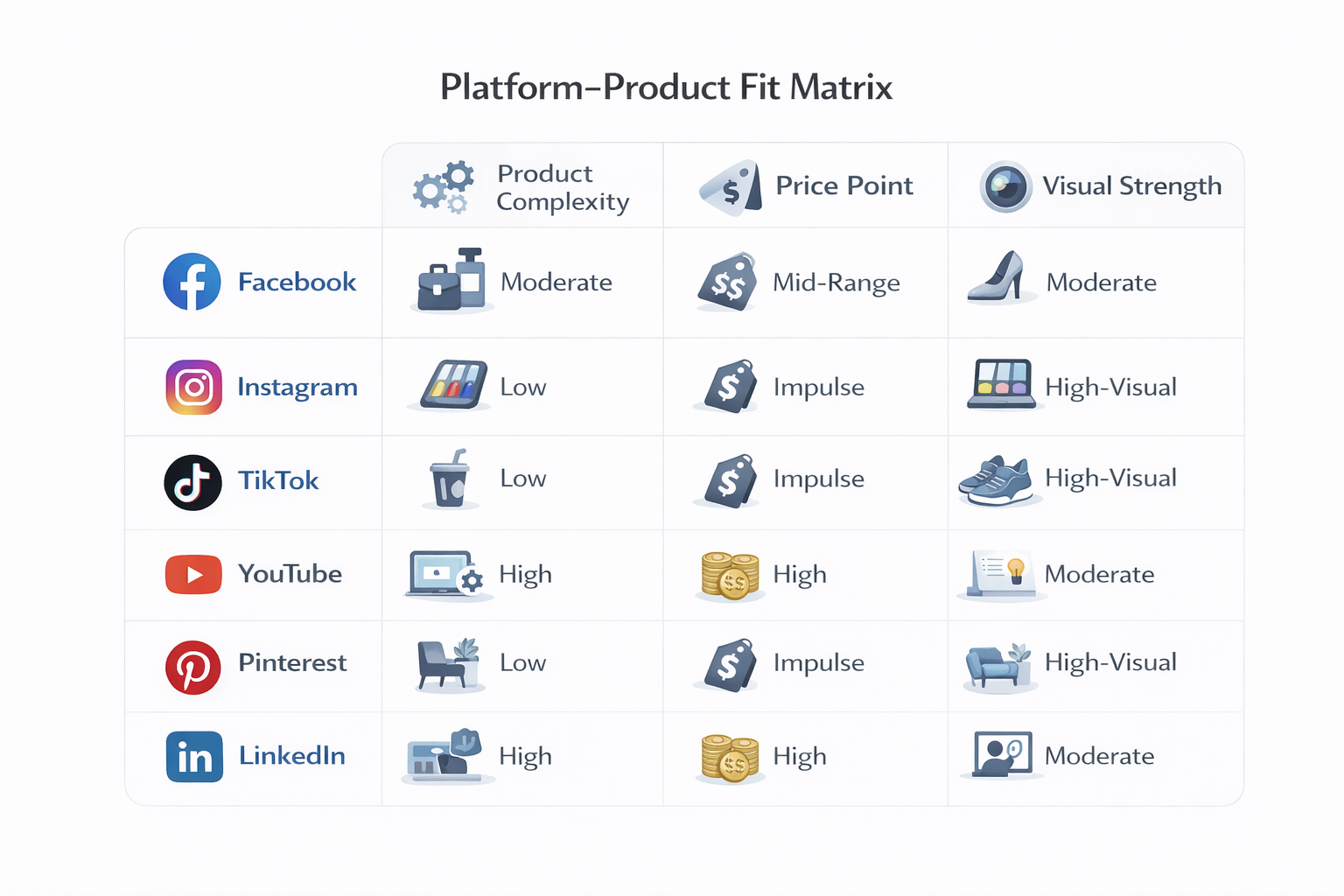
Facebook: Personal, Familiar, and Contextual
Best for:
-
Products tied to lifestyle, family, or daily routines;
-
Testimonials, emotional hooks, and community-driven offers.
What works: Casual content, long captions, social proof, and comment-friendly angles.
Instagram: Visual, Fast, and Design-Driven
Best for:
-
Fashion, beauty, gadgets, wellness, and visual transformations.
What works: High-contrast visuals, before/after transitions, Reels with pacing and flow, UGC-style ads.
TikTok: Entertaining and Relatable
Best for:
-
Trend-driven products, low-friction offers, and impulse buys.
What works: Creator content, humor, unfiltered walkthroughs, voiceovers, and challenge formats.
YouTube: Educational and High-Intent
Best for:
-
B2B offers, expensive services, or detailed product use cases.
What works: Tutorials, long-form comparisons, storytelling, and pre-roll ads matching user intent.
Pinterest: Aspirational and Planning-Driven
Best for:
-
Home, seasonal goods, gifting, fashion, and DIY categories.
What works: Inspiration boards, clean pins, how-to visuals, and vertical formats.
LinkedIn: Professional and ROI-Focused
Best for:
-
B2B software, consulting, recruiting, courses, and career development.
What works: Thought leadership, data-backed use cases, carousel explainers, and high-value lead magnets.
What You Can Adjust If Your Product Isn’t “Ad-Ready”
If your product isn’t visually stunning or instantly understood, you don’t need to abandon paid social. You just need to shift how you use it.
Choose a Goal That Matches Buyer Readiness
Stop optimizing for purchases if your audience isn’t ready to buy. Start with objectives like traffic, video views, or leads.
Break Your Funnel into Stages
Use cold ads to introduce the problem. Retarget to show the solution. Follow up with proof and urgency.
Trying to explain everything in one ad? That’s usually where campaigns fall apart.
Let Users Do the Explaining
If you can’t demo it quickly, let your customers do it for you. UGC, screen recordings, and influencer-led content simplify complex value propositions.
Final Thought: Product–Channel Fit Comes Before Scale
The best-performing ads aren’t just pretty. They’re built for the platform — and for the product they promote.
If your ads aren’t working, ask yourself:
-
Can users understand the value in under 2 seconds?
-
Are you asking for too much too soon?
-
Is the format aligned with how the platform works?
Align the product, funnel stage, and creative format — and everything else, from CTR to ROAS, becomes much easier to fix.