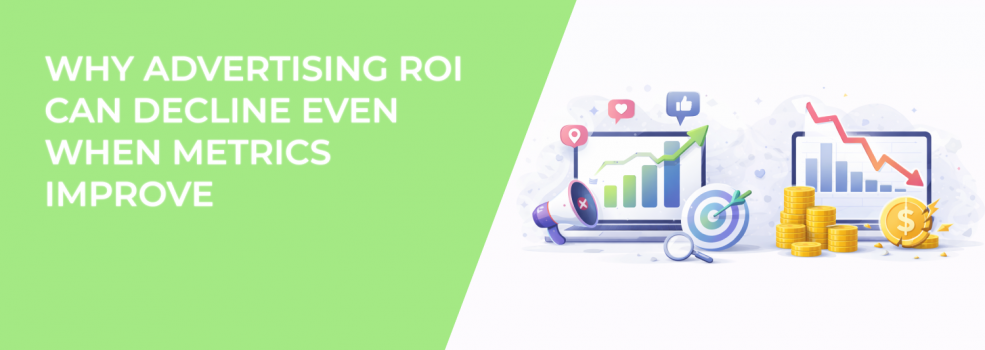
You're running Facebook or Instagram ads. Click-through rates are climbing. Cost-per-click is dropping. Everything in Ads Manager looks “better” — yet your return on ad spend (ROAS) is shrinking.
How is that possible?
The truth: better ad metrics don’t always mean better business results.
This guide explains why ROI can go down even when performance metrics go up — and how to fix it.
You’re measuring the wrong part of the journey
Most marketers check top-line numbers first: CTR, CPC, CPM. These are useful — but they only show what’s happening inside the ad platform.
They don’t tell you what happens after the click.
If your funnel is weak, more clicks just mean more wasted budget. And ironically, high-performing ads can actually amplify a broken system.
Signs your funnel is leaking
| Funnel Stage | Problem Signal | Possible Cause | Action to Take |
|---|---|---|---|
| Landing page | High bounce rate | Message mismatch, slow load | Match headline, test speed |
| Product page | Low add-to-cart rate | Unclear offer, poor images | Improve copy, highlight benefits |
| Checkout | High cart abandonment | Hidden fees, trust issues | Show shipping early, add reviews |
-
High bounce rates. People click but leave your landing page in seconds.
This often means the page doesn't match the ad or loads too slowly. -
Add-to-carts but no purchases. You’re attracting interest, but the checkout flow is causing drop-off.
Check for friction: too many steps, unexpected shipping fees, or no trust signals. -
Mobile conversion is much lower than desktop.
Your page may look fine on a big screen, but is hard to navigate on a phone.
Tip: Use tools like Hotjar, Microsoft Clarity, or Meta’s own funnel breakdowns to spot where users drop off. Also check this guide on improving post-click performance for tactics that go beyond the ad itself.
Engagement doesn’t equal buying intent
It’s easy to get excited when people like, comment, or share your ad. But engagement doesn’t pay the bills.
Sometimes, high engagement actually hurts ROI — especially if it attracts the wrong audience.
Common traps to avoid
-
Viral videos that don’t drive sales.
A funny ad might get tons of views — but go viral with people who were never going to buy. -
Clickbait copy that leads to disappointment.
If your ad headline promises more than the page delivers, users bounce fast. -
Overly broad targeting.
You reach a huge audience… but most of them aren’t in-market or relevant.
To understand this issue better, read Why Your Facebook Ads Look Great But Still Don’t Sell.
What to do instead:
-
Use lookalike audiences based on buyers, not just visitors.
-
Build warm audiences from people who engage with your brand’s Instagram or Facebook content.
-
Exclude recent engagers who didn’t convert (i.e., clicked but never purchased).
Cheap clicks often mean low-quality traffic
It feels great when your CPC drops from $1.50 to $0.80. But here’s the problem: not all clicks are equal.
Why cheap traffic can cost you more
Meta’s algorithm wants to hit your goal at the lowest cost. If your goal is just "clicks" or "landing page views", it will find users who do that often — not necessarily those who buy.
Examples:
-
People who click everything but never buy — "serial clickers"
-
Bots or low-quality users from poorly optimized placement settings
-
People who visit, get distracted, and never come back
Cheap traffic looks efficient but doesn’t convert. Check out Ad Metrics That Lie: When Good Numbers Hide Bad Performance for real examples of this pattern.
How to attract higher-quality users
-
Optimize for purchases or leads, not clicks.
Use Meta’s “purchase” or “add to cart” optimization goals. -
Use custom audiences to guide the algorithm.
Upload past buyers, or use LeadEnforce to target followers of relevant Instagram accounts and Facebook groups. -
Review your placement data.
If Stories or Audience Network placements deliver poor results, remove or adjust them.
Attribution delays make it hard to see real ROI
Most Meta campaigns use a 7-day click, 1-day view attribution window. But not all purchases happen right away.
Especially for higher-priced or subscription products, people often:
-
Visit your site,
-
Think it over for a few days,
-
Come back and buy later — possibly from a different ad or device.
If you only look at short-term metrics, you're missing the full picture.
Signs you’re undercounting delayed conversions
-
ROAS looks weak in the first 24–48 hours, then improves later.
-
Retargeting ads seem to get all the credit (when the cold ads did the hard work).
-
Campaigns with a longer buyer journey underperform on paper.
To better understand how delayed attribution distorts your numbers, read Why Conversion Delays Matter in Facebook and Instagram Ads.
Fixes:
-
Look at 7-day and 28-day attribution reports in GA4 or Meta.
-
Use offline conversion tracking for purchases that happen outside the web session.
-
Consider the real sales cycle of your product and adjust expectations accordingly.
Offers and landing pages lose relevance fast
Even great ads stop working if the offer behind them feels outdated.
Common issues with landing page and offer mismatch
-
You’re still running a “New Year” sale in February.
Users ignore it because it feels stale. -
Your page doesn't reflect the ad tone or value prop.
Ad says “Free trial,” page talks about “paid plans.” -
Your competitors updated their offers — and now yours looks weak.
Examples of timely offers that work better:
-
In February: “Valentine’s Day bundles,” “Winter Clearance,” “Q1 Growth Plan”
-
For B2B: “Ready for tax season?” or “Fresh leads before end of Q1?”
Update your offer at least monthly. Tie it to real events, customer needs, or market trends.
You’re scaling too fast — and breaking the algorithm
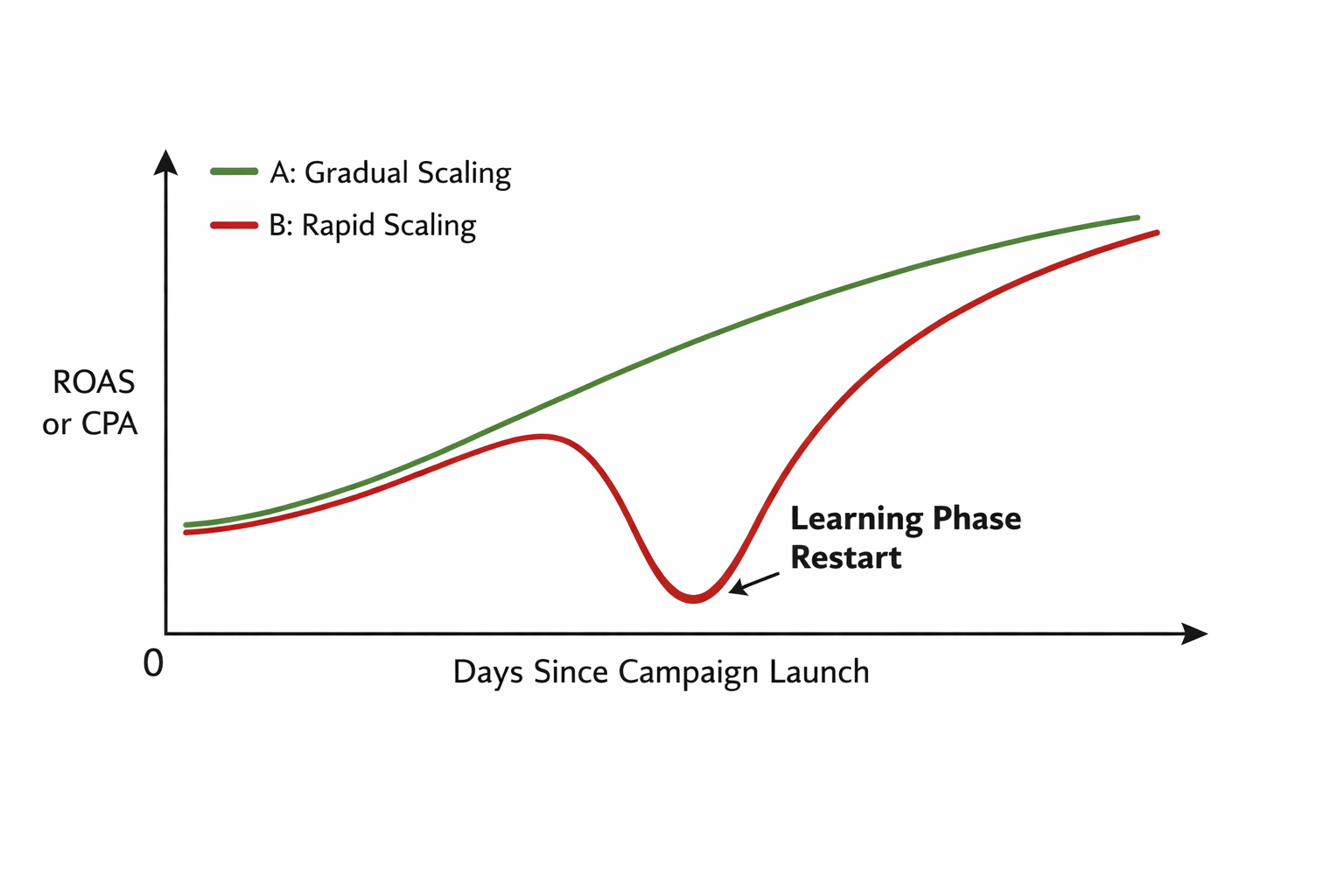
Everyone wants to scale successful campaigns. But scale too fast, and results collapse.
Why scaling kills performance
Meta’s delivery system needs time to optimize. When you suddenly:
-
Triple the budget,
-
Launch five new ad sets,
-
Change audience and creative together...
…the algorithm gets overwhelmed. Performance tanks while it relearns.
Better ways to scale:
-
Increase budget by 10–20% every few days.
-
Let ad sets get 50+ conversions before you duplicate or expand.
-
When testing, change one variable at a time — either audience or creative, not both.
Slow, steady scaling = longer-term results.
Summary: ads don't work in isolation
Your ad campaign is just one part of the full customer journey. Even strong ad metrics mean nothing if:
-
The offer is weak;
-
The funnel is broken;
-
The traffic is low intent;
-
You're measuring results too narrowly;
-
You scale too fast without control.
To get better ROI, zoom out.
Before increasing spend, ask:
-
Is my traffic converting?
-
Are my clicks coming from real, interested buyers?
-
Does my attribution window reflect actual buyer behavior?
-
Is my offer still relevant today?
-
Am I scaling in a way the system can handle?
If even one of these breaks, ROI will drop — no matter how “good” your ad metrics look.