If you're running Facebook or Instagram ads and judging success after just 24 hours, you're probably missing the full picture.
Some people click and buy right away — but many don’t. They hesitate, explore other options, or simply get distracted. That doesn’t mean your ad failed. It means the conversion was delayed.
Understanding these delays is key to making better decisions, spending more efficiently, and scaling with confidence.
What is a conversion delay?
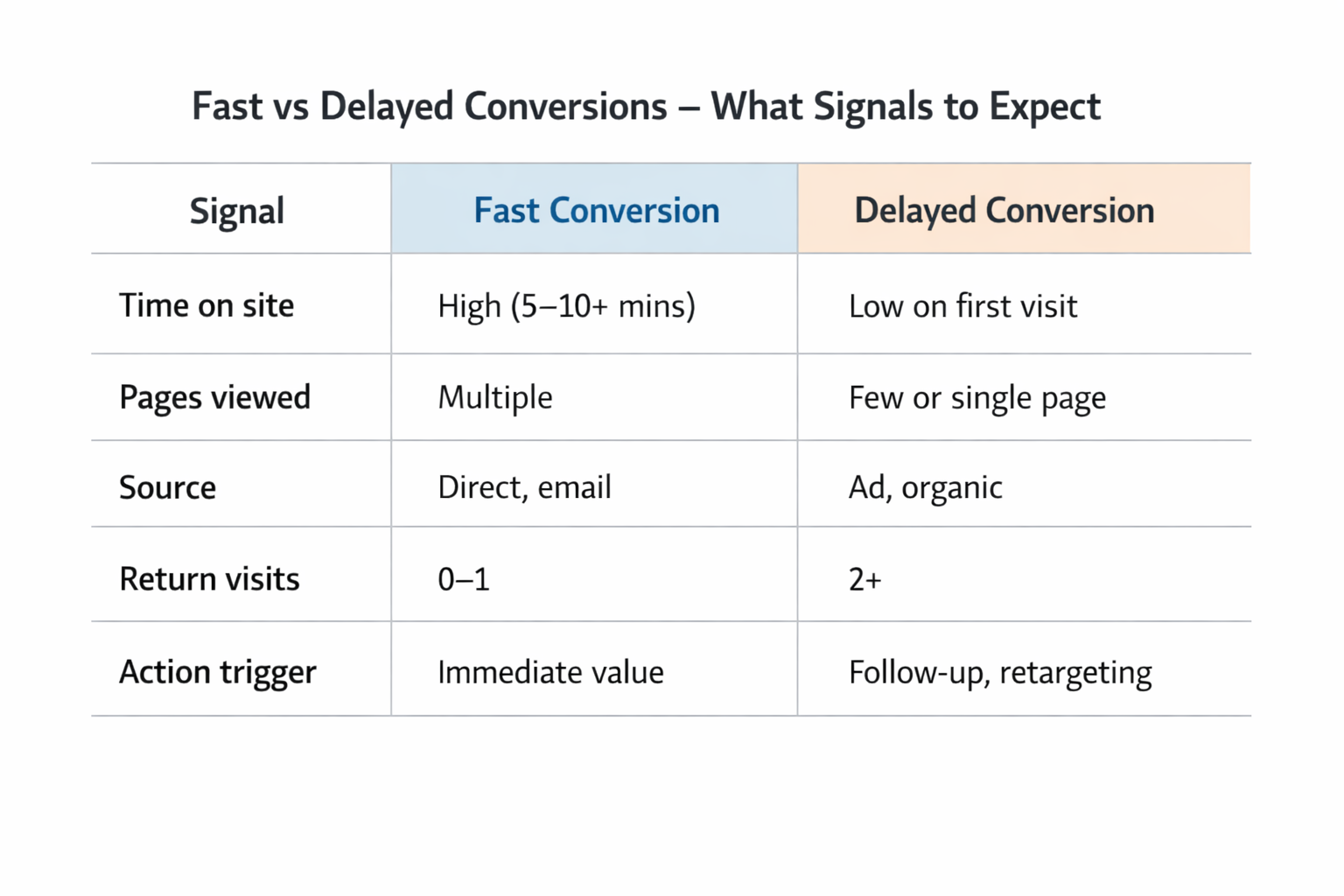
A conversion delay is the time between a person clicking on your ad and taking the action you want — like buying a product, signing up for a trial, or booking a service.
It’s not always instant. In fact, most conversions don’t happen right away, especially as prices rise or decisions get more complex.
For example:
-
Someone clicks your ad for a $120 skincare bundle;
-
They like it but want to check reviews and compare with what they use now;
-
Three days later, they come back and buy.
If you're only tracking same-day conversions, you won’t see this sale in your ad reports. That’s a problem — because the ad worked. You just didn’t wait long enough to see it.
Why people delay their decisions
Even if your ad is perfect, people don’t always act immediately. And it’s not your fault. There are many real-world reasons conversions take time.
They’re still thinking
People aren’t always in buying mode when they see your ad. Sometimes they:
-
Get interrupted and forget to come back;
-
Want to talk to a partner or team before purchasing;
-
Save the link for later but don’t revisit it until days later.
This is common for both B2C and B2B audiences. Even impulse buyers take a moment to decide when the cost or commitment is higher.
They’re researching options
Before making a decision, your audience might:
-
Google competitors;
-
Look for coupon codes;
-
Check for product reviews on YouTube or Reddit.
They leave your funnel, explore alternatives, and then come back if they still like what you offer. This can take hours or days.
Your funnel has hidden blockers
Sometimes users delay because something on your end slows them down. These include:
-
A long or clunky checkout process;
-
No guest checkout option;
-
Lack of clear shipping or return info;
-
Not enough social proof or trust signals.
Even small friction points can cause delays. They don’t always cause users to bounce — but they do add hesitation.
If you’re not sure where those drop-offs are happening, this guide on funnel drop-off fixes using Facebook ad data is a great place to start.
Why short attribution windows can mislead you
Facebook and Instagram don’t just track what happens today. They let you measure over time — but only if you choose the right attribution settings.
Understanding attribution windows
Attribution windows define how long Meta will track a person’s activity after they engage with your ad.
The most common options are:
-
1-day click: Only counts actions taken within 24 hours of clicking the ad;
-
7-day click: Tracks conversions up to a week after the click;
-
1-day view: Tracks if someone sees your ad (without clicking) and converts within a day.
If you're only looking at same-day data, you may be underestimating performance. Here’s a deeper explanation of how windows work in practice: Meta Ads Attribution: What to Know About Windows, Delays, and Data Accuracy.
Why ignoring conversion delays leads to bad decisions
When you don’t account for delayed conversions, you’re more likely to:
-
Kill good ads too early: You pause ads that seem weak today but actually convert over 3–5 days;
-
Scale the wrong ads: You put budget into flashy ads that get instant clicks — but low long-term ROI;
-
Misjudge audience quality: You assume traffic isn’t working, when in fact, your delay just isn’t being tracked.
In many cases, advertisers focus on the wrong metrics. To go deeper, check this breakdown of which ad metrics actually matter when optimizing Facebook campaigns.
What to do instead: practical steps
Here’s how smart advertisers protect against this.
1. Wait at least 3–5 days before judging new ads
Give your campaigns enough time to show delayed conversions. This is especially important if:
-
You're targeting cold audiences;
-
Your product is $50 or more;
-
You rely on remarketing or email flows to close sales.
Even if you’re eager to optimize, don’t act on day one. Set a baseline — and stick to it.
2. Compare attribution windows, not just last-click
Use Meta Ads Manager’s comparison tool to look at:
-
1-day click vs 7-day click;
-
Click-based vs view-based conversions.
Some brands see 40–60% of conversions happen after day one — especially in high-consideration categories.
3. Turn on Meta’s Conversions API (CAPI)
Meta’s CAPI helps track events even if the browser or device blocks cookies or tracking pixels. This is especially helpful in a privacy-first environment. If you're just starting out with server-side tracking, check this beginner’s guide to CAPI.
4. Use longer funnels to close the gap
If people aren’t converting fast, help guide them back.
You can:
-
Retarget ad clickers with reminder ads after 2–3 days;
-
Set up abandoned cart email flows;
-
Use lead magnets or discounts for retargeting warm traffic.
For practical tips, explore these retargeting strategies that double ROAS.
Key takeaway
Conversion delays are not failures. They’re part of how people buy — especially when decisions aren’t instant.
If you learn to track them, expect them, and work with them (not against them), you’ll:
-
Make better decisions;
-
Save money on testing;
-
Grow more sustainably over time.
Want to know if your conversion window is hurting your campaign? Read this post on what conversion lag means for your Facebook ads.