Some ads just work. They bring in clicks, conversions, and great ROAS. Then you try to run them again… and nothing.
This is a common problem for marketers. An ad that performs well once rarely works forever. And copying what worked before doesn’t always lead to success.
Let’s look at why advertising wins are so hard to repeat and what to do instead.
Why ads stop working
You’re not always in control
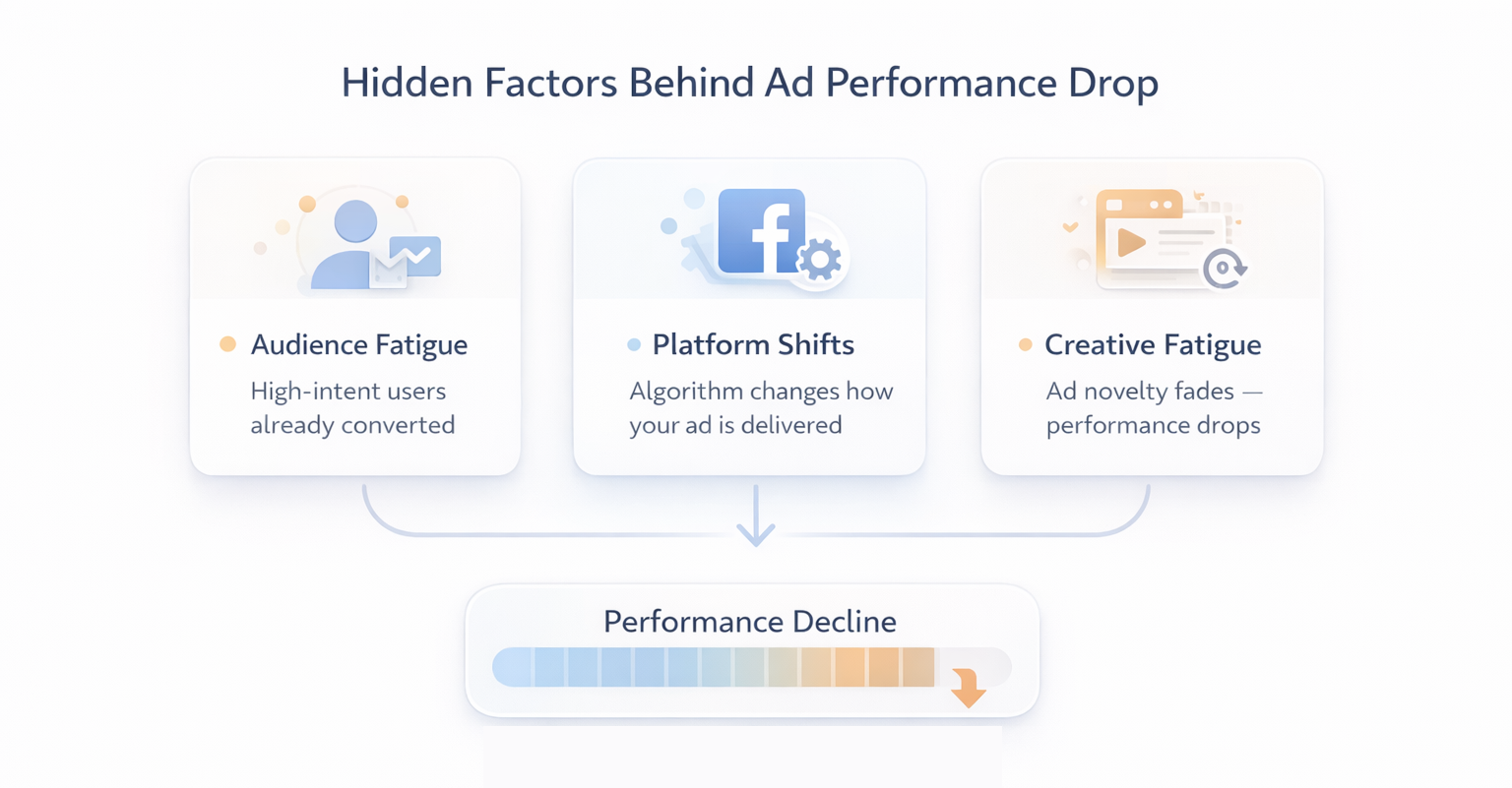
Even if you use the same product, budget, and platform, the outcome can change. A few hidden factors often shape results:
Here are some things that might make one ad win while another fails:
-
Freshness of the audience: Early on, you’re showing the ad to your best potential customers. They convert fast. Once they’re gone, performance drops.
-
Platform trends: Sometimes your ad feels new and fits what people expect to see. But that novelty fades — especially if others copy your format.
-
Timing: Some ads work because they match what’s happening in the world. A message that felt relevant last month might fall flat today.
That means success often comes from a mix of the right moment, the right audience, and the right format. Not from a perfect formula.
Want to know why your Facebook ads seem to stop performing after a couple of weeks? This guide breaks it down.
The algorithm has other plans
Facebook and Instagram ads are powered by learning systems. These systems don’t just “remember” your old wins. They react to what’s happening now.
So what does that mean?
-
Winning ads lose power quickly once they’ve reached your best-fit audience.
-
Repeating the same creatives can make people tune out — or scroll past faster.
-
Broad targeting may give stronger results to big brands with more data, leaving smaller brands behind.
You’re not running ads in a vacuum. You’re always playing on a field that’s shifting beneath your feet.
To stay ahead of these shifts, it's crucial to avoid ad fatigue and monitor costs early.
Why scaling breaks good ads
The audience changes when you scale
Let’s say your ad does well with a small budget. So you raise the spend, expecting bigger results. But instead, performance drops.
Why?
Because scaling changes who sees your ad. You move from warm, interested people to colder, less familiar ones.
For example:
-
A retargeting ad that brings 6x ROAS might fall to 2x when you expand to new audiences.
-
A desktop-friendly ad might flop in mobile placements like Instagram Stories.
Your audience isn't just bigger — it's different. And that changes everything.
Scaling campaigns takes more than budget. Here’s how to scale without killing performance.
Creative burnout is real
Great ads don’t last forever. People get used to them. They stop paying attention.
Look for signs of creative fatigue:
-
Click-through rates start to fall after people have seen the ad 2–3 times.
-
Costs go up even though you haven’t changed your targeting or bidding.
-
Conversions drop suddenly — and it’s not your landing page’s fault.
When that happens, your ad isn’t bad — it’s just overplayed. You need something fresh.
Platforms move faster than you think
Rules and results can change overnight
Just because an ad worked last quarter doesn’t mean it’ll work now.
Facebook and Instagram often change:
-
Ad policies — New rules can limit what you’re allowed to say or show, even in small ways.
-
Audience priorities — The algorithm shifts how and where your ad gets shown.
-
Ad competition — When more brands target the same audience, your costs go up and results drop.
Sometimes your ad underperforms not because it’s bad, but because the rules of the game changed.
What to do instead
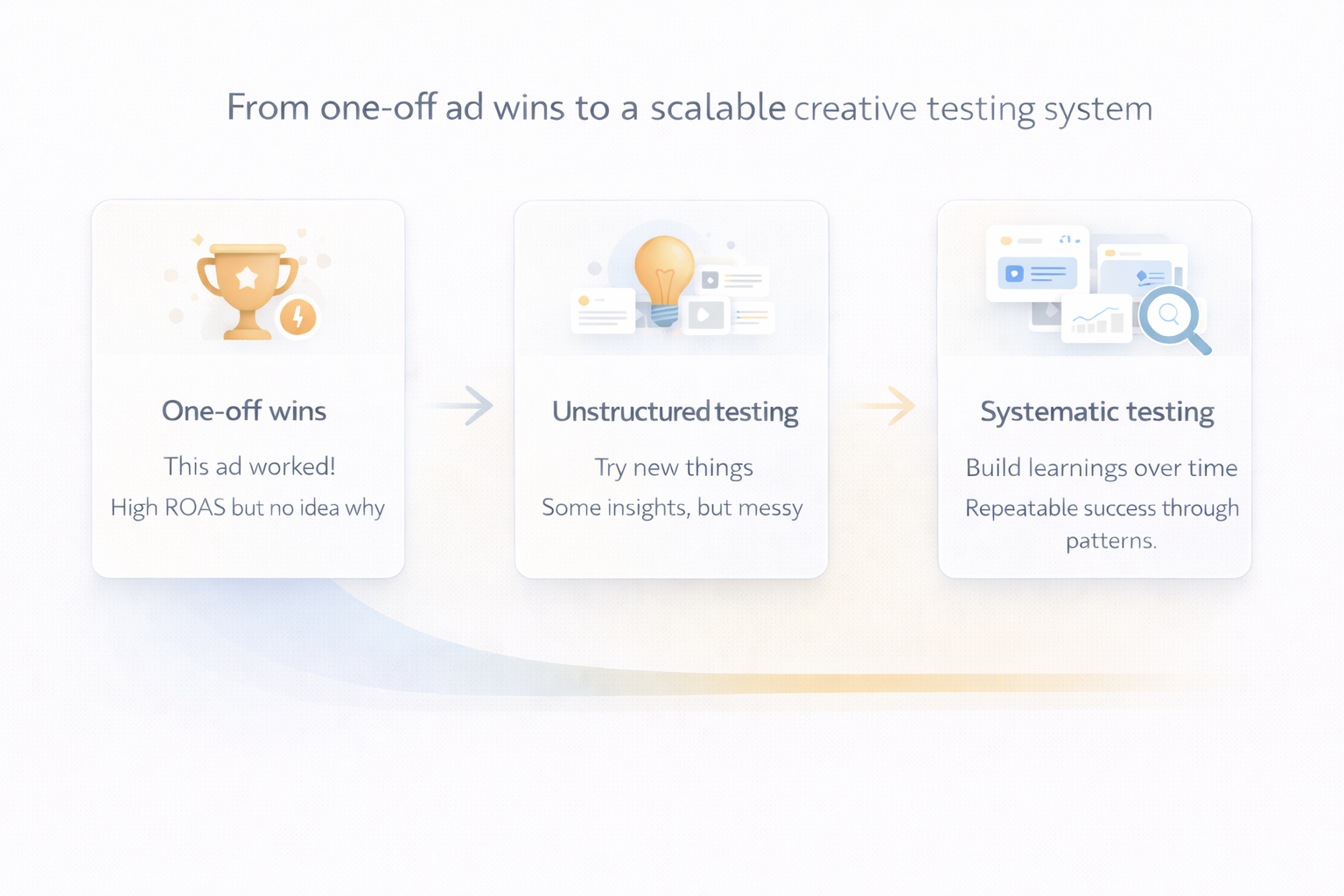
Stop chasing wins. Start building systems.
You don’t need to repeat a hit. You need to learn from it — and build a process that finds new winners over time.
Here’s how:
-
Test different angles, not just colors or headlines. Try different messages — like “save time” vs. “feel less stressed” — to see what connects.
-
Match your message to your market. Use the same words your customers do to describe their problems.
-
Think about context. A video ad that works on Instagram Reels might not land on desktop Feed. Adapt to the placement.
To build better test systems, start with these ad testing tips.
Treat ad testing like research
Testing isn’t just for picking a winner. It helps you gather insights you can use across campaigns.
Here’s what smart advertisers do:
-
Run a few ad concepts at once — but keep the CTA and offer the same. That way you isolate what’s working.
-
Group ads by theme (like product demo, testimonial, problem-focused) so you can track patterns.
-
Pay attention to the first frame or visual. That’s what makes people stop scrolling.
These small habits help you make better decisions — not just better ads.
The bottom line
One great ad won’t grow your business. Systems do. Repeating a hit might feel safe, but it won’t work for long.
Instead, focus on:
-
Learning what makes your audience respond.
-
Adapting to platform changes fast.
-
Testing with a purpose — not just for variety (read this guide on creative testing).
That’s how top advertisers win again and again — without needing to get lucky twice.
FAQ
Why do ads stop working?
Audiences get tired. Platforms change. And scaling often brings in colder users who don’t respond the same way.
How do I avoid ad fatigue?
Refresh creatives often. Watch for signs like lower CTR and higher CPM. Don’t wait for performance to crash.
Should I reuse winning ads?
Sometimes. But test new versions in parallel. Even strong ads wear out over time.
How do I build a repeatable system?
Test ideas, not just designs. Keep learning from what works — and what doesn’t.