If your ad results have dropped, you’re not alone.
Digital advertising didn’t suddenly stop working. It changed slowly — privacy updates, automation, faster content burnout, and growing competition all made performance harder to control. The changes were small at first, but together they added up.
Most ad accounts still run on strategies built for a system that no longer works the same way.
Tracking is weaker
In 2025, Google announced it would not fully remove third-party cookies from Chrome, reversing earlier plans. That might sound like a win for advertisers — but the reality is more complicated.
Cookies are already blocked by Safari and Firefox. And across all browsers, user consent rules and platform restrictions still limit what you can track.
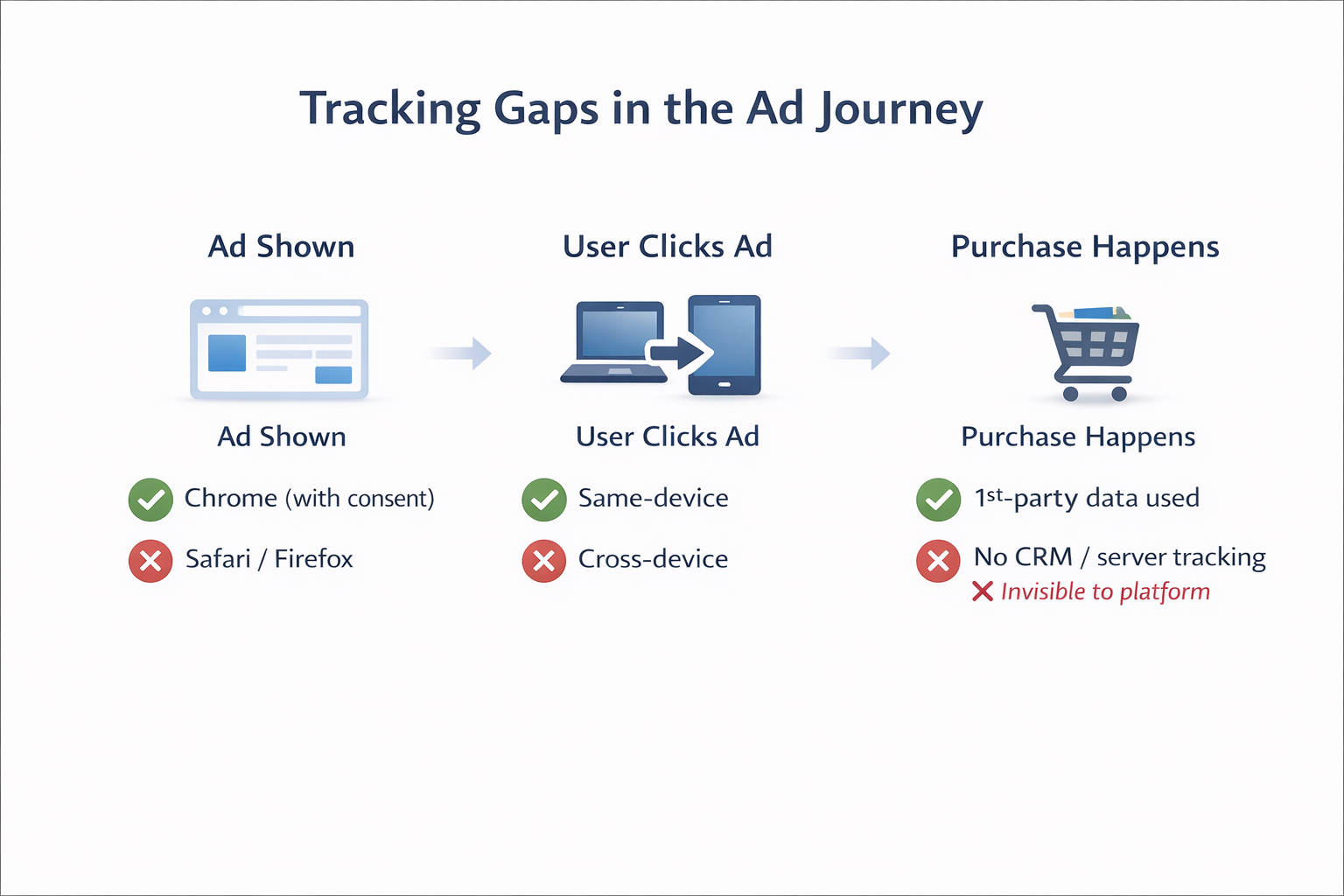
This creates gaps in your reporting:
-
Some sales and leads don’t show up in ad platform data.
-
You can’t see where all your conversions are really coming from.
-
Cross-device behavior — like seeing an ad on mobile, then buying on desktop — often goes unnoticed.
If you’re not connecting first-party data through server-side tracking or CRMs, you’re flying blind. For more on this, read How to Build Privacy-Safe Facebook Audiences Without Cookies.
Creative fades fast
Today’s users scroll faster, skip more, and get bored quicker. That makes creative burnout one of the biggest challenges in paid media.
Even strong ads stop performing after a few days — especially on platforms like TikTok, Meta, and YouTube. And once engagement drops, the algorithm stops pushing your ads.
That’s why you need a structure for frequent testing and refreshing. Modular creative systems — where hooks, headlines, and visuals can be swapped — help extend ad life and improve learning.
If you want deeper strategies, check out Creative Testing Without Audience Bias.
Automation removed visibility
Google, Meta, and TikTok all encourage advertisers to use automated campaign formats like Performance Max or Advantage+. These promise faster results — but often limit what you can see and control.
You might not know:
-
Which audience is actually converting.
-
Which creative is driving results.
-
Where most of your budget is going.
To regain insight, advertisers run controlled A/B tests, export custom reports, and tag their ads for easier analysis. Automation helps scale — but without your own feedback system, you can’t learn.
This is especially true when testing new strategies. Here's a practical resource on how to spot early signs of underperforming Facebook ads.
Scaling is no longer simple
You used to be able to increase your ad budget steadily and see a similar return. Now, that often causes costs to spike and results to crash.
Platforms re-enter learning phases. Audiences get saturated. Creative starts to fatigue. And the algorithm may not have enough good data to adjust quickly.
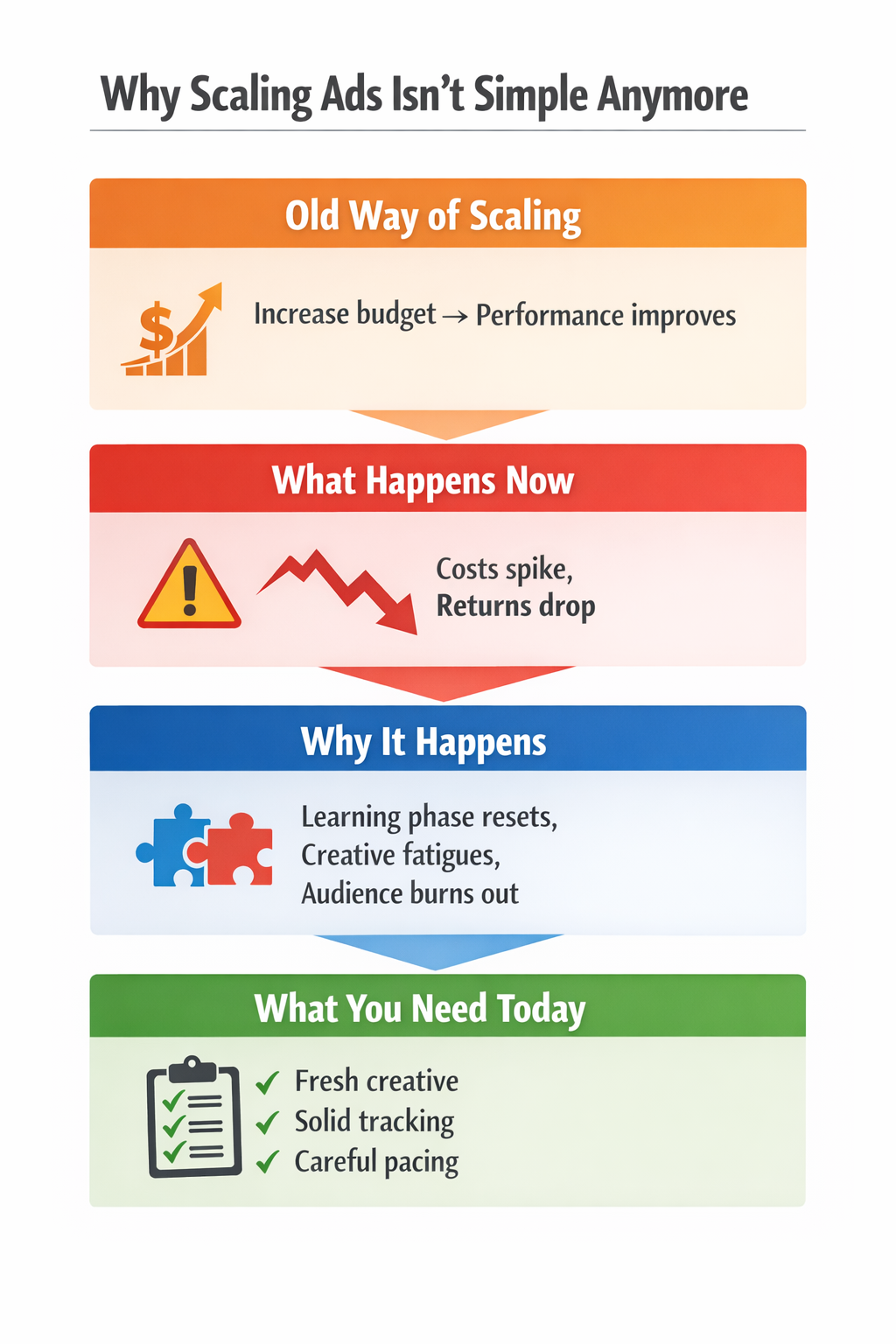
Scaling today requires more planning. You need fresh creative, stable tracking, and careful pacing. You also need to know when a campaign can scale — and when it’s already maxed out.
For tips, see The Science of Scaling Facebook Ads Without Killing Performance.
Users are harder to reach — and harder to convince
Digital behavior keeps changing. People bounce between platforms. They ignore more ads. And they expect more value before clicking.
At the same time, more brands are spending more money in the same ad spaces. That drives up costs, increases volatility, and lowers the impact of any single tactic.
You can’t fix this with targeting alone. You need better landing pages, clearer messaging, smarter email follow-up, and strong customer experience after the click.
What to do next
Digital advertising didn’t break — but it did evolve. Today, success comes from building systems, not just running ads.
This means stronger creative processes. Better use of first-party data. Clearer measurement strategies. And more patience with the algorithm.
If you want long-term performance, you have to stop chasing quick wins. Build around learning, not guessing. Track what matters — not just what’s easy. And accept that volatility is normal in modern paid media.
Your ads can still work. But now, they need smarter support behind them.