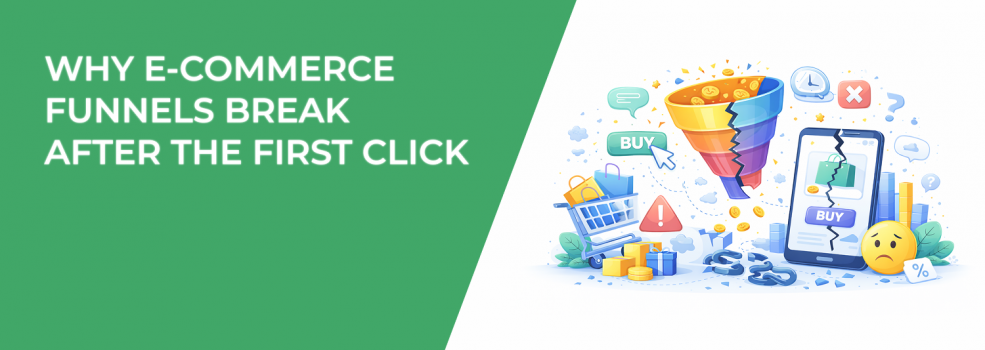
You’ve set up a great Facebook or Instagram ad. People are clicking. But then — they drop off. No sales. No sign-ups. Just dead ends.
This is a classic e-commerce funnel issue. The problem usually happens after the ad, not before it.
Let’s look at what breaks and how to fix it.
The biggest post-click breakdowns (and what to do)
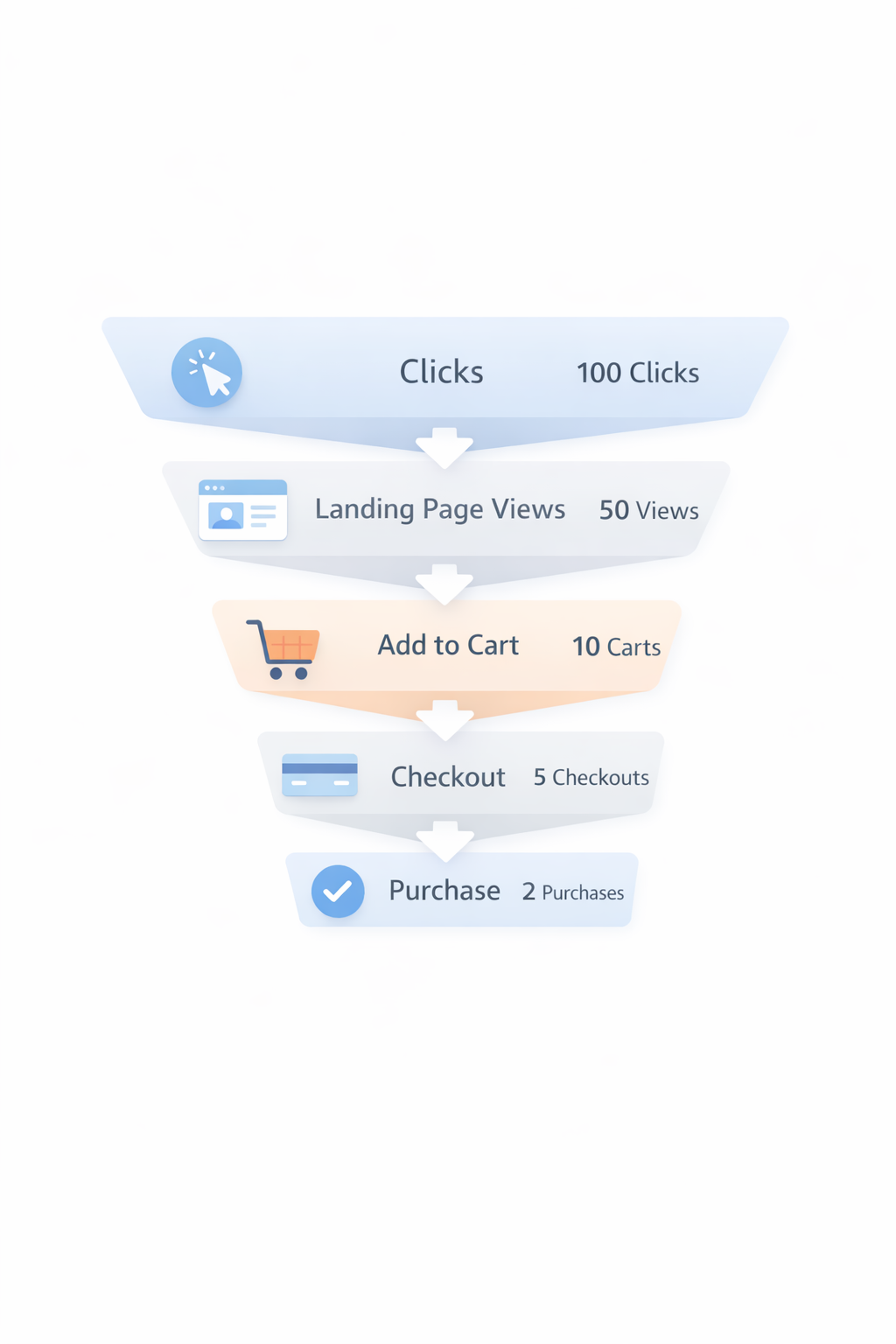
1. The landing page doesn’t match the ad
After clicking an ad, people expect the same message and offer on the page they land on. But many pages don’t deliver that.
Here’s what goes wrong:
-
Missing or different headline. If your ad says “20% off,” the landing page must show that too.
-
Wrong product placement. If the product from the ad isn’t easy to find, people won’t bother searching.
Fix this:
Use the same visuals, copy, and offer from your ad on the landing page. The page should feel like a continuation, not a reset.
If this disconnect happens, the trust you built in the ad is gone. The user feels misled — even if it wasn’t intentional. To avoid this, always treat your landing page as part of the ad experience, not a separate one.
Learn how to build high-converting e-commerce landing pages.
2. Too many choices make people leave
A lot of brands send users to their homepage or a collection with dozens of products. It seems helpful — but it’s not.
Here’s what happens:
-
There’s no clear next step. People scroll, get distracted, and leave.
-
It feels overwhelming. Too many choices mean more friction, not more conversions.
Fix this:
Create focused landing pages. Each page should have one goal — like buying a specific product or joining your email list. Less choice = more action.
If you don’t guide users toward the next action, they’ll take none. Attention spans are short, and decisions need to be easy. Every extra click is a chance to lose someone.
3. The page loads too slowly
Even a short delay can kill your conversion rate. On mobile, every second counts.
These are the usual causes:
-
Heavy product images or uncompressed video;
-
Popup-heavy page builders that lag on mobile;
-
Unoptimized scripts from third-party tools.
Fix this:
Use tools like PageSpeed Insights or GTmetrix. Compress images and videos. Run mobile tests before you launch.
Speed isn’t just a tech issue — it’s a trust issue. Slow pages feel unprofessional and can instantly turn a high-intent visitor into a bounce. You only get one shot. Make it fast.
4. Retargeting is missing — or done wrong
Not everyone buys on the first visit. That’s normal. But your funnel needs to follow up — and do it smartly.
What goes wrong:
-
Same product ad shown repeatedly;
-
Showing ads to people who already bought;
-
Discounts offered too early without context.
Fix this:
Use behavior-based retargeting:
-
If someone viewed a product, show a benefit or review ad;
-
If they added to cart but didn’t buy, try urgency or FAQs;
-
If they visited twice, test a new format or creative.
If your retargeting feels repetitive or irrelevant, it won’t work. Retargeting isn’t just “show the ad again” — it’s continuing a conversation. Tailor your follow-up to what the user did (or didn’t do).
Explore advanced retargeting strategies.
5. You assume every click means “ready to buy”
This is a common mistake. People click for many reasons — curiosity, interest, or a good visual. But most aren’t ready to buy yet.
What this leads to:
-
Low conversion rates;
-
Wasted budget on unqualified traffic;
-
Confusing your campaign metrics.
Fix this:
Add middle-funnel steps:
-
Collect emails with a lead magnet;
-
Use product quizzes to guide users;
-
Try “notify me” or “wishlist” features for non-buyers.
You can’t force someone to buy if they’re not there yet. But you can keep them in your funnel and move them forward. Warm traffic is often more valuable than cold conversions — because it converts with less push.
See how to warm up cold traffic effectively.
Don’t scale a broken funnel
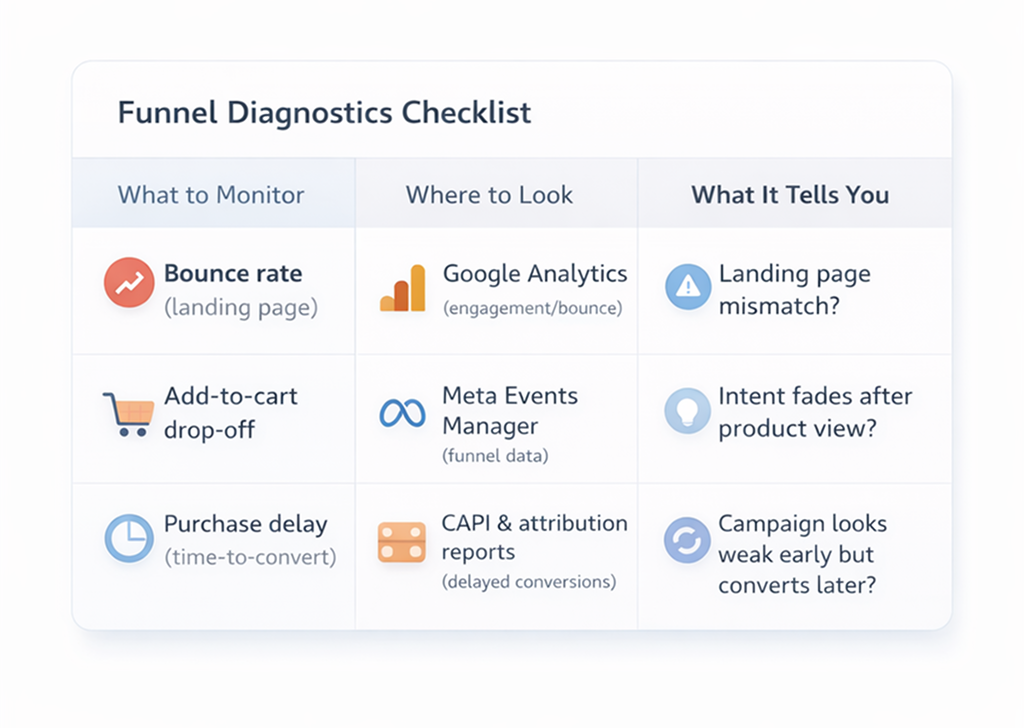
Check your funnel before increasing spend
If your ad gets clicks but not conversions, don’t assume the ad is the issue. Look at the journey after the click.
Here’s what to check:
-
Are people bouncing off your landing page too fast?
-
Are add-to-cart users dropping off before checkout?
-
Is your funnel event data showing gaps?
These signals tell you where the breakdown happens. Use heatmaps, analytics, and ad platform data to figure out what needs fixing — not guessing.
Track results over a longer window
Conversions don’t always happen on day one. If you’re only looking at 1-day results, you might cut winning campaigns too early.
Here’s what helps:
-
Check 7-day click / 1-day view attribution;
-
Use server-side tracking (like Meta’s CAPI) to catch delayed purchases;
-
Compare early data to what happens over time.
Understanding attribution windows helps you avoid turning off ads that are working slowly but steadily. It’s especially useful for products with longer decision cycles or higher price points.
Test first, then scale
It doesn’t take a huge budget to validate your funnel.
Here’s how to test smart:
-
Run a $20/day campaign to a single product funnel;
-
Compare CTR to LP views to catch loading issues;
-
Track add-to-cart to purchase to spot where intent drops.
Small-budget testing helps you avoid burning thousands on an unproven system. Think of it like a stress test — once it holds, you scale.
Final thoughts: Great ads don’t save broken funnels
It’s easy to celebrate a click. But that’s not the finish line — it’s just the start.
If you’re getting clicks with no conversions:
-
Check if your landing page follows the ad’s promise;
-
Cut down friction and options;
-
Retarget smarter, and don’t assume all traffic is ready.
Funnels break quietly, but the signs are easy to catch if you know where to look.
Fixing what happens after the click is how you turn traffic into sales — and good ads into great results. Start there.