Engagement audiences are easy to build in Meta Ads. A few video views, reactions, or post clicks, and you suddenly have thousands of people you can retarget.
At first glance, that feels promising. If someone interacted with your content, they must be interested in your product.
But many advertisers notice the same pattern: engagement campaigns produce activity, yet retargeting those audiences leads to very few conversions. The problem isn’t the platform. It’s what engagement actually represents.
Engagement Often Reflects Curiosity, Not Intent
A reaction or a video view is a very light action. It takes almost no effort, and people do it for many different reasons.
Think about how users behave in their feed. They scroll quickly, react to interesting visuals, watch a few seconds of a video, and keep moving. None of those actions require them to seriously consider a product.
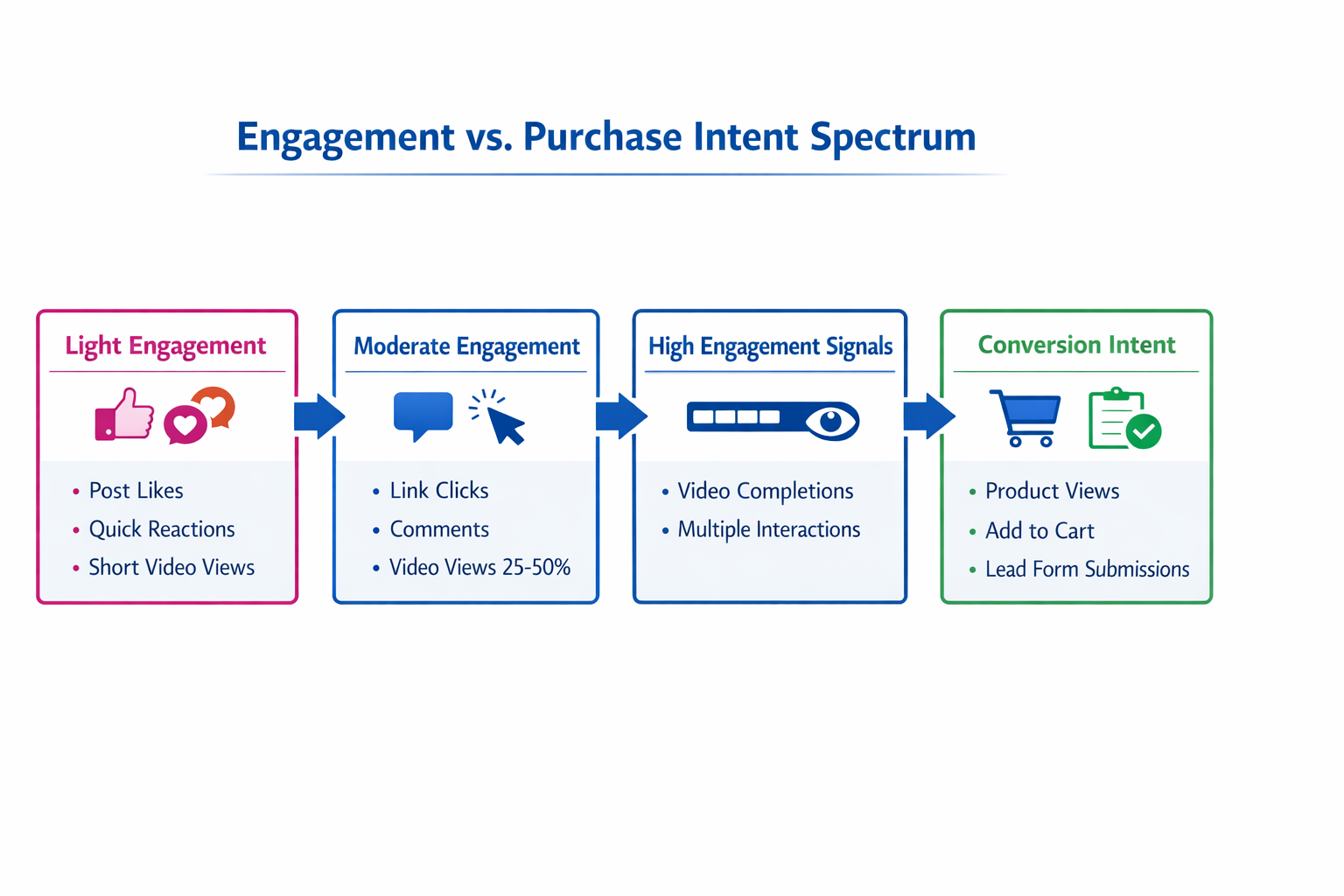
Typical engagement behavior looks like this:
-
Someone watches a few seconds of a video.
The visual caught their attention while scrolling. They paused briefly, then moved on. That view counts as engagement, but it doesn’t mean they understood the offer. -
A post gets reactions because the creative is entertaining.
People react to humor, design, or storytelling. The engagement comes from the content itself, not from interest in the product. -
Users click an ad out of curiosity.
They want to see what the landing page looks like. If they leave quickly, the click was exploratory rather than intentional.
These interactions still create audiences. The issue is that the audience contains many users who never had buying intent to begin with.
Engagement Campaigns Attract a Different Type of User
The campaign objective shapes who sees the ad.
When a campaign is optimized for engagement, Meta starts finding users who regularly interact with content. These are people who like posts, comment, watch videos, and click often.
Those habits don’t always correlate with purchasing behavior.
Some users interact with ads constantly but rarely buy anything. Others barely engage with content yet convert quickly once they see a relevant offer.
That difference becomes visible when engagement audiences are used for retargeting. The audience is active, but the buying signals inside it are weak.
If you want a broader explanation of how these audience types behave across the funnel, The Complete Guide to Warm, Cold, and Custom Audiences in Meta Ads breaks down how different audience categories perform.
Engagement Happens Early in the Decision Process
Most engagement happens when users are still discovering a brand.
They might find the topic interesting. They might want to learn something new. But they are not necessarily evaluating whether they should buy.
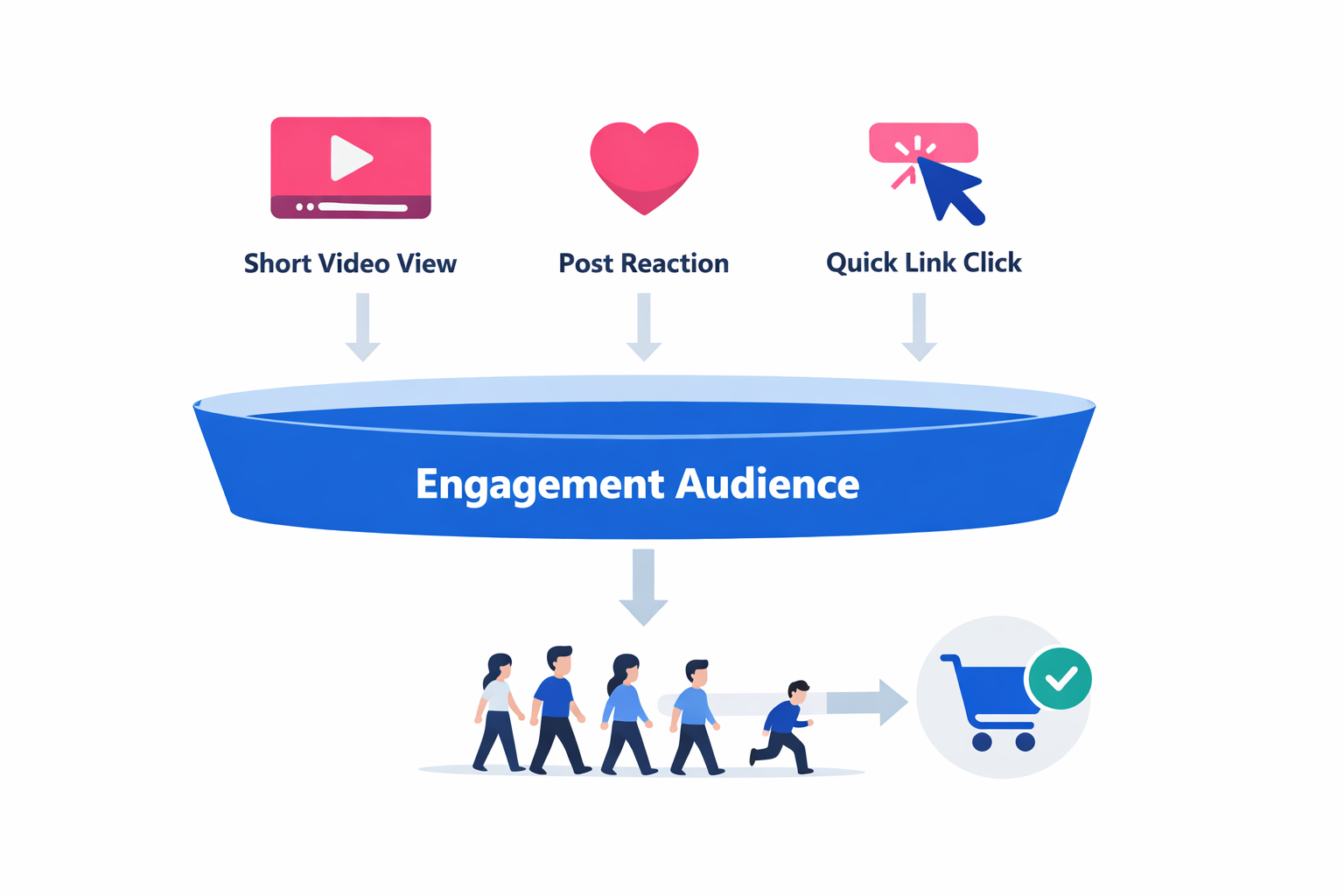
A few common signals illustrate this stage:
-
Short video views.
Many engagement audiences include users who watched only a small part of a video. That interaction may have lasted a few seconds. -
Post reactions.
A strong visual or headline can trigger reactions even if the user has no real interest in the product. -
Quick link clicks.
Curiosity clicks often lead to short website visits with little exploration.
These signals are useful for measuring content reach. They are less reliable indicators of purchase intent.
Engagement Audiences Often Mix Strong and Weak Signals
Another issue is how engagement audiences are structured.
Many advertisers group every interaction into one audience. That pool may include people who:
-
liked a post,
-
commented on content,
-
watched part of a video,
-
clicked a link,
-
or opened a lead form.
Those behaviors are not equivalent.
Someone who opened a lead form probably has more interest than someone who tapped a like button. But when both users are placed in the same audience, the targeting becomes diluted.
Separating these signals is often the first step toward improving results. This idea is explained in more detail in Maximizing ROI through Facebook Audience Segmentation.
Some Creatives Generate Engagement Without Demand
Creative style also affects engagement quality.
Certain ads attract interaction because they are entertaining or provocative. The content drives the engagement, not the product.
You might see this with:
-
story-driven videos,
-
opinion-based posts that invite comments,
-
curiosity hooks that encourage clicks.
These ads can perform extremely well in engagement metrics. Yet the audience they generate may not be interested in buying.
When those users enter retargeting campaigns, conversion rates tend to drop.
When Engagement Audiences Do Work
Not all engagement signals are weak. Some interactions suggest that users are genuinely exploring the product.
Examples include:
-
Watching most of a product video.
A viewer who stays through the explanation is likely evaluating the offer. -
Clicking an ad and browsing multiple pages.
This behavior indicates deeper interest. -
Opening or partially completing a lead form.
The user is already considering the next step.
These stronger signals are often useful for building retargeting audiences or even seeding lookalike audiences. A good example of how stronger data sources improve scaling is explained in How to Build Lookalike Audiences that Actually Convert.
A Better Way to Use Engagement Audiences
Instead of treating engagement audiences as direct conversion pools, it often works better to use them in the middle of the funnel.
A simple structure might look like this:
-
Awareness campaigns create engagement.
Videos and educational content introduce the brand. -
Mid-funnel campaigns build interest.
These ads explain the product and encourage users to explore the website. -
Conversion campaigns target stronger signals.
Retargeting focuses on product viewers, signups, or other meaningful actions.
If you want to understand how engagement audiences fit into broader targeting strategies, Using Facebook Engagement Custom Audiences to Find Your Best Leads provides a deeper breakdown.
Practical Takeaway
Engagement audiences grow quickly and often look active in campaign reports. But interaction alone doesn’t tell you whether someone is ready to buy.
Many users engage with content out of curiosity or entertainment. When those users are pushed straight into conversion campaigns, the message arrives too early.
Treat engagement audiences as a signal of interest, not a signal of intent. When they sit in the middle of the funnel — between awareness and conversion — they tend to perform much more reliably.