Many advertisers open Ads Manager and see encouraging numbers. ROAS appears healthy, cost per purchase looks stable, and conversions continue to appear in reports.
Then they compare those metrics with real business results. Revenue growth feels slower than expected, profit margins remain tight, and increasing ad spend does not produce proportional gains.
This disconnect usually comes from how Facebook attributes conversions, how its delivery system prioritizes high-intent users, and how campaign structures shift credit toward the final interaction before a purchase.
Understanding these mechanics helps explain why campaigns can look profitable inside Ads Manager while the business itself experiences limited growth.
Facebook Attribution Measures Credit, Not True Impact
Facebook does not measure whether an ad actually caused a purchase. Instead, it records whether an ad interaction happened before the purchase.
The default attribution window typically includes:
-
7-day click attribution: if someone clicks an ad and purchases within seven days, the conversion is credited to that ad interaction.
-
1-day view attribution: if a user only sees the ad and purchases within 24 hours, Facebook may still attribute the conversion.
-
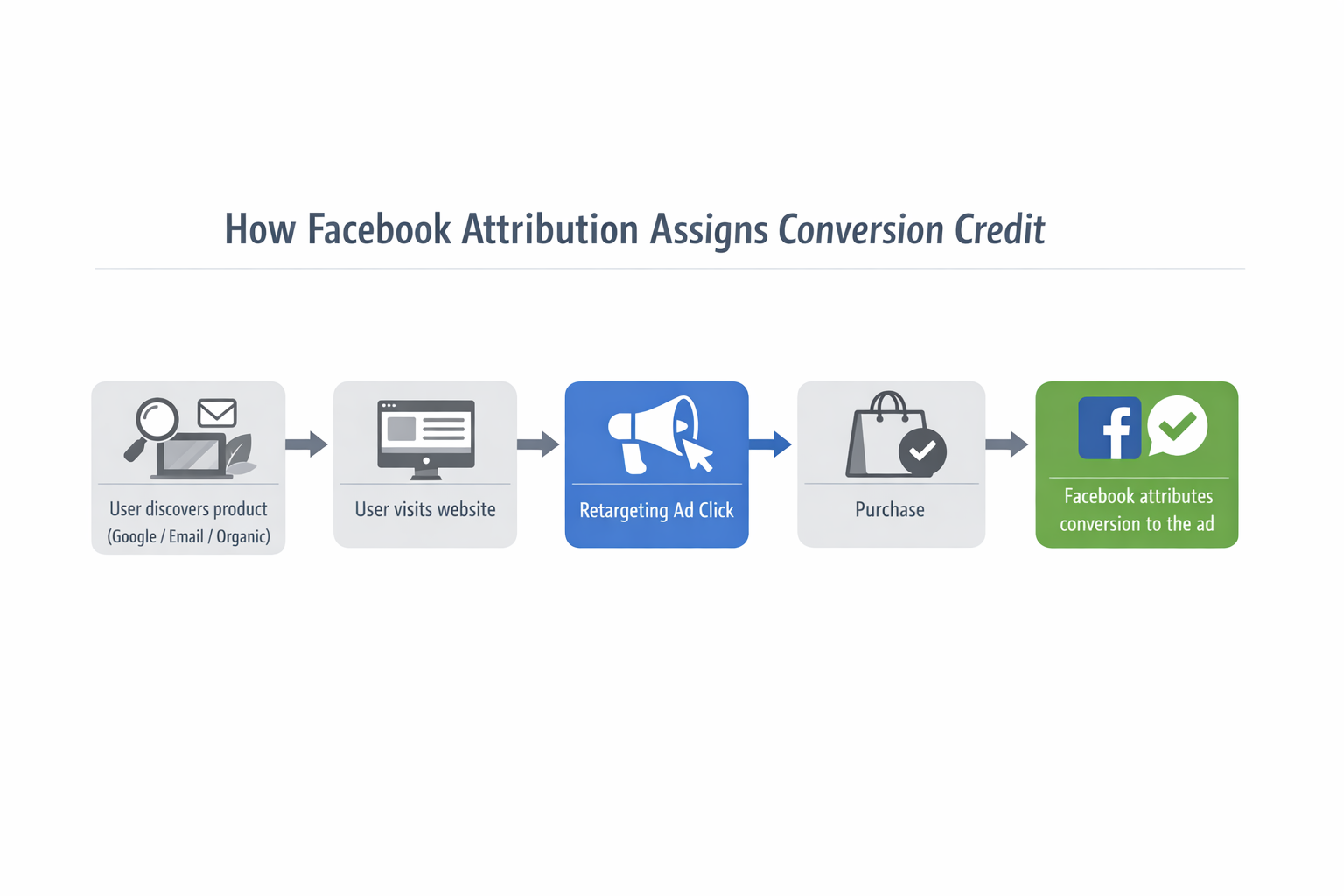
Last-touch credit assignment: if multiple ads appear during the buying journey, the interaction closest to the purchase usually receives the credit.
Because of this model, Ads Manager often captures purchases that would have happened anyway.
For example, a user may already plan to buy after discovering the product through Google search, email marketing, or organic content. If that user clicks a retargeting ad shortly before checkout, Facebook records the sale as an ad-driven conversion.
Inside the platform, the campaign looks efficient. In reality, the ad may have simply intercepted a buyer already moving toward purchase.
Retargeting Campaigns Often Capture Buyers Near Checkout
Retargeting audiences usually contain people who have already demonstrated strong purchase intent.
These users often include:
-
Product page visitors: shoppers who spent time comparing product features, pricing, or shipping options.
-
Cart abandoners: users who started checkout but left before completing the order.
-
Returning brand researchers: people who revisit the site after discovering the brand through another channel.
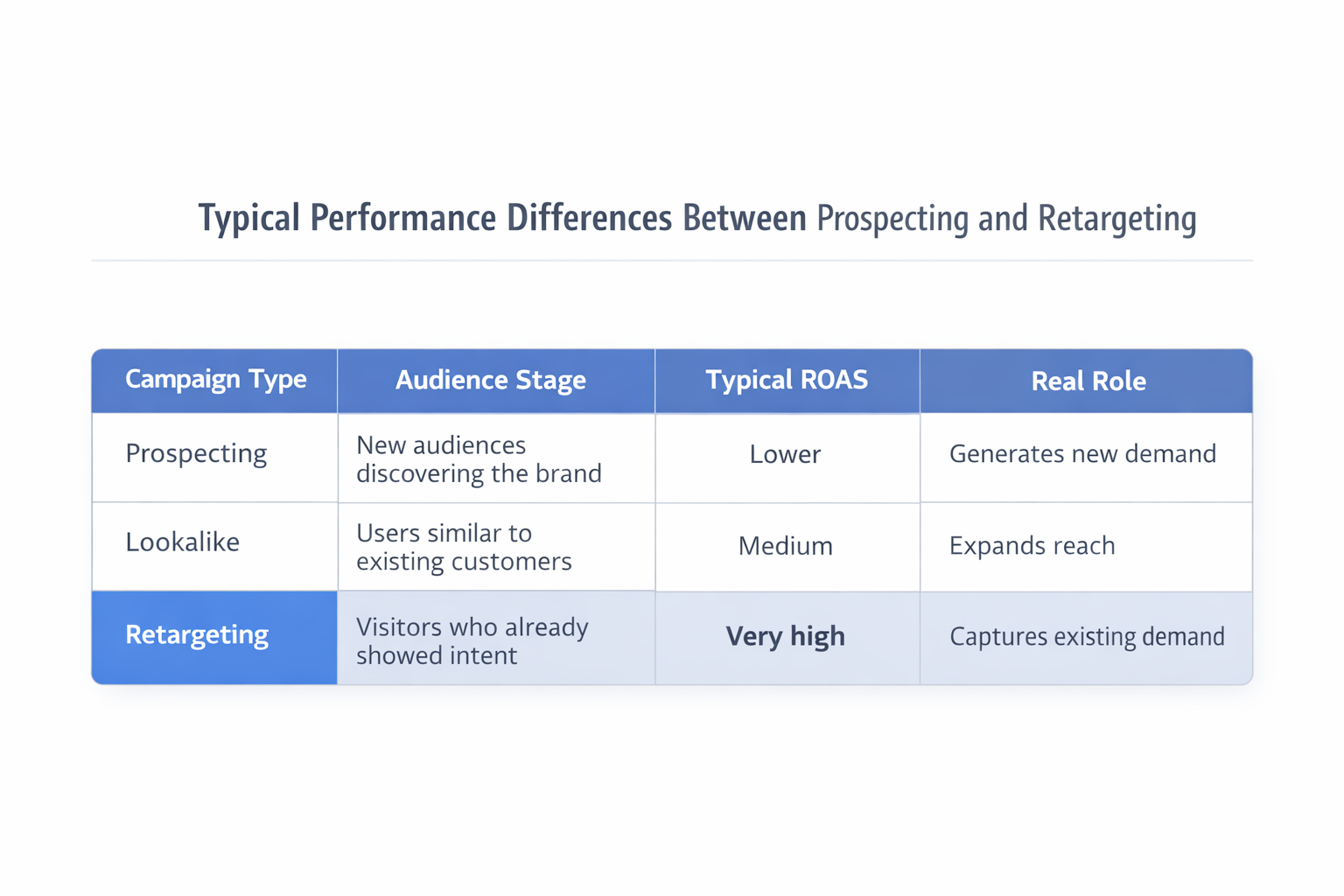
When retargeting ads reach these users, many eventually click and purchase. Facebook attributes the conversion to the ad interaction, even though the buying decision may have formed earlier.
This is why retargeting campaigns often show extremely strong ROAS compared with prospecting campaigns.
For a deeper explanation of how these segments work, see How to Create High-Converting Facebook Custom Audiences.
Ads Manager Optimizes for Conversions, Not Profit
Facebook’s delivery system optimizes for the event you select, such as purchases or leads. It does not evaluate whether that conversion produces healthy profit margins.
Several scenarios commonly create misleading performance signals.
-
Discount-driven purchases: large promotions increase conversion rates, which the algorithm interprets as strong performance. However, each order generates significantly less margin.
-
Low-value product conversions: Facebook may prioritize users who frequently purchase cheaper items because those conversions occur more often, lowering average order value.
-
High return products: Ads Manager records the purchase immediately, while refunds or returns appear weeks later in financial reports.
A campaign showing strong ROAS in Ads Manager can still produce weak profitability once operational costs are included.
Campaign Overlap Can Shift Conversion Credit
Many advertisers run several campaigns targeting similar users.
Typical account structures include:
-
Broad prospecting campaigns designed to introduce the brand to new audiences.
-
Lookalike campaigns built from customer data.
-
Retargeting campaigns targeting website visitors.
When the same user interacts with multiple ads before purchasing, attribution usually assigns the conversion to the last interaction.
A typical path might look like this:
-
A prospecting ad introduces the product.
-
The user visits the website but does not purchase.
-
Retargeting ads appear during the next few days.
-
The user clicks a retargeting ad and completes checkout.
Ads Manager credits the retargeting campaign because it delivered the final click.
The prospecting campaign generated the initial demand, but the retargeting campaign receives the conversion credit.
For a deeper comparison of these strategies, see Custom vs Lookalike Audiences: What Works Best for Facebook Campaigns?
High Frequency Can Create Artificial Efficiency
When retargeting audiences are small, frequency rises quickly. The same users see the ads repeatedly.
Eventually some of them return and purchase, and Facebook attributes the conversion to the most recent ad interaction.
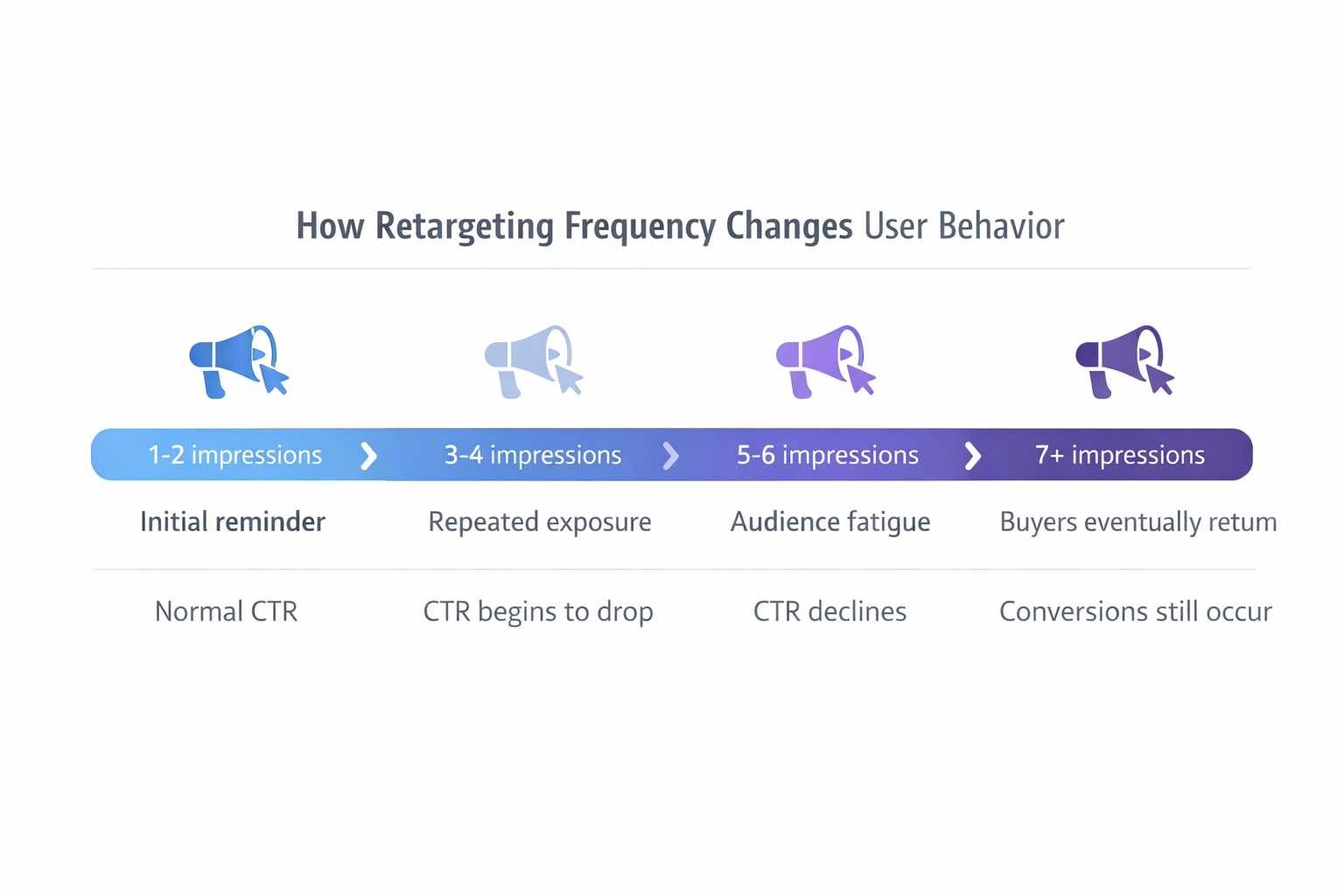
This pattern often produces several recognizable signals:
-
Frequency rises above 4–6: the same audience repeatedly sees the ads.
-
Click-through rate declines: engagement drops because the audience has already seen the ad multiple times.
-
ROAS remains high: conversions continue because the audience already contains high-intent buyers.
In these cases, the campaign may not be generating new demand. It simply continues reaching the same group until they complete their purchase.
The Algorithm Prioritizes Users Most Likely to Convert
Facebook’s algorithm constantly predicts which users are most likely to complete the selected event and prioritizes showing ads to those individuals.
These users often include:
-
People who recently visited the advertiser’s website.
-
Users researching products similar to yours.
-
Shoppers with a history of frequent online purchases.
From the platform’s perspective, this behavior improves campaign performance metrics because high-intent users convert more frequently.
However, it also means the system may concentrate delivery on people who were already close to purchasing.
Audience quality plays a major role in this process. The article The Ultimate Guide to Facebook Lookalike Audiences explains how Meta uses seed audiences to predict future buyers.
How to Detect When Ads Only Appear Profitable
Several diagnostic checks can reveal whether campaigns are creating real growth or simply capturing conversions that were already on the way.
Compare ad-attributed revenue with total revenue
-
Increase or decrease ad spend for a short period.
-
Observe how overall store revenue changes.
-
If Ads Manager conversions fluctuate but total revenue remains similar, attribution may be capturing existing demand.
Separate prospecting and retargeting results
-
Prospecting campaigns should introduce new users to the brand.
-
Retargeting campaigns should convert previously engaged visitors.
-
If most attributed revenue comes from retargeting, the account may be over-crediting bottom-of-funnel interactions.
Analyze conversion timing
-
Review time-to-conversion reports in Ads Manager.
-
Long delays between first interaction and purchase often indicate that multiple touchpoints influenced the decision.
For more context on how different audience types affect campaign structure, see The Complete Guide to Warm, Cold, and Custom Audiences in Meta Ads.
A More Reliable Way to Evaluate Facebook Ads
Ads Manager answers a narrow question: which ad interaction occurred before the purchase.
Businesses need to answer a broader one: did advertising generate profitable new customers?
Campaign metrics remain valuable for diagnosing delivery behavior and audience response. However, they should always be evaluated alongside broader indicators such as total revenue growth, new customer acquisition, and profit margins.
When those numbers move together, advertising is creating real business impact.
When they diverge, the platform may simply be capturing conversions that were already on the way.