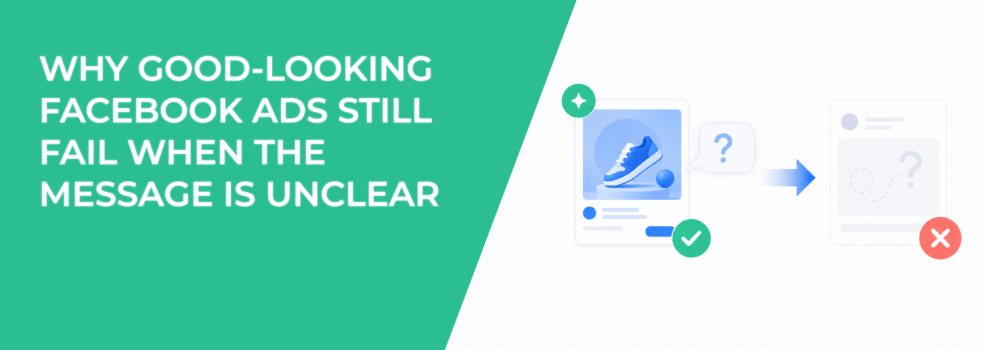
Some Facebook ads look expensive but still perform poorly. The animation is smooth. The layout feels modern. The visual quality looks far better than most competitors in the feed.
But users still scroll away or click without converting. Usually, the problem is not production quality. The problem is message clarity.
The ad looks polished, but the user cannot quickly understand:
- What the product does.
- Who it is for.
- Why it matters.
- Why they should care right now.
That confusion weakens conversion intent almost immediately.
Why Attention Alone Does Not Create Conversions
Many advertisers mistake visual attention for communication success.
A creative can interrupt scrolling without building understanding. This happens often in SaaS, finance, and B2B campaigns where teams prioritize aesthetics over specificity.
For example, a cybersecurity platform might run sleek futuristic visuals with vague copy like “Reinvent Your Digital Infrastructure.”
The ad sounds sophisticated but explains almost nothing operationally. A stronger version would say: “Detect unauthorized access attempts before they become security incidents.”
The second message immediately explains the outcome.
Why Ambiguous Ads Produce Low-Intent Clicks
Unclear messaging attracts broad curiosity instead of qualified interest. Users click because the ad feels visually interesting, not because they understand the value proposition.
Inside Ads Manager, this often creates:
- Strong thumb-stop behavior.
- Average or decent CTR.
- Poor conversion rates.
- Rising CPA after delivery expansion.
The campaign starts feeding Meta weak downstream signals because post-click engagement deteriorates.
You can usually verify this inside analytics platforms:
- Low time on page.
- Weak scroll depth.
- High landing page exits.
- Low return visitor rate.
The user clicked before fully understanding the offer.
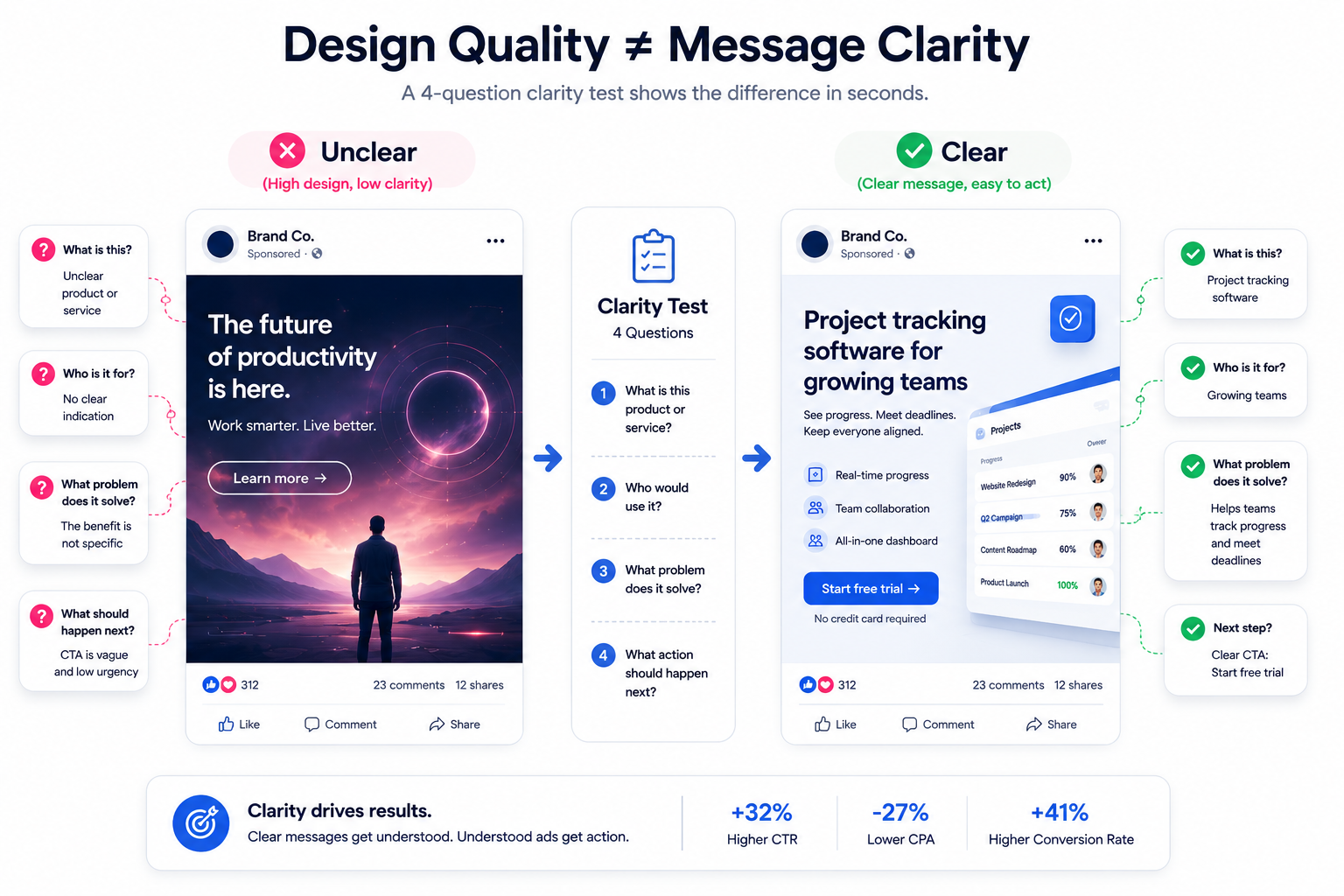
The Fastest Clarity Test for Facebook Ads
A useful test is removing the brand name entirely and asking someone unfamiliar with the business four questions:
- What is this product or service?
- Who would use it?
- What problem does it solve?
- What action should happen next?
If the answers are unclear within seconds, the ad is probably relying too heavily on design quality instead of communication clarity.
This issue becomes especially common with:
- Abstract visuals.
- Cinematic lifestyle ads.
- Generic productivity messaging.
- “Future of X” positioning language.
The creative creates atmosphere but not direction.
Why Overdesigned Ads Often Lose Performance
Many teams keep adding design layers because they want the ad to feel premium.
Over time, the message becomes buried under:
- Extra animations.
- Too many feature mentions.
- Multiple emotional angles.
- Excessive visual effects.
The ad starts competing against itself.
This is why simple creatives often outperform highly polished productions on Facebook. Users process simple structures faster during fast scrolling behavior.
A direct static image with “Reduce onboarding time from 5 days to 1” often outperforms a highly edited brand video with vague positioning.
How to Improve Clarity Without Making Ads Boring
Improving clarity does not mean removing creativity. It means making the core message obvious immediately.
A better creative structure usually includes:
- One dominant outcome.
- One clear audience context.
- One problem direction.
- One obvious next step.
For example, “Transform Your Workflow” is too vague for most cold audiences.
A stronger version would be: “Automate invoice approvals without adding more admin staff.”
The second version gives the user immediate operational context. It also makes the value easier to evaluate before the click.
For more context, review how to earn attention in 3 seconds or less, why weak value propositions kill paid social performance, and why Facebook ads look great but still don’t sell.
Final Takeaway
Good-looking Facebook ads fail when users cannot quickly understand the value behind the design.
Visual quality helps attract attention, but clarity determines whether users continue deeper into the funnel.
The best-performing ads usually communicate one specific outcome with minimal interpretation required. Once the message becomes immediately understandable, campaign efficiency improves far more consistently than adding more visual polish.