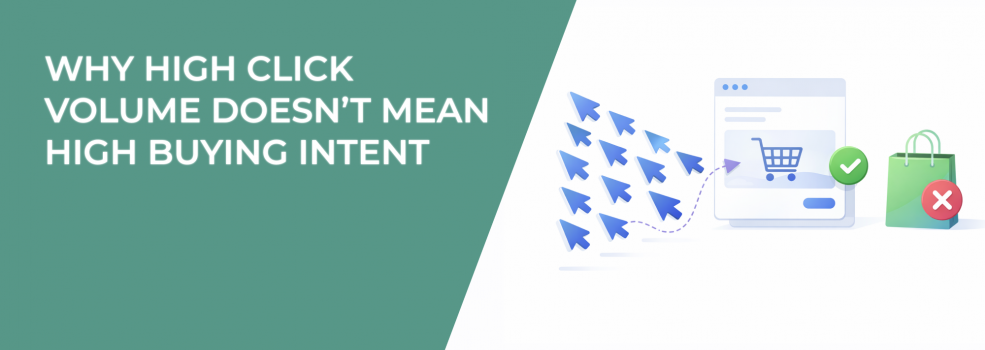
High click volume in Meta Ads often creates the impression that a campaign is working. CTR looks strong, traffic increases, and the ad appears to attract attention. Yet purchases remain low.
This happens because a click only signals interaction with the ad. It does not necessarily mean the user intends to buy.
Many campaigns generate engagement that looks promising in Ads Manager but fails to produce revenue. Understanding this gap requires looking at how Meta interprets engagement signals and how different user behaviors translate into actual purchase probability.
Clicks Signal Attention, Not Purchase Intent
A click tells Meta that a user interacted with the ad. It does not confirm that the person intends to purchase.
When an ad receives a high volume of clicks but few conversions, Meta’s delivery system may start prioritizing users who frequently click ads in general. These users often engage with content quickly but rarely complete transactions.
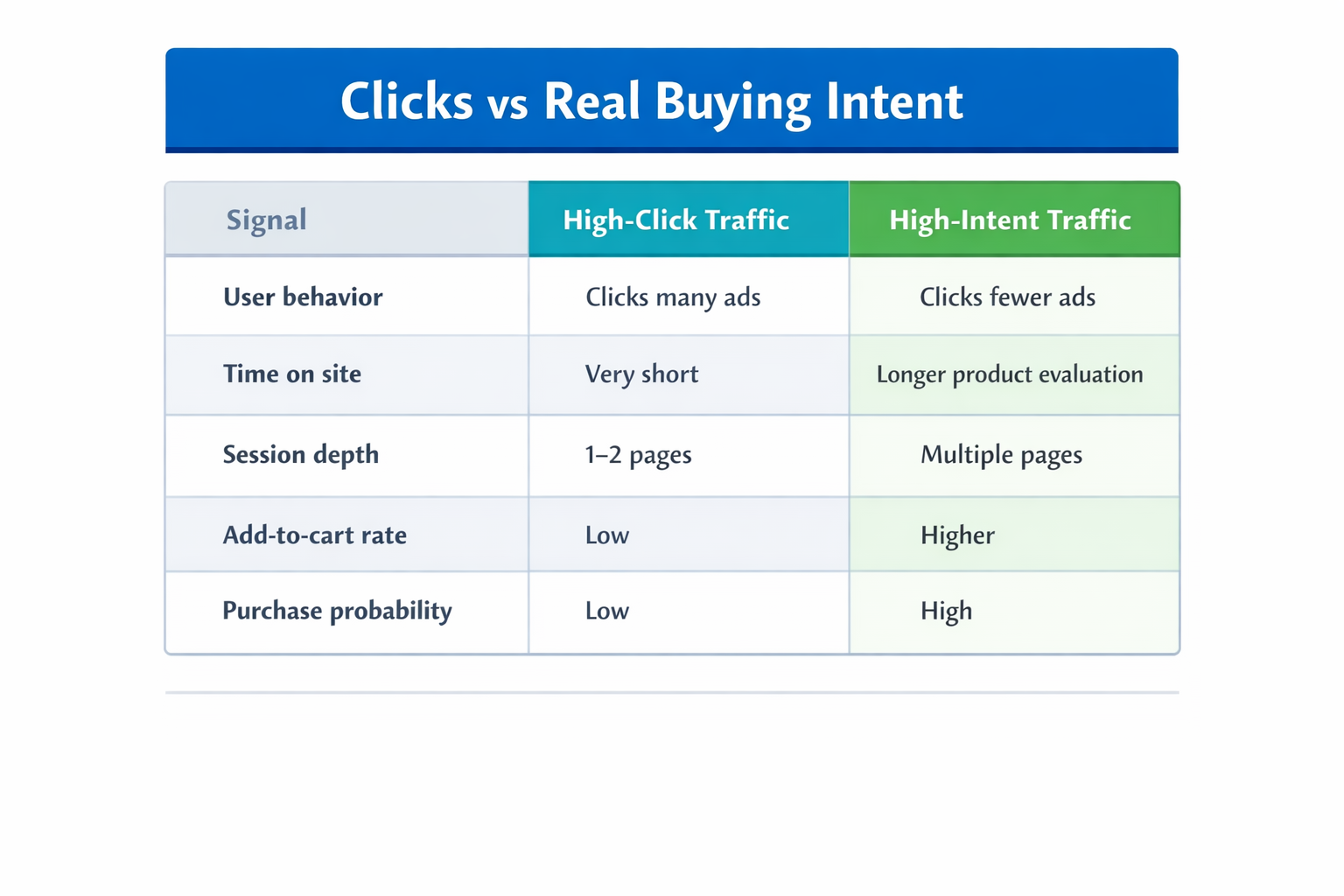
Typical patterns include:
-
Curiosity-driven clicks: Users click to see product details, compare prices, or understand the offer, but rarely continue toward checkout.
-
Habitual ad clickers: Some people click ads across many advertisers. Their activity improves CTR but rarely produces revenue.
-
Passive browsing behavior: Many clicks occur during casual mobile scrolling sessions when the user is not actively shopping.
In Ads Manager, this pattern usually appears as high CTR combined with weak conversion rate and short session duration.
This is why engagement metrics alone can be misleading. The difference between attention and real purchase behavior is explained further in Why Click-Through Rate Can Be Misleading.
Click-Optimized Campaigns Attract a Different User Profile
Campaign objective strongly influences the type of users Meta delivers.
When campaigns optimize for link clicks or landing page views, the algorithm searches for users who historically perform those actions. These users are typically highly responsive to ads but not necessarily ready to buy.
They tend to:
-
click ads frequently;
-
browse multiple advertiser pages;
-
convert at lower rates.
When campaigns optimize for purchase events, Meta instead prioritizes users whose past behavior includes completing transactions after clicking ads.
The difference in optimization logic explains why campaigns with strong engagement metrics sometimes generate weak revenue performance.
Understanding how objectives influence delivery is essential when structuring campaigns. A deeper breakdown can be found in Meta Ad Campaign Objectives Explained: How to Choose the Right One.
Creative Can Generate Curiosity Instead of Purchase Interest
Some ads are extremely effective at generating clicks but attract the wrong audience.
This usually happens when the creative focuses on novelty, surprise, or curiosity rather than clearly communicating the product and offer.
Examples include:
-
Ambiguous product visuals: Users click because they want to understand what the product is.
-
Problem-focused hooks without clear product context: The ad highlights a problem but does not clearly present the solution.
-
Curiosity-driven messaging: Key details about the product are intentionally hidden to encourage clicks.
These ads often produce a recognizable diagnostic pattern:
-
CTR appears strong;
-
CPM remains stable;
-
add-to-cart rate stays low;
-
purchases remain minimal.
In this situation, the creative succeeds at attracting attention but fails to attract buyers.
This mismatch is often connected to audience selection as well. Articles such as How to Identify High-Intent Audiences Using Facebook Insights explain how to separate casual browsers from real buyers.
Broad Targeting Can Amplify Curiosity Clicks
Broad targeting can help campaigns scale, but it also increases the probability of attracting users who are only casually interested in the topic.
When a large audience pool contains both buyers and casual browsers, Meta may initially deliver ads to the people who respond most quickly — often those who click frequently.
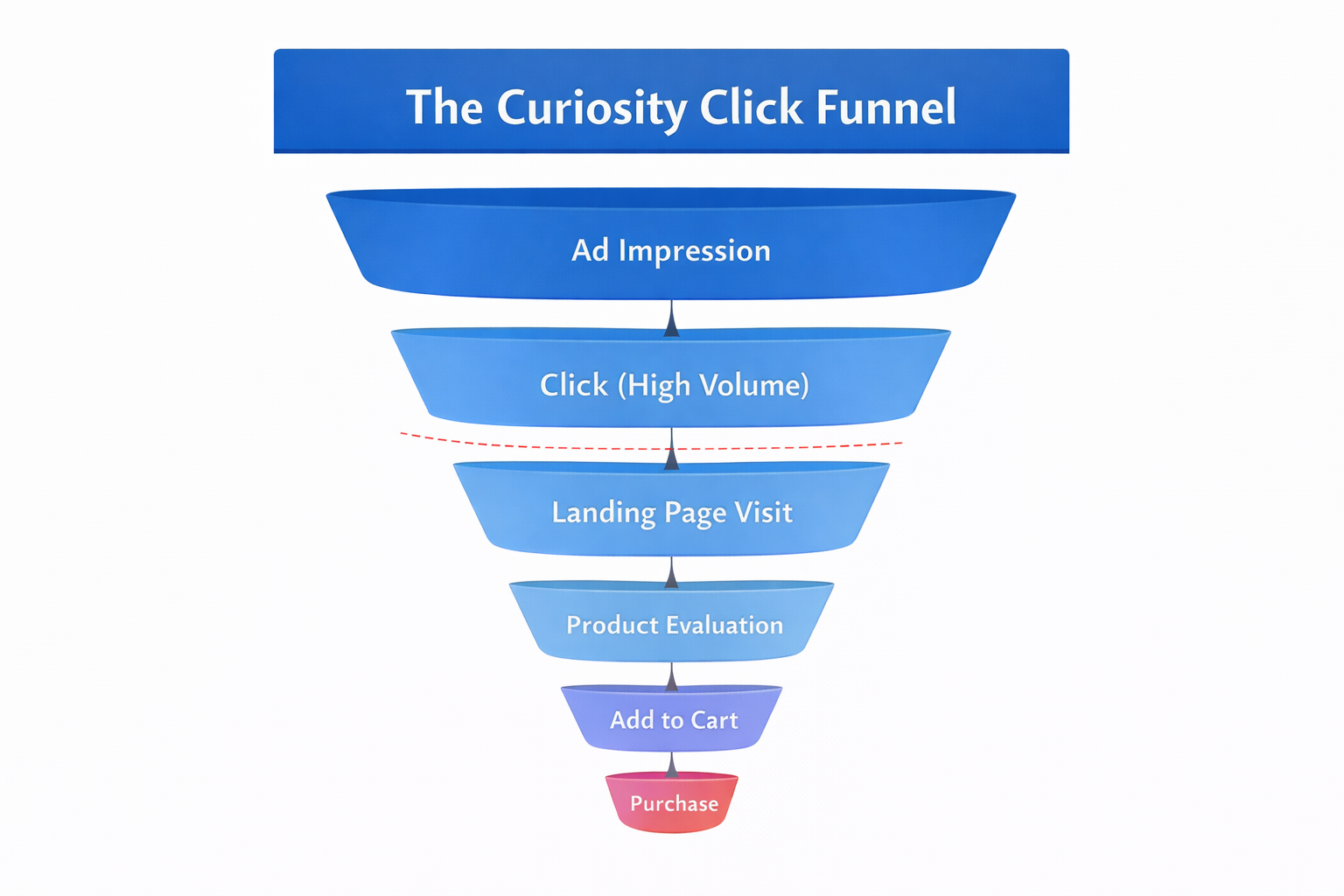
As a result, the campaign generates engagement but fails to move users deeper into the purchase funnel.
This problem becomes especially visible when:
-
CTR remains high;
-
add-to-cart rate is low;
-
purchases remain inconsistent.
At this stage, the issue is rarely the ad’s ability to attract attention. Instead, the campaign is reaching users with low purchase intent.
Post-Click Friction Can Also Inflate Click Volume
Sometimes the audience does have buying intent, but friction in the funnel prevents conversions from happening.
Clicks accumulate while users drop off after landing on the page.
Common issues include:
-
Landing page mismatch: The landing page does not clearly reflect the message or promise made in the ad.
-
Slow page load speed: Mobile visitors frequently abandon pages that take several seconds to load.
-
Unclear pricing or offer structure: Users cannot immediately understand the product value or cost.
-
Complex checkout flow: Extra steps in checkout increase abandonment.
When these problems exist, high click volume is not the root issue. The problem appears after the click, when visitors fail to progress through the funnel.
This kind of performance gap is explored further in Click-to-Landing Page Drop-Off: How Much Is Too Much in Facebook Ads?
How to Diagnose Click–Intent Mismatch
Several signals inside Ads Manager reveal when clicks do not represent genuine purchase intent.
A few metrics are particularly useful during campaign analysis:
-
CTR vs purchase conversion rate: Strong CTR combined with weak purchases usually indicates low-intent traffic.
-
Landing page views vs add-to-cart rate: Large gaps between these metrics suggest the offer does not match expectations created by the ad.
-
Session duration: Very short sessions often signal curiosity clicks rather than product evaluation.
When multiple signals appear at the same time, the campaign likely attracts attention without generating real buying intent.
The Key Takeaway
High click volume only indicates that an ad captures attention.
It does not confirm that the audience intends to buy.
When campaigns generate large amounts of traffic but few purchases, the underlying issue usually involves one of three factors: engagement-focused optimization, curiosity-driven creative, or friction after the click.
Effective performance analysis requires separating attention metrics from purchase-intent signals. Once these signals align, click volume becomes a much more reliable indicator of real campaign performance.