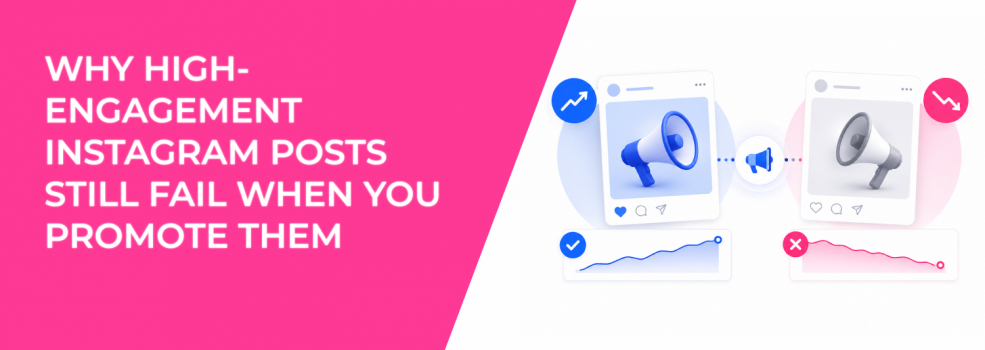
A post with thousands of likes can still become a bad ad.
This happens constantly on Instagram because engagement and buying intent are not the same thing. A post may attract attention because it is funny, visually satisfying, emotional, or trend-driven. Once budget enters the system, Meta starts optimizing around those reactions instead of commercial behavior.
That creates a frustrating campaign pattern. The promoted post looks strong at first, but CTR weakens, conversions stay flat, and CPA rises during scaling.
The problem is usually not reach. The problem is that the engagement signals were misleading from the beginning.
Why likes and comments often fail to predict conversions
Instagram engagement metrics do not all mean the same thing.
A save usually signals deeper interest than a like. A profile visit may matter more than a comment. A DM asking about pricing usually has more value than a viral reaction thread.
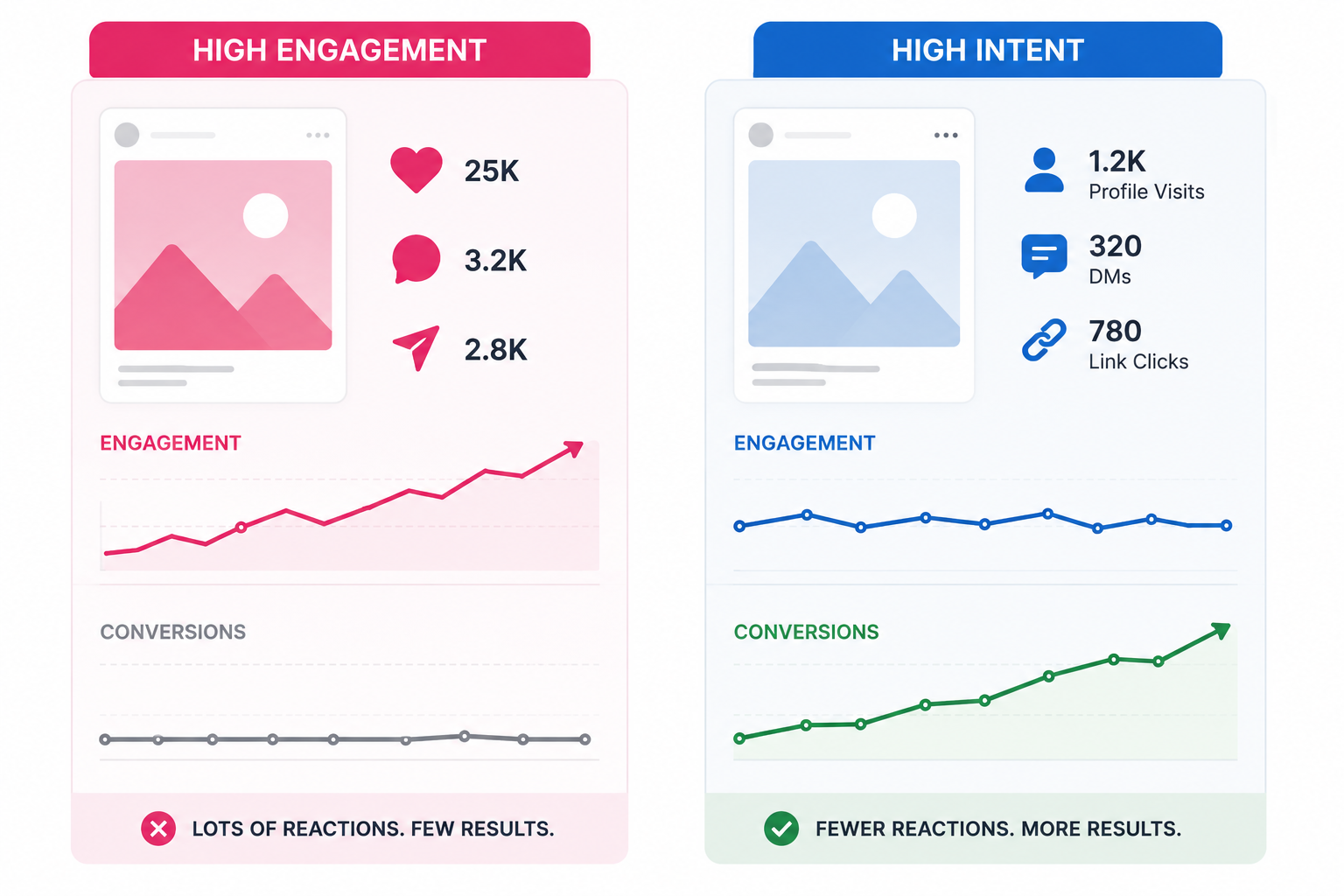
Advertisers often boost posts because the visible numbers look impressive, but the engagement itself may have weak buying intent behind it.
A motivational Reel may generate huge reach because users share it emotionally. A meme-based post may collect comments because it feels relatable. Neither automatically creates qualified traffic.
This is where many campaigns start producing vanity metrics instead of business outcomes.
How to separate attention signals from buying signals
Before promoting an Instagram post, advertisers should check whether the engagement behavior actually connects to commercial intent.
Strong promoted posts usually produce signals such as:
- Profile visits from qualified users.
- Product page clicks.
- Saves tied to purchase consideration.
- DMs asking about availability or pricing.
- Repeat engagement from niche audiences.
Weak promoted posts usually rely on broad emotional reactions instead:
- Humor engagement.
- Controversial comment threads.
- Trend participation.
- Generic inspirational reactions.
A B2B SaaS company may publish an industry meme that gets thousands of impressions and shares. That does not mean the post can generate demo requests once promoted to cold audiences.
This is why advertisers should use Instagram Insights to improve ads instead of only checking visible engagement totals.
How unclear offers turn high-engagement posts into weak ads
Organic posts can survive without a strong commercial structure because followers already understand the account.
Paid ads cannot.
Once a post enters cold delivery, the creative needs enough clarity for users to understand both the value and the next step. If the offer remains vague, the campaign often generates curiosity without conversions.
This usually appears in Ads Manager through patterns like:
- Acceptable CPC but weak conversion rate.
- Strong engagement but low lead quality.
- High CTR with low landing page completion.
- Expensive retargeting despite strong top-of-funnel metrics.
The campaign may technically attract clicks, but the users arriving after the click were never qualified to begin with.
That is one reason good numbers hide bad performance so often inside Instagram campaigns.
How to identify Instagram posts with real paid potential
The best promoted posts usually connect attention directly to intent.
A post with real paid potential typically does three things well:
- It attracts the correct audience.
The engagement comes from likely buyers, not broad entertainment traffic. - It explains the problem or offer clearly.
Cold users can understand the value without previous account familiarity. - It creates action-oriented behavior.
Users save, click, visit the profile, or ask commercial questions.
This is especially important for service businesses and B2B advertisers because broad engagement often produces low-quality leads. A high-engagement founder story may perform well organically while generating almost no qualified demo requests after promotion.
Why CTR alone can hide weak audience intent
Some promoted posts get strong CTR because the hook creates curiosity rather than purchase intent.
This can make campaigns look healthier than they really are.
A dramatic claim, vague promise, or trend-based hook may attract clicks cheaply, but those clicks often fail after the landing page because users were not looking for the actual offer.
That disconnect creates expensive optimization problems. Meta continues finding users likely to click while conversion quality stays weak.
This is why advertisers should understand why click-through rate can be misleading before scaling promoted Instagram posts aggressively.
How LeadEnforce helps advertisers promote higher-intent content
High-engagement posts often fail because the engagement came from people who were unlikely to buy in the first place.
LeadEnforce helps advertisers test this more accurately inside Ads Manager. It builds audiences from followers of Instagram accounts and members of Facebook groups related to the niche, product, or buyer problem. To set this up correctly, start with how to select Facebook and Instagram sources for targeting with LeadEnforce.
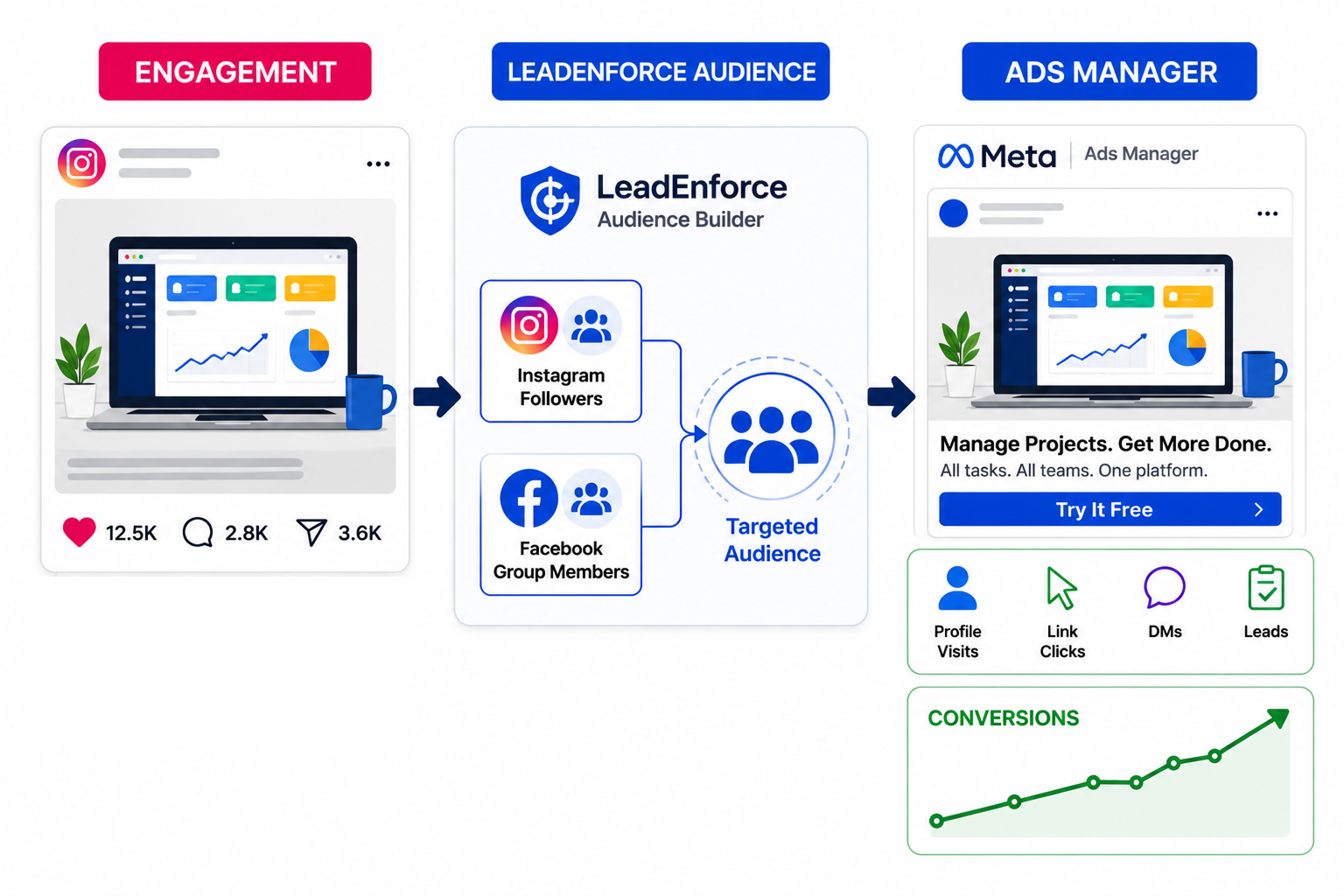
A practical workflow looks like this:
- Build a LeadEnforce audience from competitor Instagram followers or niche Facebook groups.
- Run the post as a regular ad inside Ads Manager instead of boosting it.
- Watch for higher-intent signals like profile visits, clicks, DMs, leads, or purchases.
- Scale only if the post performs with this more relevant audience.
This helps advertisers identify whether the post has real conversion potential or only broad engagement appeal.
Final takeaway
High engagement does not automatically mean high conversion potential.
Instagram posts often succeed organically because followers already understand the account context. Once Meta expands delivery to cold users, weak intent signals become easier to expose.
The best promoted posts do more than attract reactions. They attract the right users, communicate the offer clearly, and create measurable buying behavior after the click.