Facebook Ads has become a standard tool for small businesses. But standard use doesn't mean smart use.
Many advertisers treat Facebook as a plug-and-play platform. They assume following surface-level advice — launch a few campaigns, add some interest targeting, test a few creatives — is enough.
But beneath the simple interface are systems that penalize shallow strategies. And small advertisers often don’t realize how their approach is setting them up to fail.
Here’s what’s often overlooked and what needs to change.
Over-relying on short-term campaign metrics
When fast results hide long-term waste
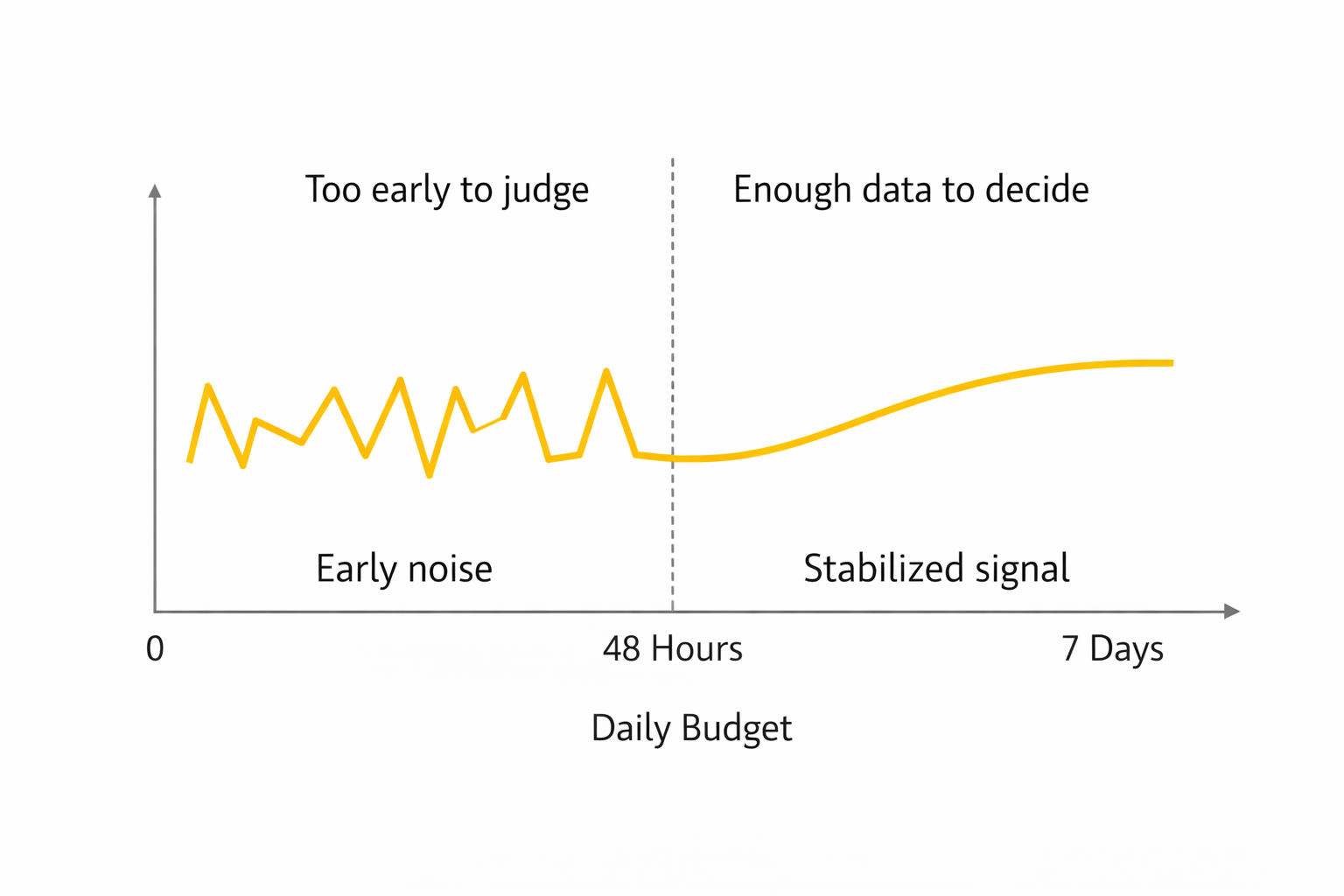
Many small advertisers kill campaigns if they don’t convert in the first 48 hours. The assumption: if it doesn’t work now, it never will.
But this creates false negatives — campaigns that could succeed with minor adjustments or enough data maturity.
Why this happens:
-
Small budgets spread thin across too many ad sets;
-
Short evaluation windows that ignore learning phases;
-
Confusing early noise with final performance.
Instead of chasing quick wins, advertisers should monitor data density: is there enough volume to evaluate results fairly? If not, delay decisions. Pausing early drains learning and inflates costs in future campaigns.
Learn more about how long Facebook Ads should run before judging results.
Treating campaign structure like a checklist
More isn’t better when it comes to strategy
Many advertisers mimic "pro" structures they find online: three cold ad sets, one warm, one retargeting, one lookalike, split creatives. It feels comprehensive.
But if you don’t know why each piece exists, you’re just burning budget.
Common issues:
-
Using retargeting too early, with no real volume;
-
Creating custom audiences without exclusions, causing overlap;
-
Running multiple objectives without understanding their trade-offs.
Effective structures don’t start with templates. They start with one question: what signal do I want to generate or reinforce here?
See how to structure Facebook campaigns for rapid testing and iteration.
Using KPIs without a feedback loop
Most advertisers track data — but don’t use it
Facebook gives plenty of metrics: CTR, CPC, CPM, ROAS. But small advertisers often check these like a scoreboard, not a diagnostic tool.
The real power of metrics is to explain why something’s working — or not.
For example:
-
A low CTR on a high-converting ad might signal mismatched creative expectations;
-
A high ROAS with a shrinking frequency window could mean creative fatigue;
-
Steady CPM with dropping CTR could suggest ad blindness, not competition.
Numbers are only useful if they guide action. Otherwise, they’re decoration.
If you're unsure what to prioritize, read what Facebook metrics actually matter for optimization.
Believing “what worked before” still works now
Facebook ad dynamics change faster than most realize
Many small brands fall into the trap of repeating what once worked: the same hook, the same creative format, the same copy template.
But Facebook’s ecosystem evolves constantly. A creative that scaled last year may underperform today — even with the same audience and offer.
Why?
-
Audience overlap gets saturated;
-
Repetition reduces novelty (especially in small markets);
-
Platform shifts affect delivery (e.g., iOS updates, privacy rules).
Rather than repeating winners, think in terms of principles: What about that ad worked? Was it the angle, the imagery, the timing? Test the principle — not the asset.
Running creative tests without creative diversity
Variations aren’t meaningful if they don’t challenge assumptions
Many advertisers claim they’re testing creatives. In reality, they’re changing background colors or swapping in synonyms.
Cosmetic edits won’t change performance.
What meaningful testing looks like:
-
Shifting tone: conversational vs. direct;
-
Changing format: motion-first vs. static image;
-
Reframing the pitch: feature-led vs. outcome-led.
The goal of creative testing isn’t optimization — it’s discovery. You want to learn what type of messaging resonates, not just polish what’s already there.
Learn how to avoid common creative testing mistakes that waste budget.
Ignoring operational bottlenecks behind bad results
Not all problems are marketing problems
Some campaigns fail because of factors outside the ads: slow landing pages, confusing pricing, poor product-market fit.
But small advertisers often blame the platform.
Signs the problem isn’t your ad:
-
Bounce rate is high but CPC is low;
-
Add-to-carts spike, but checkouts stall;
-
CTR is solid, but leads don’t convert.
In these cases, better ads won’t fix the problem. You need faster load times, clearer offers, or simpler funnels — not more testing.
Misjudging scale-readiness
A campaign that works at $30/day might collapse at $300
A common mistake is assuming that success at low spend means you’re ready to scale.
But small budgets benefit from noise: lucky clicks, lenient delivery, and short timeframes. As you scale, you hit audience limits and higher competition.
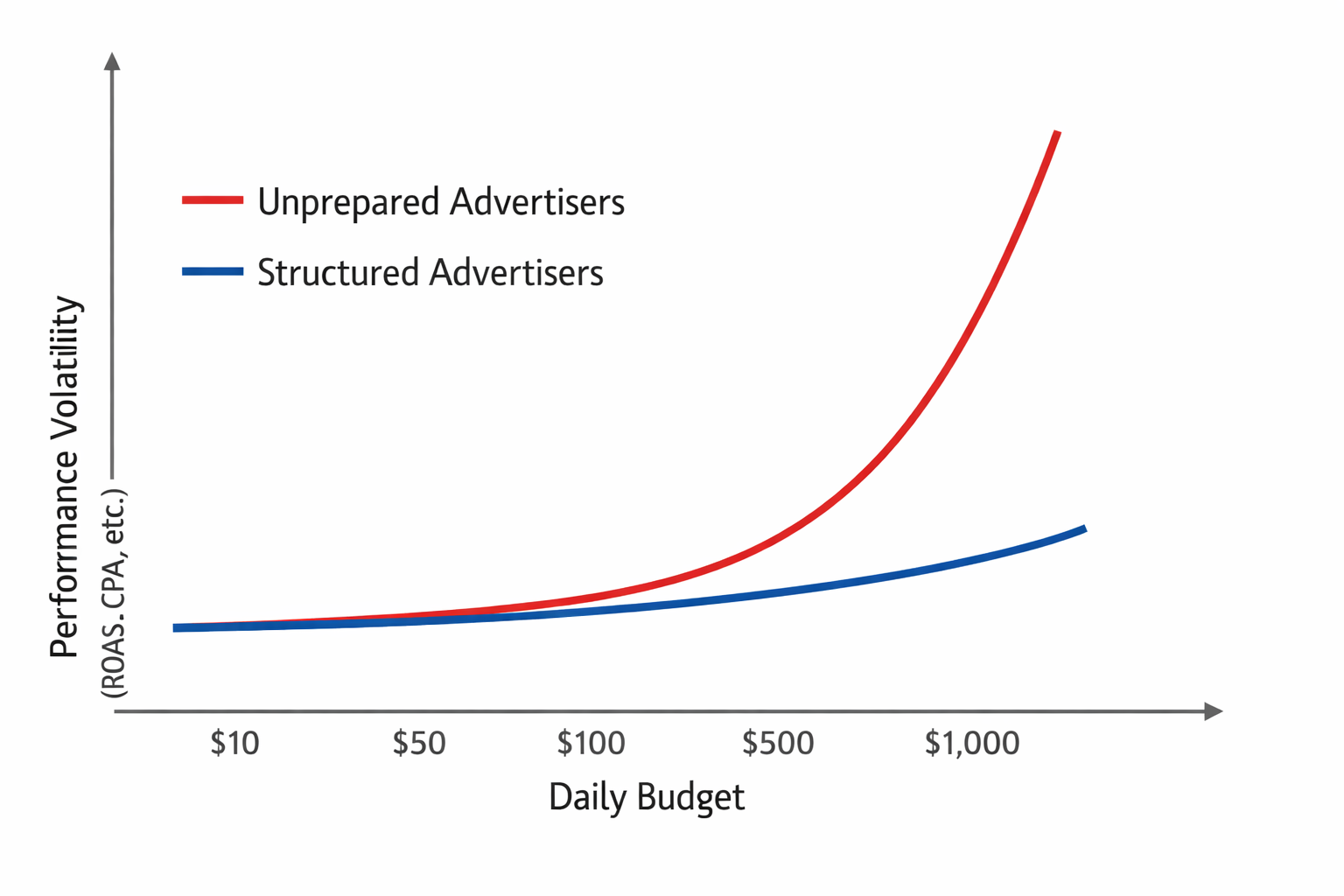
At higher spend, issues emerge:
-
Frequency spikes faster;
-
Weak creative gets exposed;
-
Audiences exhaust within days, not weeks.
Before scaling, pressure-test your systems. Do you have multiple creatives ready? Have you built conversion capacity? Can your funnel support higher volumes?
Scaling isn’t just turning up the budget — it’s preparing for new constraints.
Conclusion
Running Facebook ads as a small advertiser doesn’t mean thinking small. But it does require clarity, discipline, and a willingness to rethink the basics.
Avoiding superficial fixes, asking better questions, and building for long-term signal quality — these are the marks of small advertisers who punch above their weight.
Don’t just copy what big brands do. Build systems that make sense for your size, speed, and goals. That's how Facebook ads become an asset — not a gamble.