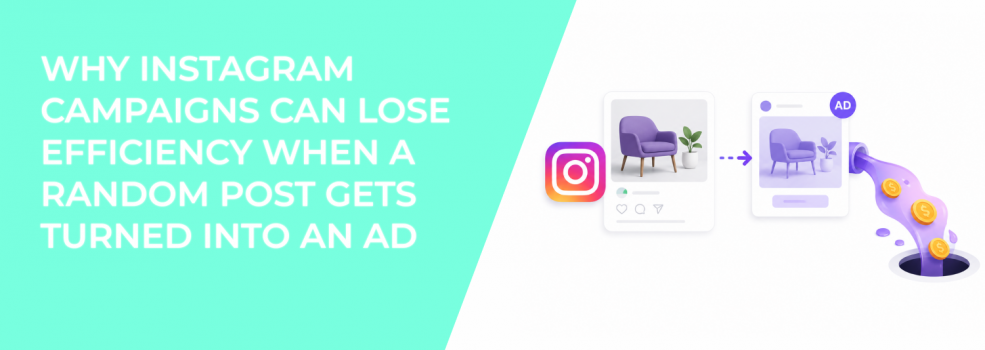
Many Instagram ads fail before optimization even begins.
The problem starts when advertisers turn random organic posts into paid ads without checking whether the content actually supports paid delivery goals.
A post may look successful inside Instagram because it collected fast engagement. That does not mean the content can drive efficient conversions once Meta starts spending budget behind it.
Random boosted posts often damage campaign efficiency because the content was never designed for commercial intent in the first place.
Why Random Organic Content Creates Weak Delivery Signals
Organic Instagram content usually serves different purposes.
Some posts maintain account activity. Others follow trends, react to memes, or increase reach temporarily. Certain Reels exist mainly to improve visibility inside Explore or Reels feeds.
When those posts suddenly become ads, Meta receives inconsistent behavioral signals.
For example:
- users may watch without clicking
- viewers may engage casually without purchase intent
- comments may come from low-quality audiences
- saves may reflect entertainment value instead of buying behavior
Meta uses those engagement patterns during delivery optimization. That often creates campaigns with healthy engagement metrics but weak business outcomes.
This is why experienced advertisers try to validate ad ideas before spending budget instead of promoting content impulsively.
Why Random Instagram Posts Often Increase CPA
A random Instagram post usually lacks structural conversion elements.
The hook may create curiosity without qualifying users. The visual may attract broad audiences instead of relevant buyers. The messaging may never establish product intent clearly.
As delivery expands, Meta continues finding similar low-intent users because the original engagement pool trained the system incorrectly.
Inside Ads Manager, this often appears as:
- low CPC with poor conversion rates
- rising CPA after scaling
- unstable ROAS
- high outbound clicks with weak session quality
The advertiser assumes targeting is failing while the real issue comes from the post itself. This is closely related to why clicks don’t equal demand in Meta campaigns.
Why Paid Delivery Requires Different Content Behavior
Organic content and paid creative do not operate under the same conditions.
Organic Instagram posts rely heavily on existing followers, algorithmic reach, and passive browsing behavior. Paid campaigns compete directly inside Meta’s auction system.
That changes what the creative must accomplish. Strong paid content usually does at least one of these things quickly:
- identifies a buyer problem
- filters the audience intentionally
- demonstrates an outcome
- creates direct commercial relevance
- encourages action-oriented engagement
Random organic posts rarely contain those elements consistently.
That is why advertisers who use learnings from organic posts to guide ad creative usually outperform advertisers who simply boost whichever post gained engagement recently.
How Advertisers Filter Instagram Posts Before Turning Them Into Ads
Experienced media buyers usually screen organic content before allocating spend. They check whether the post generates behaviors connected to business outcomes instead of vanity engagement.
Common validation checks include:
- profile visits after viewing the content
- outbound click behavior
- comments related to pricing or product interest
- retention quality during product demonstrations
- audience overlap with existing customers or qualified visitors
These signals help determine whether the content can support paid delivery efficiently.
Some advertisers also separate “engagement content” from “conversion content” entirely. This prevents weak audience signals from entering scaling campaigns.
How Random Boosting Quietly Wastes Retargeting Budget
Weak boosted posts do more than waste prospecting spend. They also contaminate retargeting pools.
If a boosted Reel attracts users with low commercial intent, those users enter future retargeting audiences. Later campaigns start spending money re-engaging traffic that was never likely to convert.
Over time this creates:
- weaker warm audiences
- inflated retargeting CPM
- declining conversion quality
- lower efficiency during scaling
The problem becomes difficult to diagnose because the campaigns continue generating engagement activity.
Meanwhile, purchase efficiency keeps deteriorating.
Final Takeaway
Instagram campaigns lose efficiency when random organic posts become ads without validation.
Organic engagement alone does not prove that content supports paid acquisition goals. Many posts succeed because they entertain users, not because they attract qualified buyers.
The safest Instagram campaigns usually start with content that already demonstrates clear commercial behavior before budget enters delivery.