
Launching untested ad ideas at scale is one of the fastest ways to burn budget. Even experienced teams misjudge which concepts will resonate with an audience. Validation creates a structured way to separate intuition from evidence, ensuring that only ideas with early proof move forward.
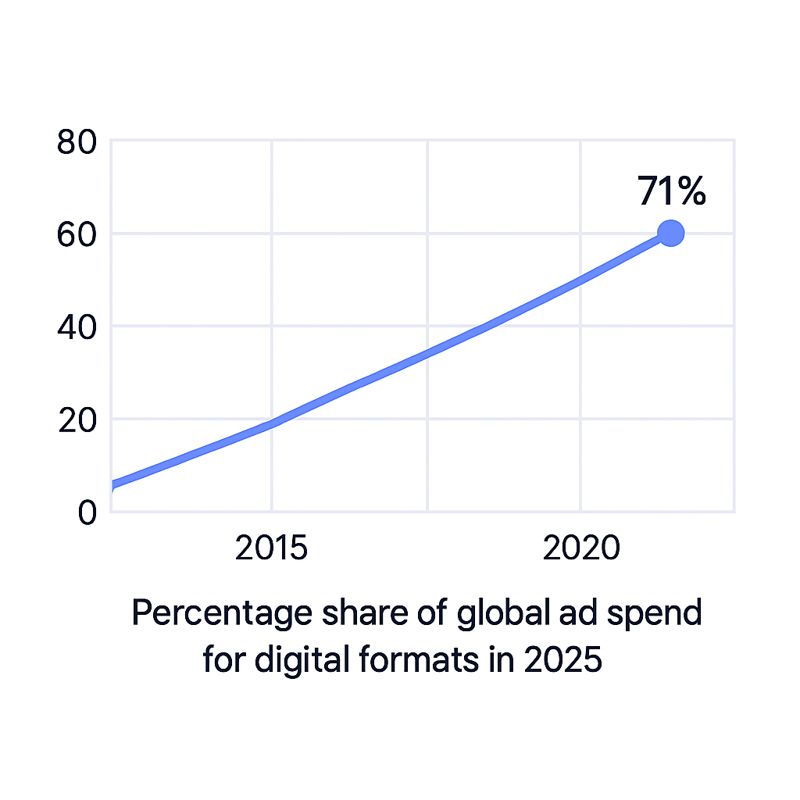
Digital Ad Spend Share — digital ad formats now make up 71% of total global advertising spend in 2025
Industry data consistently shows that a large share of ad concepts underperform once scaled. Early-stage validation helps identify weak messaging, mismatched audiences, or creative fatigue before these issues become expensive.
What “validation” really means
Validation is not about finding a winner immediately. It is about answering a smaller, safer question: Does this idea show signs of traction compared to a baseline?
A validated ad idea typically demonstrates at least one of the following:
-
Higher engagement or click-through rate than existing ads
-
Lower cost per click or cost per lead in limited exposure
-
Clear qualitative signals, such as stronger user comments or saves
The goal is confidence, not perfection.
Step 1: Start with a clear hypothesis
Every ad idea should begin with a testable hypothesis. Instead of saying, “This creative will work,” define why it should work.
Examples include:
-
Highlighting a specific pain point will increase click-through rate by at least 15%
-
Shorter copy will outperform long-form copy for cold audiences
-
Product-in-use visuals will generate more qualified clicks than static images
A clear hypothesis allows you to evaluate results objectively.
Step 2: Use low-cost, high-signal formats
Validation does not require full-funnel campaigns. Use formats that surface signals quickly:
-
Engagement-optimized ads to test messaging resonance
-
Click-focused campaigns with strict spend caps
-
Story or feed placements where users react quickly
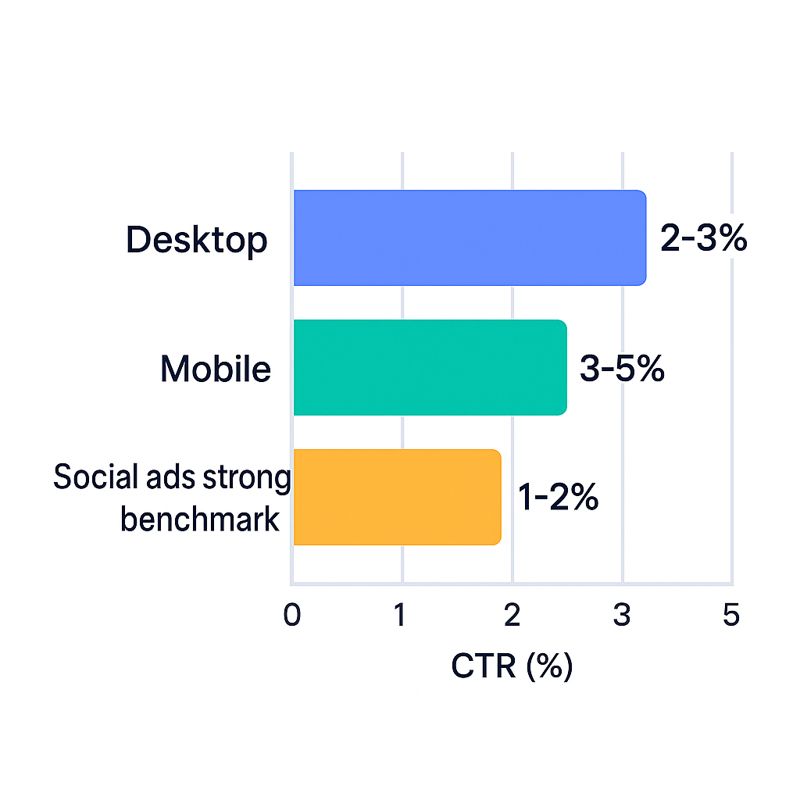
Click-Through Rate Benchmarks Across Platforms — showing typical performance ranges for desktop, mobile, and social placements
According to platform benchmarks, early engagement metrics such as click-through rate and hold time often stabilize faster than conversion metrics, making them reliable validation indicators in short tests.
Step 3: Limit variables to isolate the idea
Testing too many changes at once makes results meaningless. Keep everything constant except the core idea being validated.
For example:
-
Same audience, different hook
-
Same visual, different headline
-
Same copy, different call to action
Studies on experimentation show that tests with fewer variables produce more consistent and repeatable outcomes, while multi-variable tests increase the risk of false positives.
Step 4: Set realistic validation thresholds
Validation thresholds should be directional, not absolute. Instead of chasing perfect numbers, compare performance against a baseline.
Common validation benchmarks include:
-
10–30% lift in click-through rate versus control
-
Lower cost per click at similar reach
-
Consistent performance after initial learning phase
Industry research indicates that many early “winners” disappear after limited spend, so stability over time is often more important than short spikes.
Step 5: Use small budgets with structured scaling
Allocate a fixed, limited budget per idea. This keeps testing disciplined and prevents emotional decisions.
A practical approach:
-
Run each idea with equal spend
-
Pause ideas that fail to meet baseline metrics
-
Gradually increase budget only after performance remains stable
This approach mirrors how professional teams de-risk creative decisions while maintaining speed.
Step 6: Combine quantitative and qualitative signals
Numbers alone rarely tell the full story. Qualitative feedback often reveals why an idea works or fails.
Look for:
-
Repeated objections or questions in comments
-
Language users use to describe the offer
-
Patterns in saves, shares, or profile visits
When qualitative insights align with performance metrics, confidence in the idea increases significantly.
Common validation mistakes to avoid
Even structured validation can fail if these pitfalls are ignored:
-
Ending tests too early before metrics stabilize
-
Declaring winners based on tiny differences
-
Ignoring audience overlap between tests
-
Scaling ideas without retesting in new contexts
Avoiding these mistakes can prevent costly misinterpretations.
Turning validated ideas into scalable ads
Once an idea is validated, treat it as a foundation, not a finished asset. Expand it through:
-
Multiple visual executions
-
Variations in tone and format
-
Adaptation for different audience segments
This preserves the core insight while increasing longevity and reach.
Related articles you may find useful
Final thoughts
Validating ad ideas before spending budget is less about caution and more about control. By testing with clear hypotheses, limited variables, and small budgets, teams can replace guesswork with evidence and scale only what proves its value.