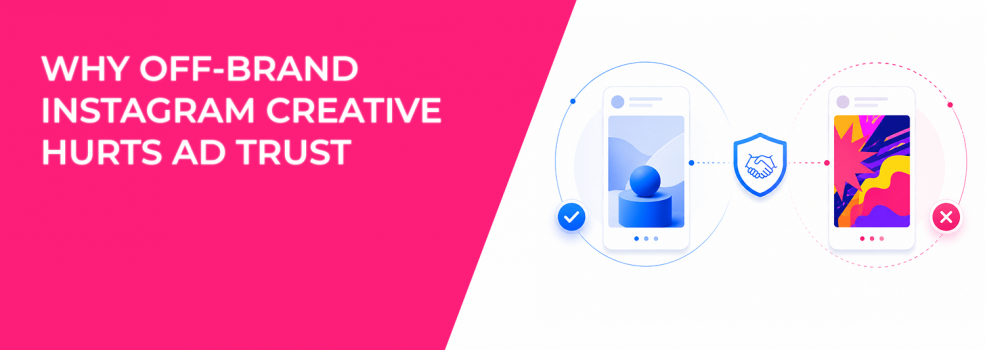
A user can distrust an Instagram ad before reading the copy. The visual impression does a lot of work first.
If the ad looks cheaper, louder, or less credible than the actual brand experience, people feel the mismatch. They may not describe it that way, but the hesitation is real.
This matters because Instagram ads often ask users to move quickly. Click the product. Submit the form. Book the call. Send the DM. If the ad creates doubt, every next step gets harder.
Why visual mismatch can turn cheap clicks into expensive leads
Off-brand creative can sometimes lower CPC. That is what makes it dangerous.
A dramatic hook, meme-style format, or creator-style edit can pull cheap attention. But if the ad does not match the brand, offer, or landing page, the click may carry weak intent.
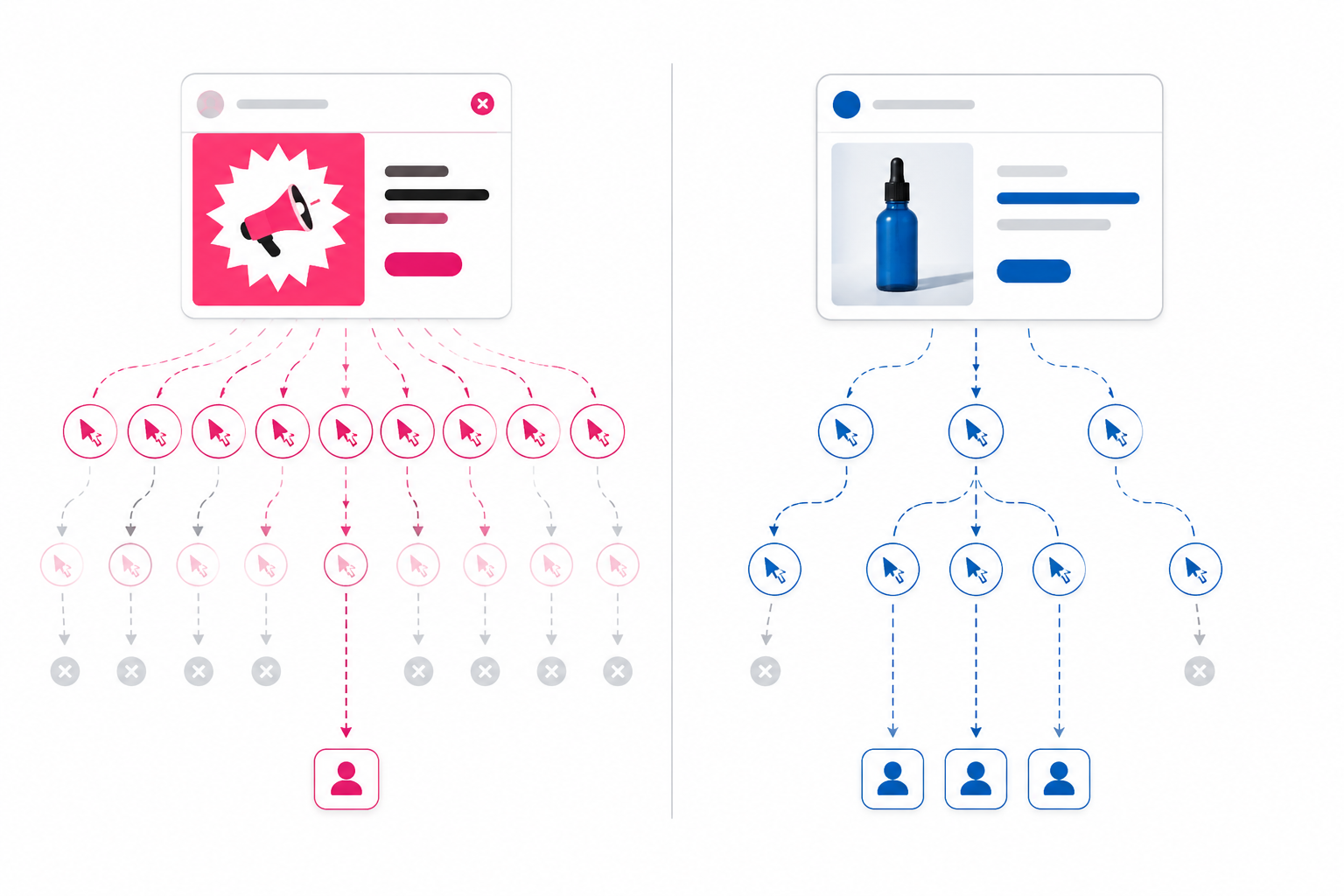
A lead generation campaign may collect more form submissions, but sales later reports poor fit. An e-commerce campaign may get more product page traffic without checkout growth. A SaaS campaign may get trial signups from users who misunderstood the product.
Meta can optimize toward the behavior it sees. If the ad attracts low-intent clicks and weak conversions, the algorithm may start finding more of those users. Cheap traffic then becomes expensive pipeline.
That is why advertisers should think about how advertising messages feel trustworthy, not only whether they attract attention.
Where off-brand creative damages CPA, ROAS, and lead quality
Visual mismatch hurts different businesses in different places. The damage usually appears after the first engagement.
For premium e-commerce brands, bargain-style visuals can create price shock. Users click because the ad feels casual or low-cost, then bounce when the product price does not match that expectation.
For B2B advertisers, overly casual Instagram creative can generate curiosity without business intent. A founder may click a funny Reel but ignore the follow-up because the brand did not establish enough seriousness.
For service businesses, generic stock-style creative can make the offer look interchangeable. That lowers trust because users cannot tell who is actually behind the service.
The common issue is expectation mismatch. The ad promises one level of credibility. The landing page, call, product, or sales process requires another.
Build trust cues into every Instagram ad format
Trust cues are visual and message signals that help users believe the ad belongs to a real, credible brand. They should appear early enough to affect the first decision.
For B2B, trust may come from product screenshots, specific language, customer proof, or clear industry context. For e-commerce, it may come from real product use, reviews, packaging, or consistent styling. For local service businesses, it may come from location cues, team visuals, before-and-after context where policy-safe, or proof of completed work.
The creative does not need to look corporate. UGC can build trust when it feels real and matches the brand. Clean studio creative can build trust when the brand sells a premium product.
The point is to design ads for trust, not just for clicks. A click that starts with doubt usually costs more later.
Match the ad, landing page, and next step so users do not hesitate
An Instagram ad should prepare the user for what happens next. The landing page should not feel like a different company. The lead form should not shift tone. The sales follow-up should not introduce a message the ad never promised.
This is where many advertisers lose conversion rate. The ad feels casual, the landing page feels formal, and the follow-up feels sales-heavy. Users feel the disconnect and slow down.
Review the full path from impression to conversion. Check colors, claims, proof, offer name, product framing, and tone. If the ad and landing page look disconnected, fix that before changing bids or audiences.
Users already ignore ads from unfamiliar brands. They also ignore brands they almost recognize but cannot fully place, which is why the problem of people ignoring ads from brands they don’t recognize matters here.
Final takeaway: Instagram creative must earn trust before it earns clicks
Off-brand Instagram creative can look effective when CPC is low. But if the ad weakens trust, the campaign pays for it through lower conversion rates, worse lead quality, and unstable CPA.
The fix is to protect trust cues in every format. Make the ad native enough for Instagram, but still connected to the brand, landing page, and offer. Better trust does not always create the cheapest click. It usually creates the click with a better chance of converting.