
Many ad campaigns struggle not because traffic is expensive, but because the ads fail to earn confidence. On Facebook and Instagram, attention is relatively easy to capture, while trust takes longer to build and is easier to lose.
Clicks alone do not indicate whether people believe your message or understand your offer. Sustainable performance comes from ads that feel credible, clear, and consistent from first impression to conversion.
Why Clicks Don’t Tell the Full Story
A click only shows that something caught the user’s eye, not that the person understood the offer or trusted the brand. In practice, high click-through rates often hide structural problems that appear later in the funnel. This gap between interaction and real demand is explained in more detail in Why Clicks Don’t Equal Demand.
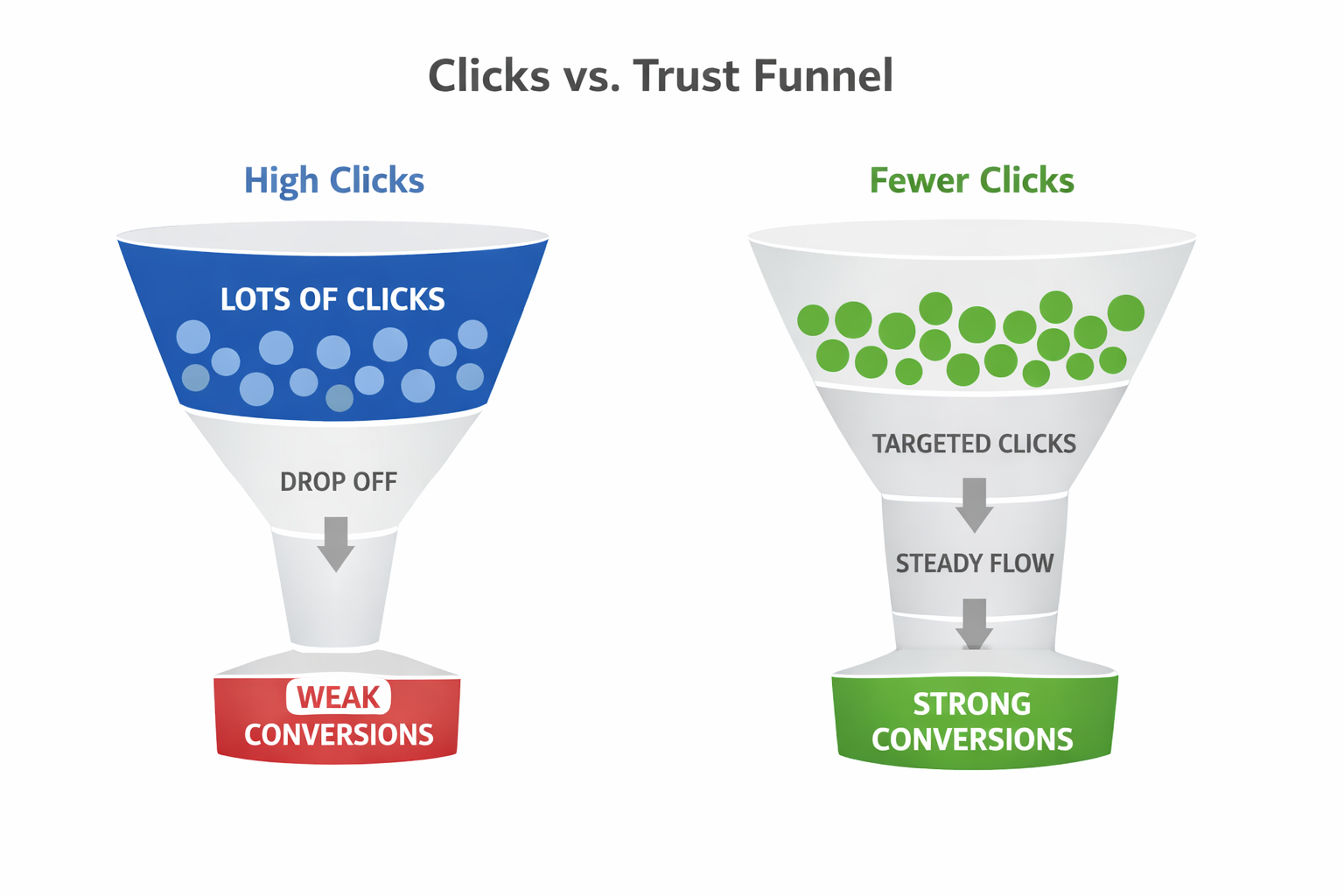
For many advertisers, strong CTR is driven by patterns that look effective at first but weaken performance over time. These patterns usually involve pulling attention without properly qualifying the audience. Common examples include:
-
Messaging that attracts curiosity rather than buying intent, such as teaser headlines that avoid specifics and overpromise outcomes;
-
Simplified claims that ignore real-world complexity, which is especially damaging for higher-ticket or B2B offers;
-
Creative that prioritizes visual hooks over explaining what is actually being sold and why it matters.
When trust is missing, more traffic typically leads to more inefficiency, not more revenue.
How Users Decide Whether to Trust an Ad
Most users approach ads with caution, particularly those who have purchased similar products before. They quickly scan for signals that help them judge whether engaging further is worth their time.
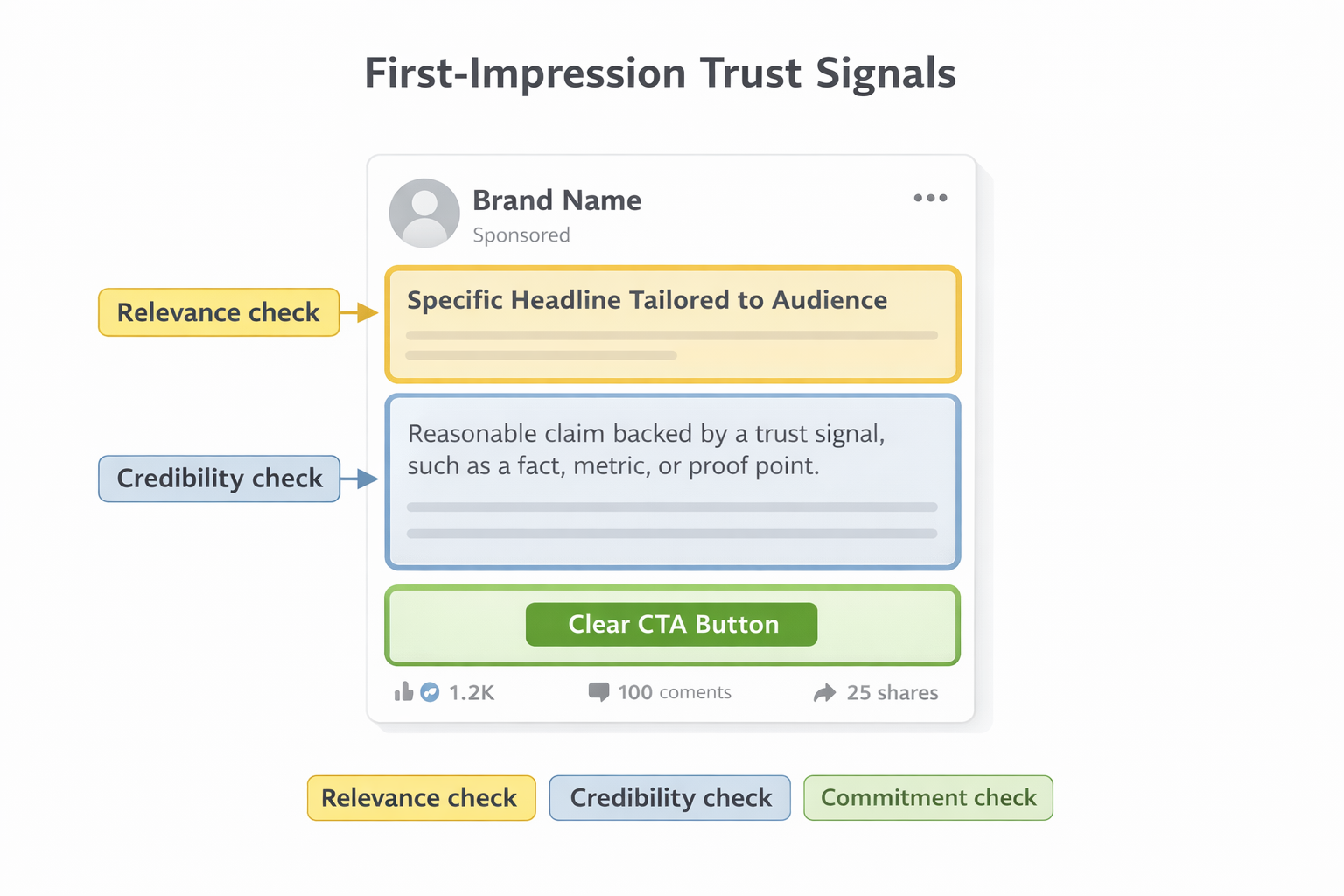
These early judgments are rarely emotional. They are practical and defensive, shaped by past experience with misleading ads. In most cases, users are trying to answer a few core questions before doing anything else:
-
Is this message clearly relevant to my situation, or is it trying to appeal to everyone at once?;
-
Does the claim sound realistic and grounded in actual use, rather than marketing language?;
-
Do I understand what will happen after I click, including the type of commitment involved?
If an ad does not provide enough clarity on these points, users tend to assume risk and disengage. This first moment of evaluation is explored further in How to Build Trust in the First Ad Impression.
What Trust-Focused Ads Do Differently
They Reduce Uncertainty Instead of Creating Mystery
Many ads attempt to increase engagement by withholding information and leaning into curiosity. While this can increase clicks, it often attracts people who are not ready or not qualified to move forward.
Trust-focused ads work in the opposite direction. They aim to set expectations early, even if that means fewer clicks upfront. Over time, this approach leads to stronger downstream performance.
In practice, this kind of clarity usually includes several elements working together. For example:
-
A concrete outcome, such as a specific operational improvement or measurable business result;
-
Clear conditions, including pricing ranges, setup requirements, or realistic timelines;
-
Familiar situations that help users quickly recognize whether the offer applies to their use case.
By reducing uncertainty, these ads attract fewer but better-aligned clicks.
They Use Simple Design to Signal Confidence
Visual restraint is often underestimated in ad performance. Overdesigned ads can feel aggressive, especially when paired with strong claims or urgent language.
Ads that are built around trust tend to look more controlled. The design supports the message instead of competing with it.
This usually shows up in specific, deliberate choices, such as:
-
Brand-consistent colors and typography, rather than urgency cues designed to force attention;
-
Clear structure and spacing that make the message easy to scan and understand;
-
A single primary idea, supported by secondary detail, instead of multiple hooks fighting for attention.
When the design feels calm and intentional, the message feels more credible.
Why Message Consistency Matters So Much
Ads and Landing Pages Must Say the Same Thing
Once a user clicks, they are looking for confirmation. They want to know they landed exactly where they expected to be.
Even small changes in wording or emphasis can introduce doubt. This is especially true when the ad simplifies the promise, but the landing page reframes it or adds conditions. The performance impact of this disconnect is covered in Creating a Seamless Experience Between Ads and Landing Pages.
Strong message consistency means more than repeating phrases. It involves preserving meaning across the entire experience, including:
-
The same core value proposition in both the ad and the landing page;
-
Consistent language for features, benefits, and pricing models;
-
Visual continuity that reassures users they are still interacting with the same brand.
Consistency reduces mental effort and makes it easier for users to continue.
Match the CTA to the User’s Level of Awareness
Not every user who sees an ad is ready to make a decision. Pushing for conversion too early often creates resistance instead of momentum.
Trust-focused advertisers treat the CTA as a reflection of the user’s awareness, not just a lever for short-term results. This often leads to a more gradual progression, such as:
-
“See how it works” for users encountering the brand for the first time;
-
“Explore use cases” for those who are comparing options or learning details;
-
“Request a demo” once intent and understanding are established.
The action should feel reasonable, not rushed.
How Social Proof Builds or Breaks Trust
Specific Proof Carries More Weight Than Big Claims
Social proof works best when it adds information, not when it tries to impress. Large numbers and vague statements may look strong, but they rarely reduce uncertainty.

Effective social proof tends to be concrete and contextual. It often includes elements such as:
-
Named industries or job roles, which help users see themselves in the example;
-
Short testimonials that reference a specific outcome or challenge;
-
Context that shows how and where the product is actually used.
This principle aligns closely with the ideas discussed in Advertising and Trust: How Brands Can Win Without Manipulation.
Why Trust Improves Performance Over Time
Facebook and Instagram optimize toward positive user experience signals. Ads that attract low-quality clicks may perform briefly, but they weaken delivery as spend increases.
Trust-focused ads usually show different performance patterns over time. They often generate:
-
Longer engagement after the click, which signals relevance and clarity;
-
More qualified audiences for retargeting and lookalike expansion;
-
Greater stability when budgets are increased or creatives are refreshed.
These effects are gradual, but they create a more reliable foundation for growth.
A Practical Way to Evaluate Trust in Your Ads
Before scaling any ad, it helps to step back and assess it from the user’s perspective. This does not require complex frameworks, just honest review.
A simple trust-first check might include questions like:
-
Is it immediately clear who this offer is designed for, and who it is not?;
-
Does the design feel proportionate to the price and seriousness of the offer?;
-
Does the landing page confirm the promise made in the ad without reframing it?
If these answers are uncertain, scaling usually amplifies problems rather than solving them.
Closing Thoughts
Clicks respond to novelty, but trust responds to clarity and consistency. Ads that are designed around trust create fewer surprises and better long-term outcomes.
When users understand what you offer and believe what you say, performance becomes more predictable. That predictability is what allows advertisers to scale without constantly chasing new tactics.