Many teams start Facebook ads with the creative. They write hooks, design images, edit videos, and build variations. Then they decide the campaign goal later.
That order creates problems.
A creative made for attention may not drive leads. A creative made for leads may not work for sales. A creative made for cold traffic may feel repetitive to warm users.
Meta does not judge creative by looks alone. It reads how users respond to the ad based on the campaign goal. If the goal is chosen too late, the creative may push users toward the wrong action.
The campaign goal tells the creative what job to do
A Facebook ad goal is not just a setting. It tells Meta what result to look for.
If the goal is traffic, the ad has to make people click. If the goal is leads, the ad has to make people comfortable enough to share contact details. If the goal is sales, the ad has to build enough trust for purchase intent.
These are different jobs.
A broad awareness video can be useful, but it may not explain why someone should book a demo. A direct sales ad can work for warm users, but feel too aggressive for cold traffic.
This is why creative planning should start with the campaign goal, not the asset folder.
Creative fails when the message and goal do not match
A common example is a lead campaign built from awareness creative.
The ad explains the problem, gets attention, and earns clicks. But when the user sees a form, they are not ready to submit. They have not seen enough proof, offer detail, or reason to act.
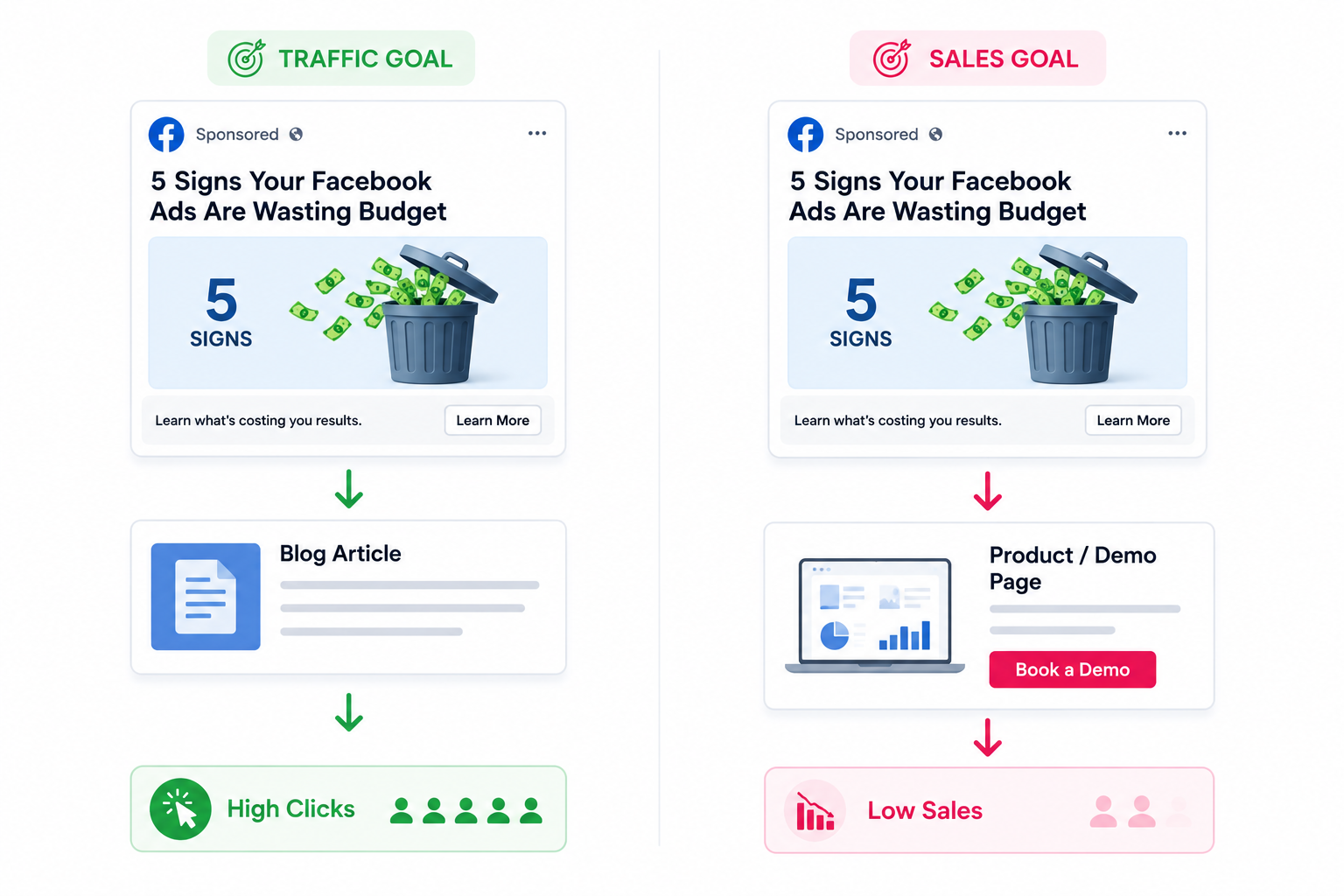
Another example is using sales creative in an engagement campaign. The ad asks people to buy, but Meta is looking for people likely to react, comment, or share. The campaign may get activity, but not revenue.
The creative is not always bad. It is often built for a different goal.
This is why teams should decide what to test first in Facebook campaigns before producing too many variations.
Build the creative brief after choosing the goal
A better creative brief starts with the action you need.
For lead generation, the ad should make the offer clear. It should explain who the offer is for, what happens after submission, and why the user should trust the next step.
For traffic, the ad should create enough interest to visit the page. The landing page can do more of the selling.
For sales, the ad needs stronger proof. It may need to show the product, value, price logic, social proof, urgency, or objection handling.
Before the creative is built, define:
- The action you want: click, lead, message, purchase, call, or booking.
- The user’s stage: cold, warm, returning visitor, or existing lead.
- The conversion path: instant form, website, Messenger, product page, or booking page.
- The main risk: weak CTR, low form completion, poor lead quality, or low sales rate.
This keeps the creative focused. It also makes performance easier to read after launch.
Funnel stage should shape the ad
Cold audiences usually need context. They may not know the brand, offer, or problem yet.
Warm audiences need a different message. They may already understand the problem, so the ad should focus on proof, comparison, or a clearer reason to act.
Bottom-funnel users need less education and more confidence. At this stage, the creative should reduce hesitation.
This is why segmenting creatives by funnel stage helps. It prevents one ad from doing too many jobs.
A cold traffic ad should not be judged like a retargeting ad. A retargeting ad should not spend time explaining basics the user already knows.
Better audiences still need goal-specific creative
LeadEnforce can help advertisers build more precise audiences from Facebook groups, Instagram followers, Instagram engagers, and social profile data.
That can improve audience quality, especially when broad targeting brings weak signals.
But better targeting does not remove the need for better creative planning. If you target high-intent users with vague creative, they may still ignore the ad. If you target a niche audience with the wrong goal, Meta may still optimize toward the wrong action.
Audience and creative need to match the same goal.
For example, an audience built from relevant Facebook groups may already understand the problem. That creative can be more direct. An audience built from broad interest targeting may need more education before asking for a lead.
Use creative variations to answer one question at a time
Random creative testing wastes money. If every variation changes the hook, format, CTA, offer, and funnel stage, you will not know what caused the result.
Goal-first testing is cleaner.
For a lead campaign, test different ways to qualify users before they submit. One ad can focus on the pain point. Another can focus on proof. Another can explain who the offer is for.
For a sales campaign, test product angle, offer clarity, or objection handling. Keep the goal stable so the data is easier to read.
This is where funnel-specific creatives help. They keep each ad tied to one stage and one action.
Final takeaway
Creative should not start with “What asset do we have?”
It should start with “What action does this campaign need?”
The campaign goal changes the message, CTA, format, and conversion path. When creative is planned before the goal, the ad can look good but push users toward the wrong behavior.
Choose the goal first. Then build the creative around that goal.