An Instagram Story can look ready to promote and still fail before it reaches review.
This usually happens because boosting is not the same as building a fresh ad in Ads Manager. When you boost an existing Story, Meta has to turn that organic asset into an ad. If the Story contains elements that the ad system cannot convert, the promotion may be blocked before delivery starts.
For advertisers, this is more than a small setup issue. A blocked Story can delay a campaign, waste production time, and push budget into weaker creatives just because they are technically eligible.
Core problem: The Story was built for organic engagement, not ad eligibility
Organic Stories are designed for interaction. You can add link stickers, music, mentions, GIFs, countdowns, polls, and other native elements that make the Story feel active inside Instagram.
The ad system has stricter rules.
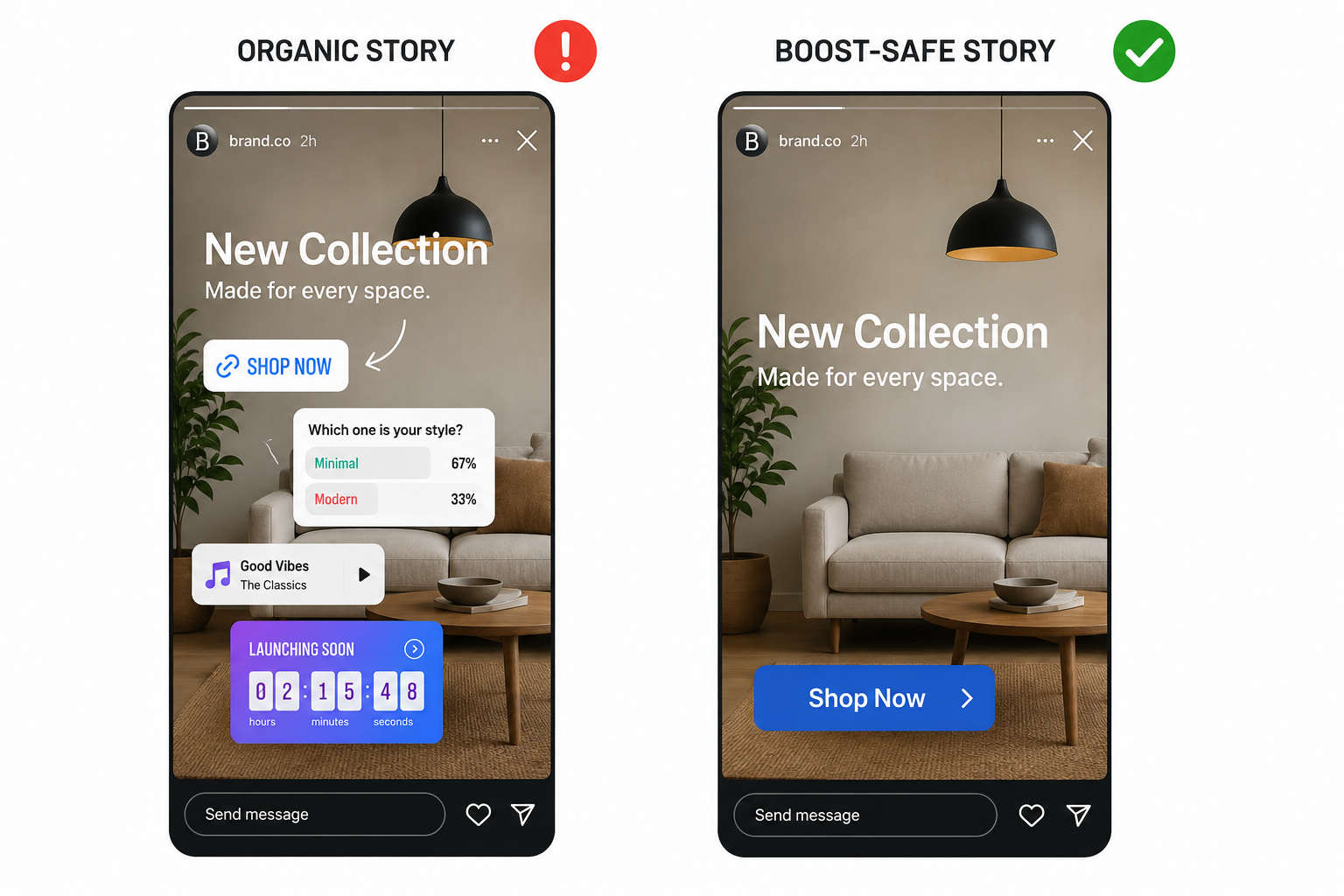
Meta’s troubleshooting guidance notes that some Story features cannot be used when boosting an existing Story. Link stickers are a common blocker, and advertisers are usually expected to use a proper ad CTA instead.
That distinction matters because many teams create Stories for organic reach first. Later, when one gets strong replies or profile visits, they try to boost it. By that point, the Story may already contain features that make it impossible to promote.
The performance cost shows up quickly. A brand might spend an hour designing a launch Story, wait for early engagement, then discover it cannot put budget behind it. The media buyer either rebuilds the asset under time pressure or shifts spend to a less relevant post.
Solution: Strip the Story down to ad-compatible elements before boosting
The fastest fix is not to keep editing the campaign settings. It is to rebuild the Story asset.
Start by removing the elements most likely to block promotion:
- Link stickers: Replace them with the ad’s CTA button, such as “Learn More” or “Shop Now,” so the click path sits inside the ad setup.
- Music stickers: Use original audio or an exported video file without licensed music layers that Meta may not clear for paid use.
- GIFs and animated stickers: Export motion as part of the video creative instead of relying on native Story stickers.
- Multiple tappable elements: Reduce the Story to one clear action path so Meta does not have to interpret competing taps.
This keeps the Story simple enough for the boosting workflow.
A clean paid Story usually needs only three things: the visual hook, the offer, and the next action. Anything that adds interaction but does not support conversion should be treated as a risk.
Why this affects CPC, CPA, and campaign learning
A Story that cannot be boosted does not enter auctions. That means it generates no paid impressions, no click data, and no conversion signals.
The bigger issue is opportunity cost. If the Story was your strongest creative, losing it can force spend toward weaker assets. You may still launch on time, but your CPC can rise because the replacement creative earns weaker engagement. CPA can also move in the wrong direction if the backup asset does not match buyer intent.
This is common in local service, event, and e-commerce campaigns. A Story with strong organic replies looks like the obvious creative to boost. But if it contains a link sticker, music, and a countdown, the paid version may never launch.
Before rebuilding the campaign, check whether Story ads actually fit the goal. LeadEnforce’s guide on when Stories ads fit your funnel stage can help you decide whether to fix the Story or move the message into Feed or Reels.
How to rebuild an ineligible Story without changing the message
Do not redesign the whole creative unless the original concept was weak. Most blocked Stories only need a cleaner ad-safe version.
Keep the same structure, but replace unsupported layers with static or baked-in design elements. For example, turn a native countdown sticker into plain text inside the creative. Replace a link sticker with a visual CTA cue and let Meta’s button handle the click.
The paid Story should still feel native, but it should not depend on native Story tools to work.
This is where many advertisers overcorrect. They remove the sticker, then redesign the Story into a polished banner. That can lower performance because the asset stops looking like Instagram content. Keep the pacing, vertical framing, and direct message intact.
For teams that often promote organic Instagram content, it helps to build a reusable “boost-safe” Story format. LeadEnforce’s article on read Instagram ad performance after launch is useful once you start comparing rebuilt Story ads against original organic winners.
When the issue is not the Story itself
Sometimes the asset is not the only problem. A Story may fail to boost because the connected account, Page permissions, payment settings, or ad account status has a restriction.
Check the ad account before rewriting the creative. If other posts can be boosted but this Story cannot, the asset is likely the issue. If nothing can be boosted, look at account quality, billing, Page access, and Instagram professional account status.
If the Story enters review and then gets rejected, treat that as a different problem. At that point, review the policy reason and compare it against what to check when Meta disapproves an ad.
Final takeaway
Some Instagram Stories cannot become ads because they were built with organic features that do not transfer into paid promotion.
The fix is not to force the boost through. Rebuild the Story as an ad-safe version: no link stickers, no unnecessary tappable elements, no unsupported music layers, and no native effects that Meta cannot convert. The more your paid Story depends on the actual creative instead of Instagram-only features, the easier it is to launch and measure.