Most advertisers look at bottom-of-funnel ROAS first. When purchases drop, they adjust retargeting, bids, or creatives. Sometimes that helps. Often, the real issue started higher in the funnel.
Top-of-funnel campaigns decide who enters your ecosystem. They shape intent, expectations, and buying probability long before someone sees a retargeting ad.
If that upstream layer weakens, bottom-of-funnel ROAS will eventually follow.
Your Funnel Is One Connected System
Meta evaluates behavior across the entire journey. It connects impressions, clicks, engagement, and purchases into one learning model.
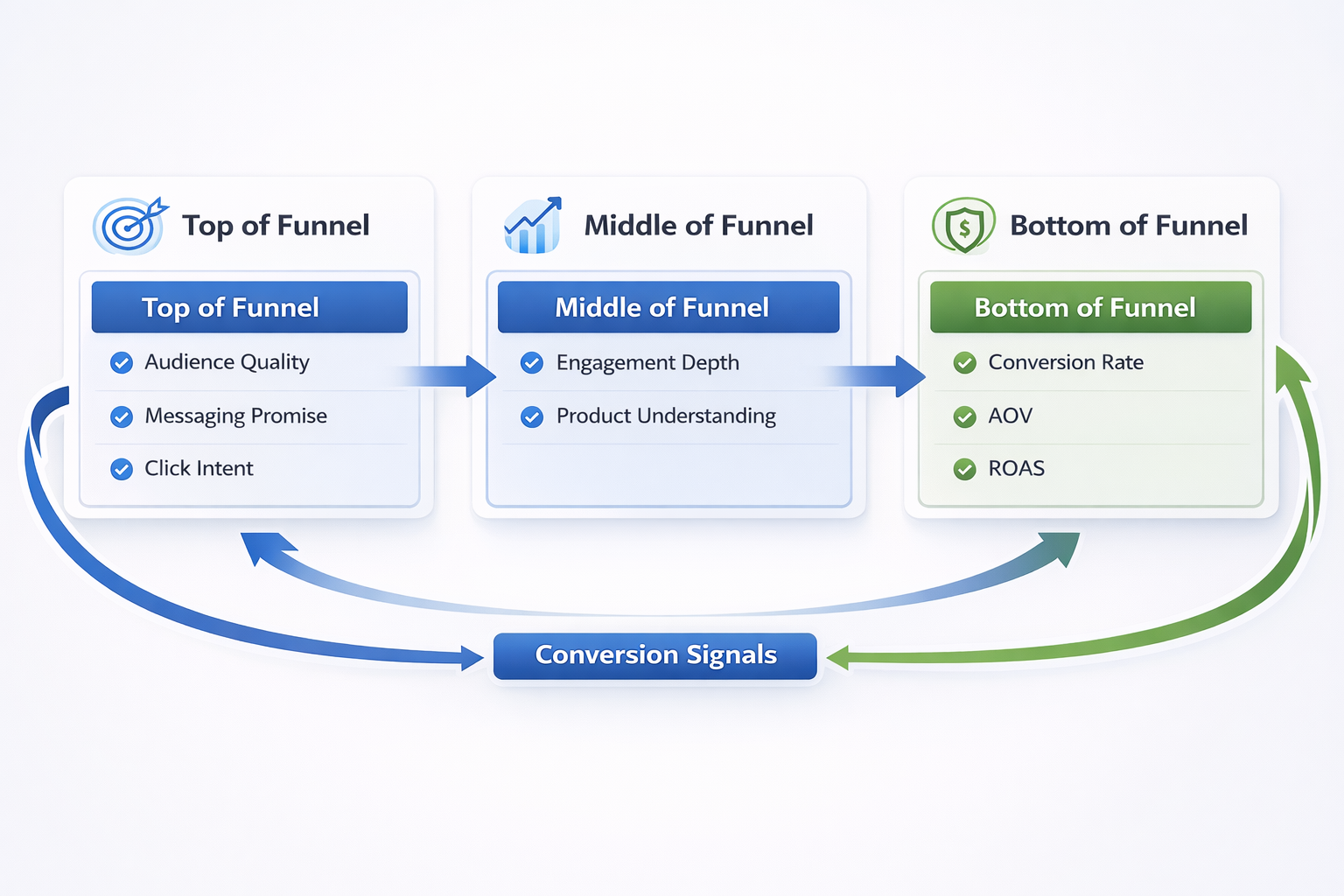
This means:
-
Prospecting affects retargeting performance.
-
Messaging at the top influences conversion at the bottom.
-
Budget changes in one stage create delayed effects elsewhere.
When you only optimize the last step, you often fix symptoms, not causes.
If you want a broader perspective on this, review Are You Too Focused on ROAS? Why Full-Funnel Metrics Matter.
How Top-of-Funnel Traffic Impacts Bottom-of-Funnel ROAS
Retargeting converts demand. It does not create it.
If low-intent users enter your funnel, retargeting efficiency drops. This usually shows up as rising CPA or declining conversion rate.
1. Audience Quality Sets the Ceiling for ROAS
When prospecting focuses on volume instead of relevance, performance erodes over time.
Watch for these patterns:
-
Cheap CPC but weak purchase rate; clicks increase, sales do not.
-
High engagement with low add-to-cart rate; interest is shallow.
-
Growing reach with declining average order value; buyer quality is shifting.
These are early signs that prospecting is feeding the funnel with weaker signals.
A deeper breakdown of this concept can be found in Why Audience Quality Matters More Than Size for Facebook Ads.
2. Early Messaging Shapes Buying Behavior
The first ad someone sees creates expectations.
If top-of-funnel ads focus on discounts, users expect low prices. If retargeting emphasizes premium value, friction increases.
Strong funnel messaging usually follows a clear progression:
-
Top: highlight the problem and attract the right people.
-
Middle: explain the solution and build trust.
-
Bottom: remove objections and present the offer.
This sequencing principle is central to How to Build a Full-Funnel Strategy With Facebook and Instagram Ads.
The Time Lag Effect
There is always a delay between first click and purchase. If your sales cycle is seven days, today’s ROAS reflects last week’s traffic.
This delay causes common mistakes:
-
Scaling prospecting aggressively after a good week; quality drops and ROAS falls later.
-
Cutting prospecting during slow days; retargeting pools shrink days later.
-
Changing creatives too quickly; learning never stabilizes.
Understanding conversion delays is critical. For more context, see What Conversion Lag Means for Your Facebook Ads.
How to Diagnose If the Problem Is at the Top
Instead of guessing, look at cross-stage metrics.
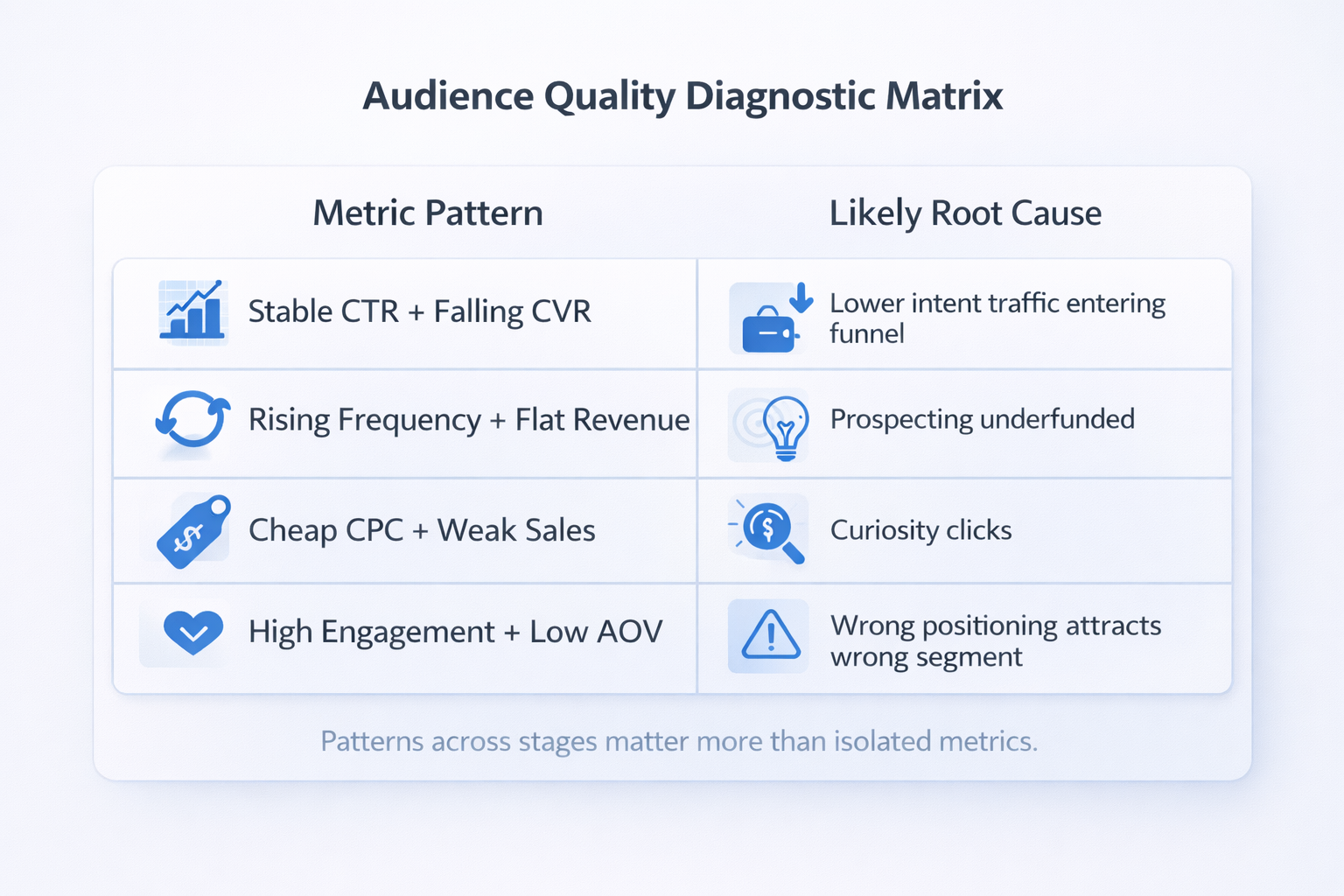
Here are practical checks you can run:
-
Retargeting CTR is stable, but conversion rate drops; upstream intent likely weakened.
-
Retargeting frequency rises without revenue growth; new users are not entering the funnel.
-
First-time buyers decrease while returning buyers remain stable; prospecting may be underfunded.
You can also compare spend distribution using frameworks like Prospecting vs Retargeting: Ideal Ratios to see if your structure is balanced.
Budget Allocation Influences Stability
Many advertisers overinvest in retargeting when ROAS is strong. That inflates short-term results but weakens long-term growth.
Healthy funnels usually:
-
Maintain consistent prospecting even during profitable weeks.
-
Scale budgets gradually rather than in large jumps.
-
Monitor new customer acquisition, not just ROAS.
Retargeting depends on fresh inflow. Without it, performance becomes unstable.
Why Signal Quality Matters to the Algorithm
Meta optimizes around patterns. When your top-of-funnel consistently attracts similar, relevant users, the system learns faster and more accurately.
When traffic becomes mixed, signals weaken. Converters appear random, and costs rise.
Improving top-of-funnel precision often improves bottom-of-funnel ROAS without touching retargeting settings.
Practical Action Plan
If bottom-of-funnel ROAS drops, do this before changing retargeting:
-
Review prospecting targeting changes from the previous 7–14 days.
-
Compare cost per qualified visitor, not just cost per click.
-
Audit messaging consistency across stages.
-
Check retargeting audience size trends.
Bottom-of-funnel performance reflects what top-of-funnel created earlier.
When the top is strong and aligned, the bottom becomes more efficient and stable over time.