Many advertisers assume scaling is simple: increase the budget and expect more conversions at roughly the same cost.
In reality, even a 20–30% increase can suddenly raise CPA, increase CPM, or reduce conversion rates. Nothing changed in the campaign — yet results decline.
The reason is structural. When budgets increase, the delivery system must expand where it spends, which changes both the audience segments and auctions your ads compete in.
Scaling therefore alters the campaign’s environment rather than simply increasing volume.
Budget Increases Push Delivery Into Weaker Audience Segments
At lower budgets, Meta concentrates impressions on users with the strongest predicted conversion signals.
These are people whose behavior closely matches recent buyers.
When the budget increases, the system must find more impressions. To spend the additional budget, delivery expands beyond the highest-intent users.
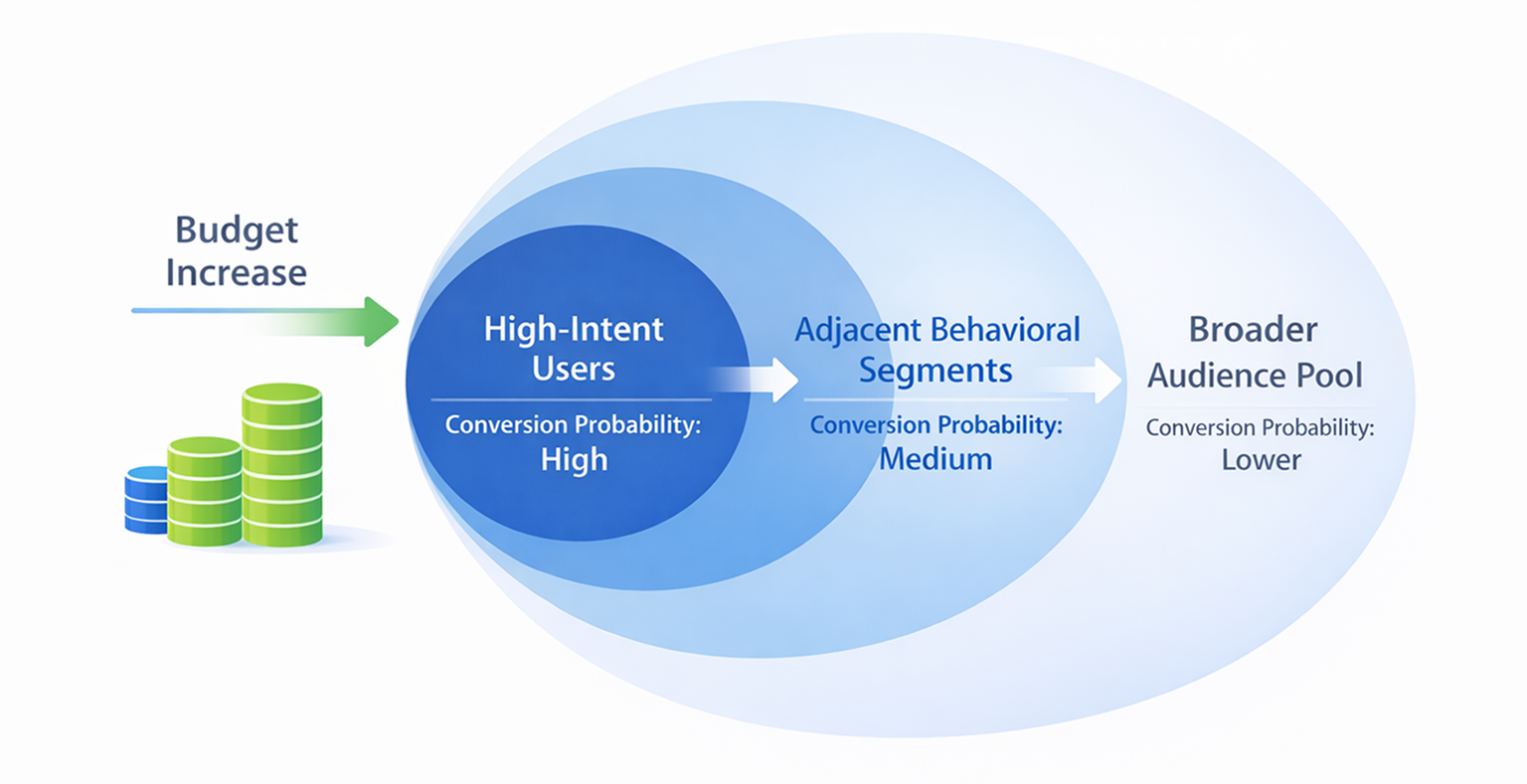
The progression usually looks like this:
-
High-intent cluster.
Users with strong purchase signals and behavioral similarity to previous converters. -
Adjacent behavioral groups.
People with partial signal overlap — similar interests, engagement, or browsing behavior. -
Lower-probability users.
Broader segments where predicted conversion likelihood is weaker.
Even a small budget increase can push the campaign from the first layer into the second.
The Campaign Starts Competing in Different Auctions
Budget growth also changes the auctions your ads enter.
At small spend levels, your ads may win impressions in auctions with relatively weak competition. When the budget rises, the system must compete across a wider inventory pool.
Inside the Meta auction, ad delivery depends on:
-
bid value,
-
predicted action rate,
-
ad quality signals.
If new auctions contain stronger competitors, CPM increases and efficiency drops.
For a deeper explanation of how auction dynamics affect delivery, see Facebook Ad Auction: Do Ad Sets Compete Against Each Other?
Creative Fatigue Accelerates the Efficiency Drop
Budget increases also expose another limitation: creative saturation.
If spend rises but the audience size stays the same, ads appear more frequently to the same users. Engagement gradually declines.
Typical warning signals in Ads Manager include:
-
rising frequency,
-
falling CTR,
-
stable or increasing CPM.
This pattern is one of the clearest signs of creative fatigue.
You can learn more about identifying and preventing this issue in Ad Fatigue on Facebook: How to Spot It Early and Fix It Fast.
How to Scale Without Breaking Performance
Efficiency drops are not unavoidable. Most problems occur because scaling happens faster than the delivery system can adapt.
A few structural adjustments make scaling more stable.
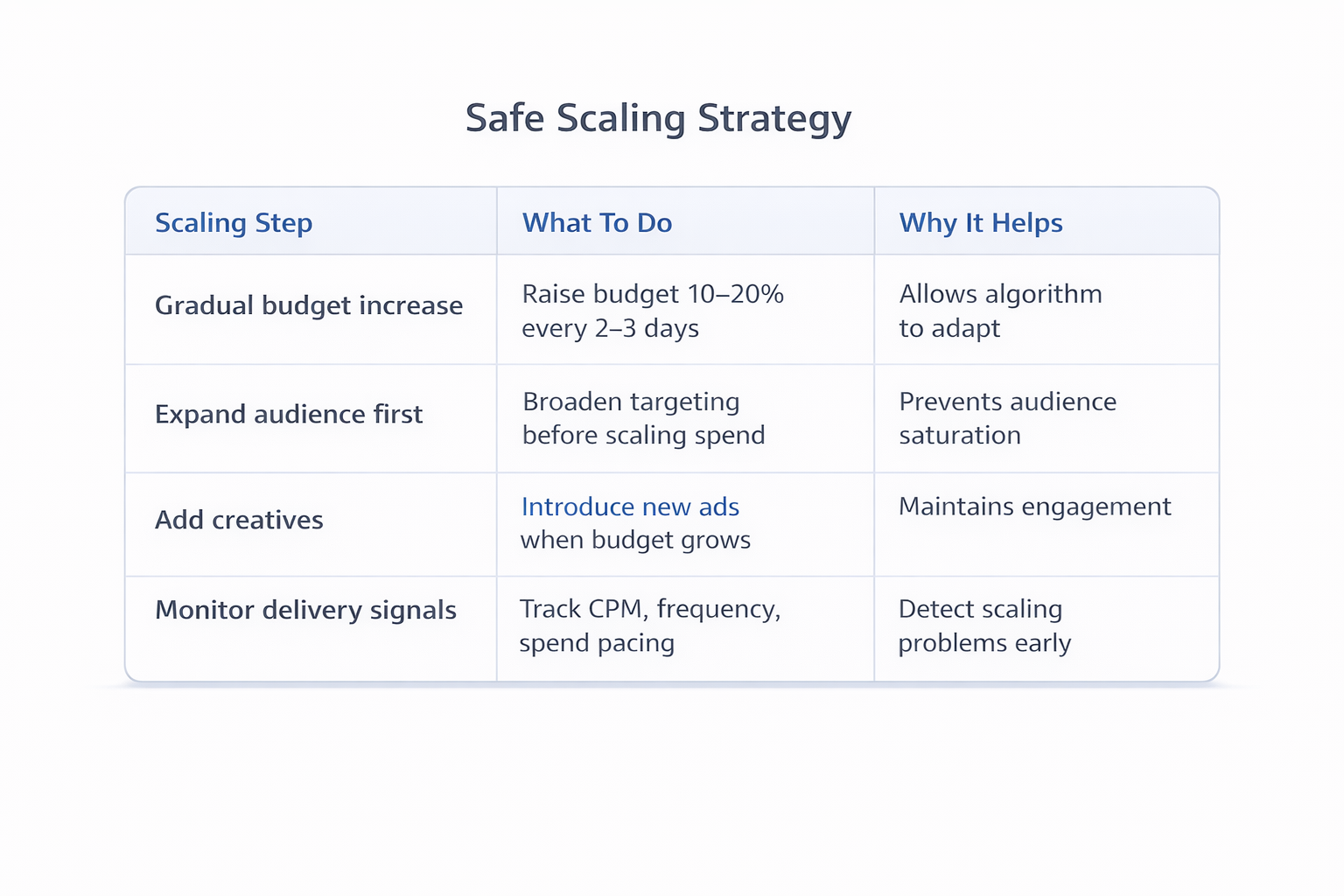
Increase budgets gradually
Large jumps force the algorithm to explore new audiences too quickly.
A safer pattern is:
-
increase budget by 10–20%,
-
wait 48–72 hours before scaling again,
-
confirm CPA and CPM stability.
Gradual increases keep the campaign closer to high-intent segments.
Expand audiences before increasing spend
If the audience is already small, scaling forces the algorithm into limited delivery opportunities.
Instead, expand the available pool first by:
-
adding broader lookalike tiers,
-
expanding geographic coverage,
-
loosening overly narrow targeting.
If your targeting pool is too restricted, the campaign may saturate quickly.
Add new creatives when spend grows
More budget means more impressions. Without new creatives, frequency increases and engagement declines.
Refreshing creatives regularly helps maintain CTR and prevent performance decay.
Monitor delivery signals, not just CPA
Performance problems usually appear in supporting metrics before CPA rises.
Watch for:
-
CPM spikes,
-
rapid frequency growth,
-
uneven spend distribution,
-
learning phase resets.
Understanding these signals helps advertisers interpret campaign behavior correctly. A useful framework is explained in
How to Analyze Facebook Ad Performance Beyond CTR and CPC.
Scaling Changes the Delivery Frontier
Increasing budget does not simply buy more impressions.
It expands the delivery frontier — the range of auctions and audience segments where the campaign competes.
At small budgets, delivery focuses on the highest-probability buyers. As spend grows, the algorithm moves outward into broader and less predictable segments.
Efficiency drops are often a natural consequence of that expansion.
Advertisers who scale successfully treat budget increases as a delivery system shift, not just a spending decision.