If your product or service takes weeks or months to sell, December might seem like the wrong time to advertise. But it’s actually one of the most valuable moments to shape next quarter’s results.
Even when people aren’t buying, they’re still scrolling, researching, and making shortlists. Your brand should be there while they’re doing that — not just when they’re ready to take out their wallet.
For more on long-cycle buyer behavior, check out our full breakdown: Paid Traffic for Long Sales Cycles — What Works.
Change the Goal — Don’t Focus on Quick Conversions
In December, most people aren’t ready to make big decisions. That’s especially true for high-consideration products like SaaS, consulting services, B2B tools, or anything that requires planning or budget approvals.
Instead of pushing for sales, shift your campaign goals to early-stage outcomes.
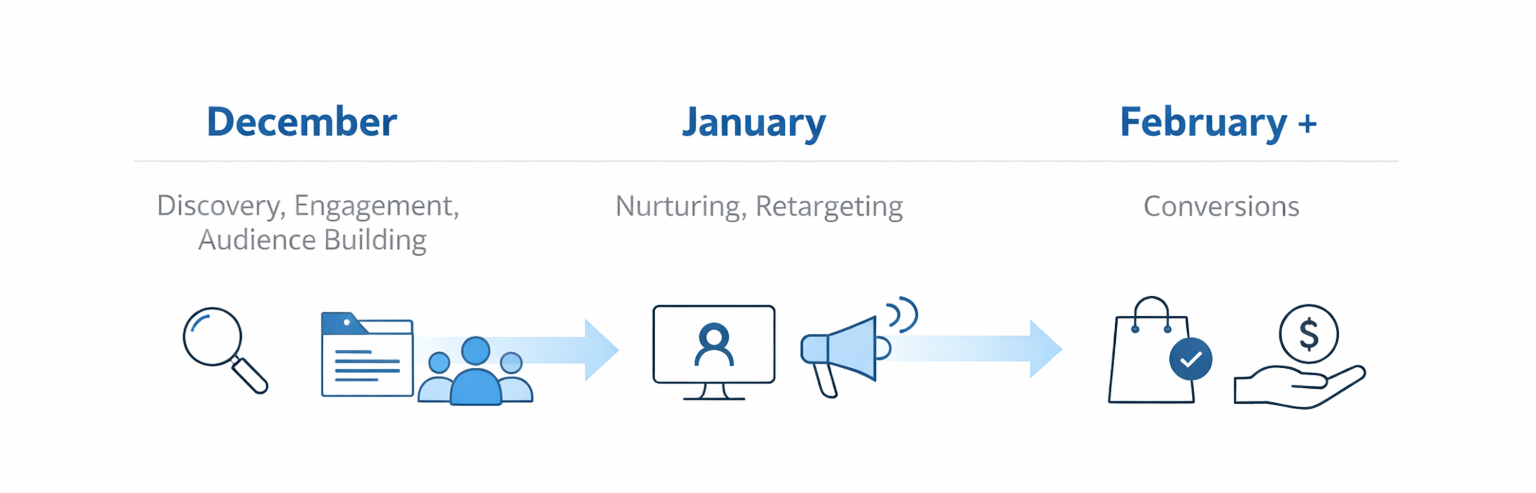
Here’s what that looks like:
-
Reach the right people early. Run ads that introduce your brand to decision-makers, not just broad audiences.
-
Build mid-funnel assets. Use lead forms, landing pages, or guides to collect contacts for follow-up in Q1.
-
Feed your retargeting engine. Create remarketing audiences based on actions like video views, button clicks, or scroll activity.
This approach builds the groundwork for conversions in January or February — when your buyers are actually ready to move.
Understand What Buyers Are Really Doing in December
People are still active online in December, but they behave differently. They’re not comparing prices or filling carts. They’re thinking about what’s next — and gathering ideas.
That includes:
-
B2B teams prepping for Q1. Many departments are evaluating tools, vendors, and services in December — even if deals close later.
-
High-ticket consumers doing research. People planning moves, big purchases, or personal investments often use the holidays to browse and learn.
-
Buyers reviewing what didn’t work in the past year. Ads that offer better ways of solving known problems are more likely to land.
Need more guidance on what works in this period? See our article: December Ads Strategy — Keep Performance Strong Through Year-End.
Make Creative That Speaks to the Right Stage
Holiday-style banners with “limited time” offers won’t do much for a long buying cycle. Your ads should support research and evaluation, not push for urgency.
Here’s what works better:
-
Short, informative videos. Instead of flashy promos, use 30–60 second clips that explain how your product works or solves real problems.
-
Real customer experiences. Use paid social to distribute honest testimonials or client stories — especially ones that reflect the buyer’s challenges.
-
Decision-making content. Promote resources like ROI calculators, budget templates, or comparison charts. Give buyers tools they’ll actually use.
You’re not just filling space — you’re helping someone move closer to a decision.
Structure Your Campaigns for the Long Run
If your December campaigns are disconnected from your full strategy, you’ll lose momentum when January starts. Your ads should be part of a system — not a seasonal one-off.
To do that:
-
Use broad top-of-funnel ads to collect data. Run campaigns optimized for reach or engagement to identify who’s paying attention.
-
Segment retargeting by behavior. Retarget those who watched most of a video or visited specific landing pages — not just everyone who clicked.
-
Offer small actions. If sales aren’t realistic, ask for smaller commitments like email signups, demo bookings, or downloads.
When January hits, you’ll already have a pool of warm prospects ready for next steps.
Make Seasonal Relevance Subtle but Strategic
Even if you’re not running a sale, your ads can still feel timely. But avoid generic messages like “New Year, New You” — they don’t say anything specific.
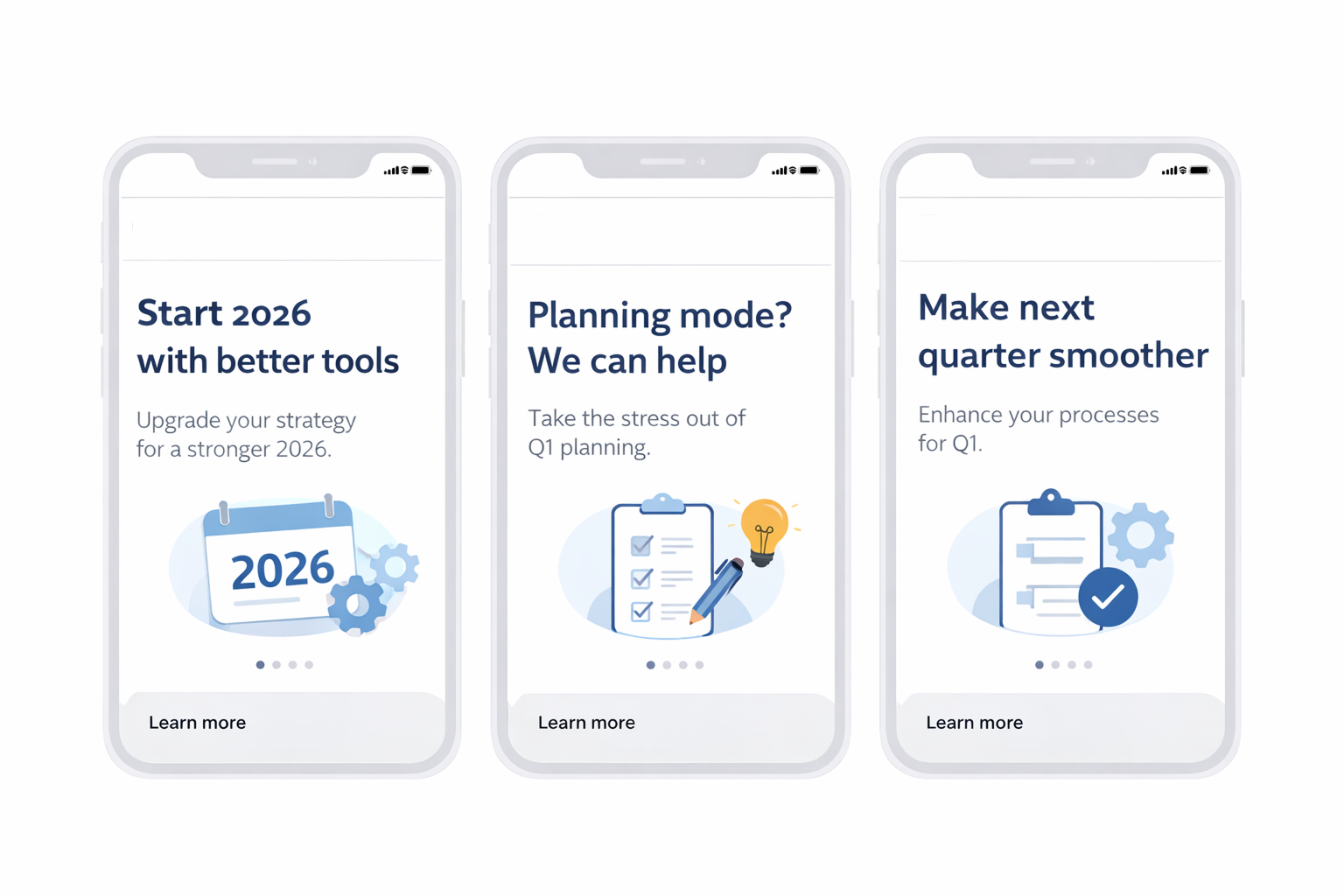
Here are better ways to tie into the season:
-
Position your product as part of next year’s plans. Try language like “Ready to start fresh in 2026?” or “Tools for a stronger Q1.”
-
Address common end-of-year pain points. For example, “Still not happy with your current solution?” or “Use downtime to plan smarter.”
-
Create content around annual wrap-ups. Think checklists, planning templates, or recaps of industry changes that relate to your product.
You're not forcing urgency — you're aligning with the mindset people already have.
Use This Time to Improve Your Data and Signals
This is your last chance to strengthen your targeting before Q1 campaigns go live. Smart use of data now will make your ads more efficient later.
Here’s what to do:
-
Upload first-party data. Use your CRM or email list to build custom audiences and let Meta optimize for similar users.
-
Refine pixel events. Make sure your tracking is clean and that meaningful actions (not just page views) are captured.
-
Create fresh lookalikes. Seed them with recent high-intent leads, not outdated contacts.
These steps improve Meta’s ability to find better leads — when competition (and CPMs) spike again in January.
Track the Metrics That Actually Matter in December
If you measure success only by sales, your December results may look weak. But other signals give you a much clearer picture.
Focus on:
-
Engagement depth. Are people watching most of your video? Are they spending time on your site or clicking through multiple pages?
-
Audience growth. Are your remarketing segments growing with qualified traffic? Are your email or lead lists improving in quality?
-
Lead behavior. Even a small number of form fills can be valuable if the intent is high — especially for B2B or high-LTV products.
Track what shows real interest, not just what’s easy to count.
Final Thoughts: Long Sales Cycles Need Long-Term Thinking
You don’t have to run “holiday ads” to make December work for your brand. You just need to understand what buyers are doing — and support them with content and campaigns that match.
If you treat December as a planning period instead of a pause, you’ll head into Q1 with a stronger pipeline, better audiences, and smarter signals.