When you’re short on time or budget, running high-performing Facebook and Instagram ad campaigns can feel overwhelming. There are always more audiences to test, new formats to try, and countless copy variations to explore.
But the reality is, you don’t need to do everything. You just need to focus on what moves the needle. This article will show you how to prioritize the right elements so you can spend smarter, not harder.
Why Trying Everything Leads to Slower Results
Modern ad platforms offer a dizzying number of features. If you try to test everything at once — headlines, creatives, placements, audiences — you’ll end up spreading your budget too thin.
Worse, you may not learn anything useful. Prioritization isn’t just about saving effort. It’s how you get faster results and clearer signals about what actually works.
Step One: Choose Campaigns That Support Business Goals
Before you touch Ads Manager, start with a bigger question: What business outcome matters most right now?
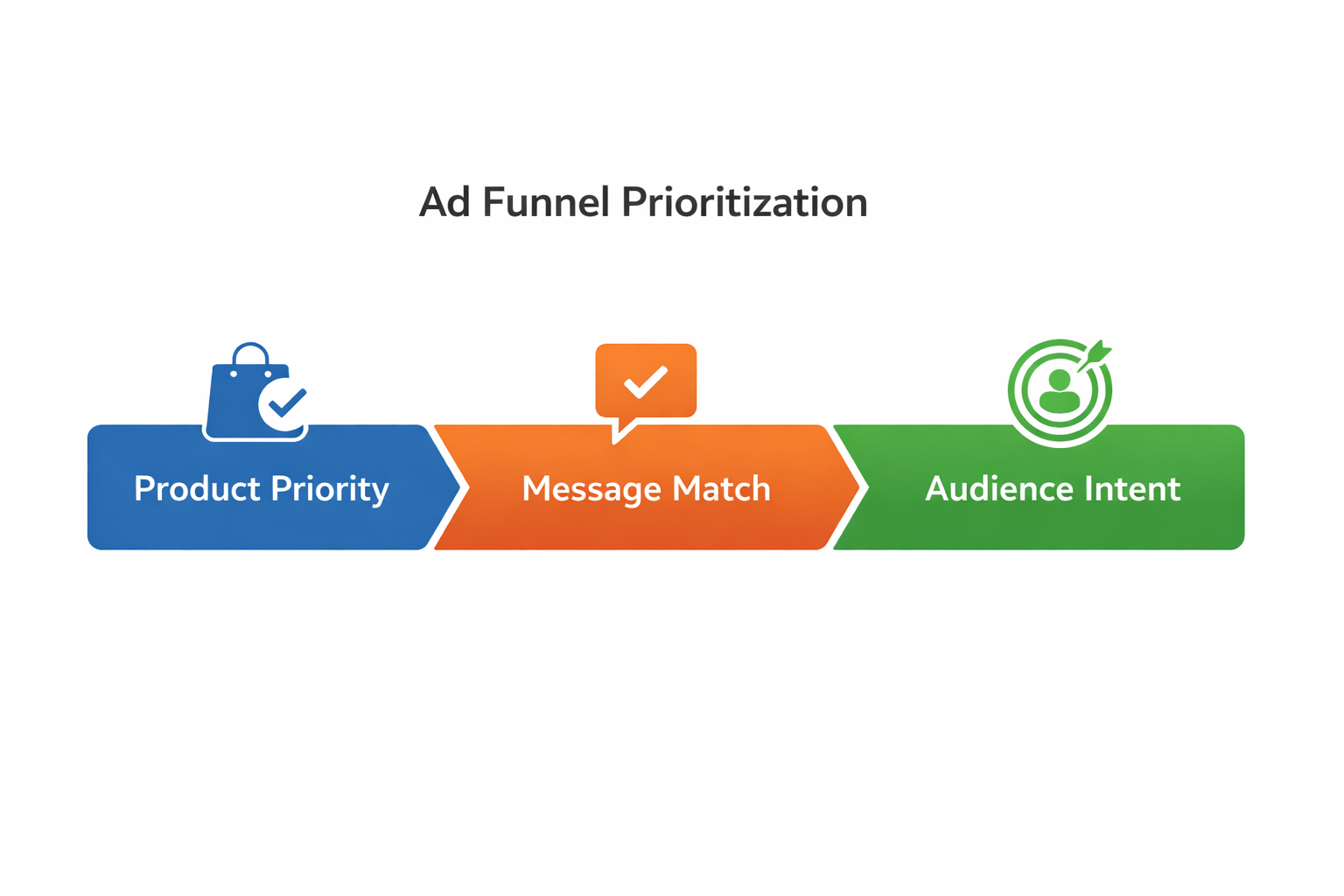
Not every campaign deserves your focus. Narrowing your priorities makes your budget work harder. Here are three high-impact places to focus first:
-
Your highest-margin or best-selling product. For example, if you sell four digital services, promote the one that consistently drives 80% of your revenue.
-
A single conversion goal. Choose one objective — like purchases, booked calls, or email signups — instead of chasing engagement, traffic, and video views at the same time.
-
Audiences close to converting. Warm leads, past customers, and website visitors will often deliver stronger returns than broad cold traffic.
If you need help identifying these high-value audiences, this guide to Identifying High-Intent Audiences Using Facebook Insights breaks it down well.
Step Two: Refine Your Message Before You Touch Visuals
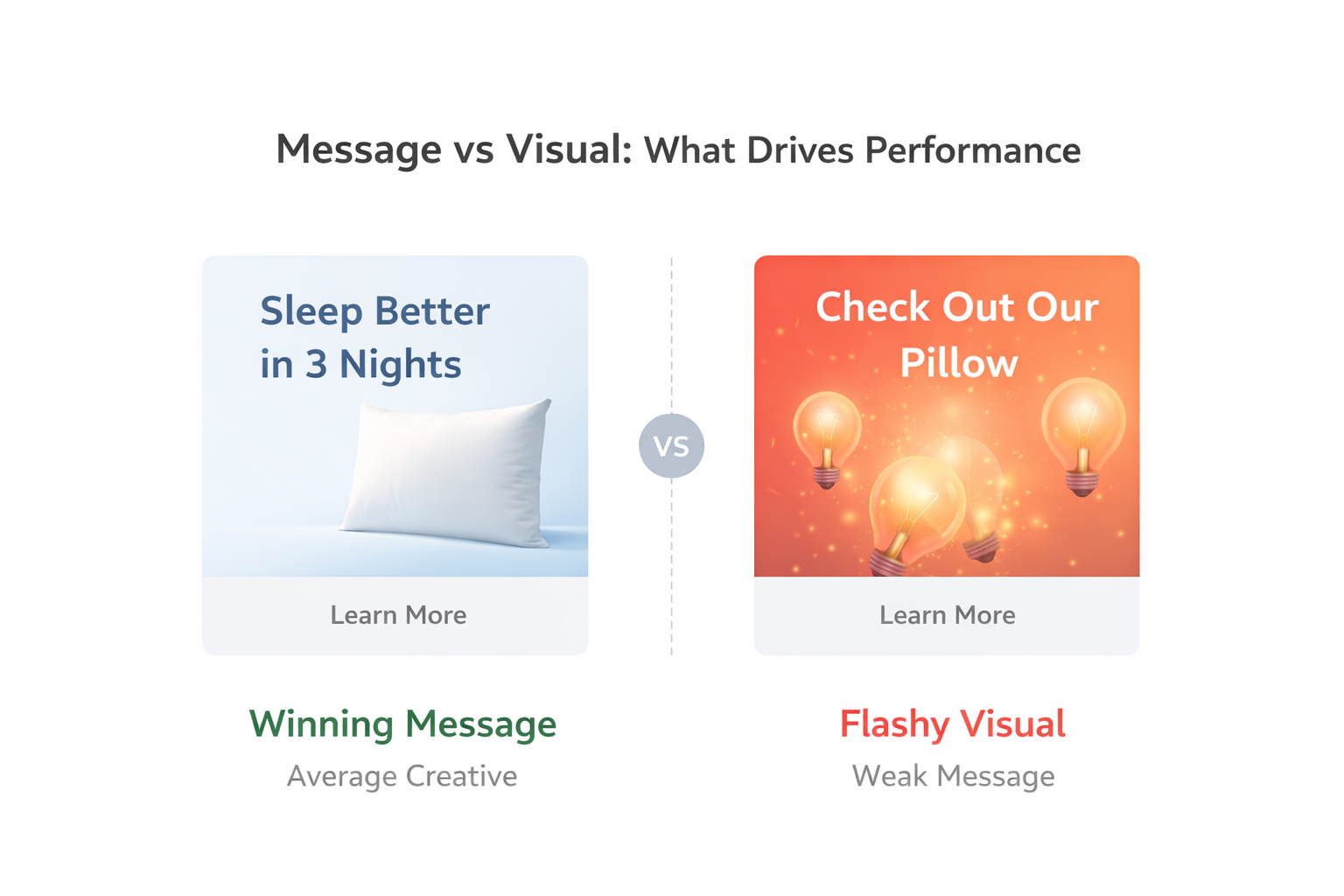
If you can only get one part of your ad right, make it the message. Compelling copy and a clear value proposition will outperform slick visuals every time — especially when you're limited on resources.
Here’s what strong ad messaging includes:
-
A clear, benefit-led value proposition. Focus on the outcome, not just the feature. For instance, “Sleep better in 3 nights” is more powerful than “100% natural melatonin blend.”
-
Language that resonates with your audience. Speak their language. If you're targeting freelance designers, use terms they relate to — like “client-ready mockups” or “non-boring portfolios.”
-
A strong headline or opening hook. Your first line should pull attention. Something like “Tired of spending $10 per click?” beats “Check out our service.”
Want to sharpen your ad copy fast? Read 5 Ways to Make People Click Your Ad Thanks to the Ad Copy for proven writing tactics.
Step Three: Keep Creative Simple, Consistent, and Focused
When you don’t have the time or team to produce and test dozens of visuals, stick to formats that are clear and consistent with your offer. Effective visuals don’t need to be complex — they need to match your message and help users take the next step.
Prioritize creatives that:
-
Show the product or outcome in use. For example, if you sell desk accessories, use a video of someone unboxing and setting it up — not just a static image of the product on white background.
-
Match the landing page. If your ad highlights “50% off bundles,” make sure the landing page shows the same deal. Inconsistency creates confusion and drop-offs.
-
Work well on mobile. Square or vertical formats are ideal. Avoid heavy files or horizontal-only visuals that won’t display properly in Instagram Stories or Facebook feeds.
For more tips on mobile-friendly visuals, check out The Best Practices for Designing Mobile-Friendly Facebook Ads.
Step Four: Focus Targeting Where It Counts
Targeting is one of the easiest places to overcomplicate your strategy. If you're dealing with limited time or budget, it's better to run fewer audiences and exclude what doesn’t matter.
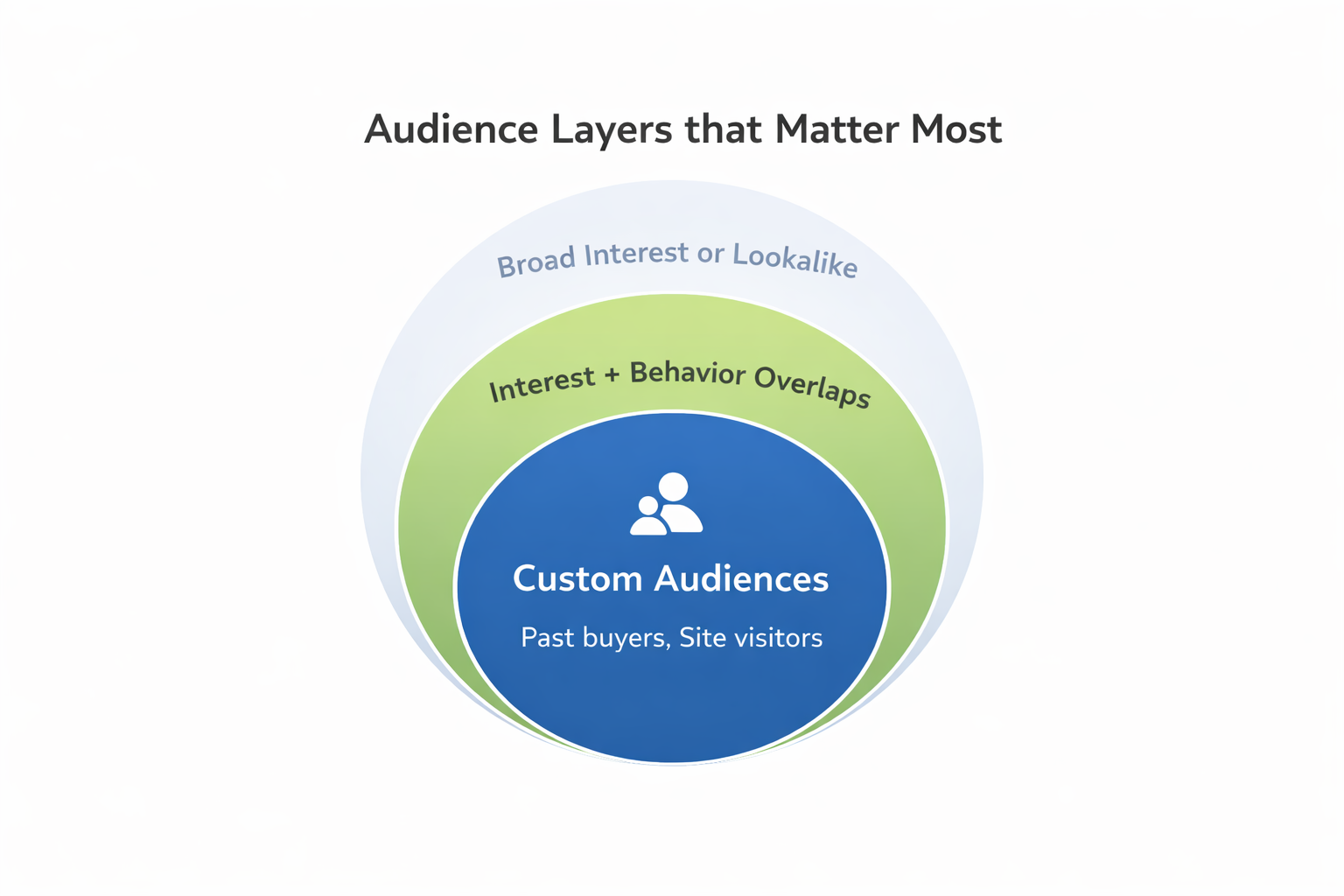
Begin with these targeting priorities:
-
Custom audiences based on warm behavior. This includes site visitors, email subscribers, video viewers, or people who engaged with your Instagram profile in the last 30 days.
-
Interest and behavior overlaps. Combine niche interests with behavioral filters. For example, instead of targeting “dog owners,” target “dog owners” who also “visited pet websites in the last 7 days.”
-
Strong exclusions. Exclude recent purchasers, users who already submitted a form, or cold traffic that bounced after a few seconds. This reduces waste and gives you cleaner results.
If you're ready to go deeper into hyper-specific segmentation, this guide on Layering Detailed Targeting for Facebook Audiences is worth bookmarking.
Step Five: Fix What Happens After the Click
A strong ad gets the user to click — but the landing page is what actually converts them. If you're not seeing results, the problem may not be the ad itself. Often, it’s what happens after.
Here’s what to look for:
-
Message match. Make sure your ad and landing page align in language, tone, and offer. If the ad says “Book your free 15-minute demo,” the page should show that exact same message.
-
Clean, fast, and focused design. Use one primary call to action, minimal distractions, and make sure your page loads in under three seconds.
-
Mobile optimization. Test your landing page on several mobile devices. Forms should be easy to fill out, buttons easy to tap, and text readable without pinching.
To improve the entire user path, refer to How to Create a High-Converting Landing Page for actionable guidance.
Not Sure What to Fix First? Start Here
If your time is limited and you're unsure where to begin, focus on the first variable that’s most likely to affect performance. That could be your copy, your creative, or your audience. But how do you choose?
This article on What to Test First in Facebook Campaigns breaks it down by campaign type and performance level. It's a practical guide for getting quick wins without burning budget.
Final Thought: Simplicity Wins When Resources Are Tight
You don’t need to test 100 versions of an ad to get results. You need to focus on what matters most:
-
Products that drive real revenue.
-
Copy that speaks clearly to your audience.
-
Creatives that match the message and format.
-
Audiences with the highest intent and best margins.
-
Funnels that don’t drop the ball after the click.
Set one priority per week. Make one smart improvement at a time. That’s how resource-strapped advertisers stay efficient and effective.