When performance drops, teams often react by changing too many variables at once: creatives, targeting, bids, and budgets. This makes it impossible to understand what actually caused the issue. A short, repeatable diagnostic process helps teams:
-
Detect performance blockers early
-
Avoid unnecessary creative or budget churn
-
Prioritize fixes with the highest impact
-
Save hours of manual analysis
According to industry benchmarks, advertisers that review campaign health weekly are up to 32% more likely to recover declining return on ad spend within the same month compared to those who rely on ad-hoc checks.
The 30-Minute Diagnostic Framework
The framework below is designed to fit into a single focused session. Set a timer, avoid distractions, and follow the steps in order.
Minutes 0–5: Goal and Signal Check
Start by confirming the primary goal of the campaign. Is the system optimizing for conversions, revenue, leads, or traffic?
Key questions:
-
Is the optimization event still firing correctly?
-
Has the volume of conversions dropped, or only their quality?
-
Did the campaign recently exit the learning phase?
Data accuracy issues are more common than expected. Studies show that up to 20% of conversion drops are caused by tracking errors rather than real performance changes.
Minutes 5–10: Budget and Delivery Diagnostics
Next, verify whether the campaign is actually spending as intended.
Look for:
-
Sudden budget caps or pacing limits
-
Learning resets caused by large budget changes
-
High impression share loss due to budget constraints
If spend is inconsistent, performance metrics become unreliable. Platforms tend to deprioritize campaigns that cannot sustain stable delivery for at least 3–5 consecutive days.
Minutes 10–15: Audience and Reach Health
At this stage, assess whether the campaign still has access to enough qualified users.
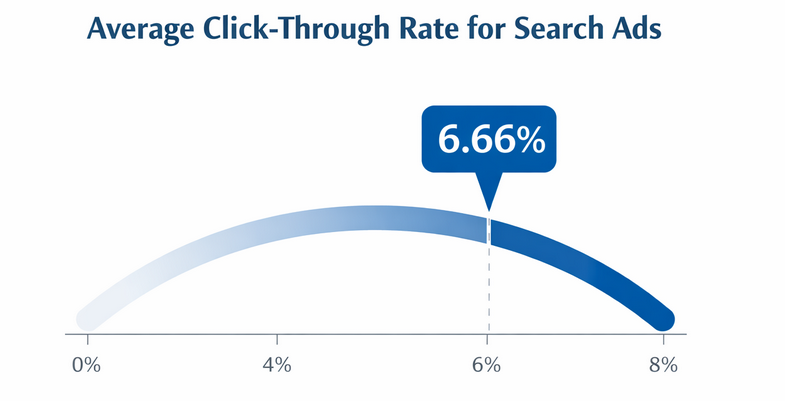
Average click-through rate of 6.66% for search ads, demonstrating typical engagement levels advertisers should benchmark against during diagnostics
Check:
-
Audience size trends over the last 7–14 days
-
Frequency growth and reach saturation
-
Overlapping audiences across active campaigns
Once frequency exceeds 4–5 impressions per user in short timeframes, click-through rates often decline by 15–25%, signaling audience fatigue rather than creative failure.
Minutes 15–20: Creative Performance Signals
Instead of reviewing all creatives, focus only on outliers.
Identify:
-
Top 20% creatives by spend
-
Bottom 20% creatives by conversion rate or CTR
-
Creatives with sharp week-over-week declines
In many accounts, 70–80% of spend concentrates on a small subset of creatives. Diagnosing those few assets delivers faster insights than broad creative reviews.
Minutes 20–25: Funnel and Post-Click Review
Strong ads cannot compensate for broken funnels. Quickly review post-click performance.
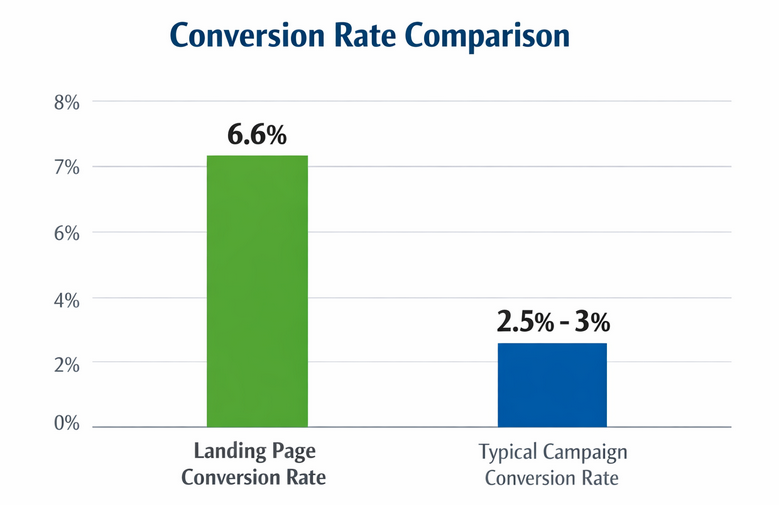
Average click-through rate of 6.66% for search ads, demonstrating typical engagement levels advertisers should benchmark against during diagnostics
Key indicators:
-
Landing page load time
-
Drop-off between click and conversion
-
Device or browser-specific issues
Research shows that every additional second of page load time can reduce conversion rates by up to 7%, making technical issues a frequent hidden bottleneck.
Minutes 25–30: Hypothesis and Action Selection
End the session by writing one clear hypothesis and one action.
Examples:
-
“Performance dropped due to audience saturation; expand reach and reduce frequency caps.”
-
“ROAS declined after budget increase; revert budget and allow re-learning.”
Limiting yourself to a single action prevents over-optimization and makes results easier to evaluate.
Common Diagnostic Mistakes to Avoid
Even experienced teams fall into these traps:
-
Fixing symptoms instead of root causes
-
Comparing performance across mismatched timeframes
-
Reacting to daily fluctuations instead of trends
-
Changing creatives before verifying delivery and tracking
Avoiding these mistakes alone can improve optimization efficiency without increasing ad spend.
Turning Diagnostics Into a Habit
A 30-minute diagnostic works best when done consistently. Teams that schedule structured diagnostics at least once per week report more stable performance and fewer emergency optimizations.
Over time, documented diagnostics create a valuable knowledge base that reveals recurring patterns across campaigns, audiences, and platforms.
Suggested Reading
To go deeper into related topics, consider these articles:
Final Thoughts
Fast campaign diagnostics are not about finding every problem. They are about finding the most important problem quickly. With a repeatable 30-minute framework, teams can stay proactive, reduce wasted spend, and make performance decisions with confidence.