Facebook and Instagram ads can deliver incredible ROI — but only when campaigns are set up to support the algorithm, not confuse it. Many advertisers blame poor targeting or high CPMs when the real issue is deeper: misaligned data, poor creative strategy, or structural flaws in how the account is built.
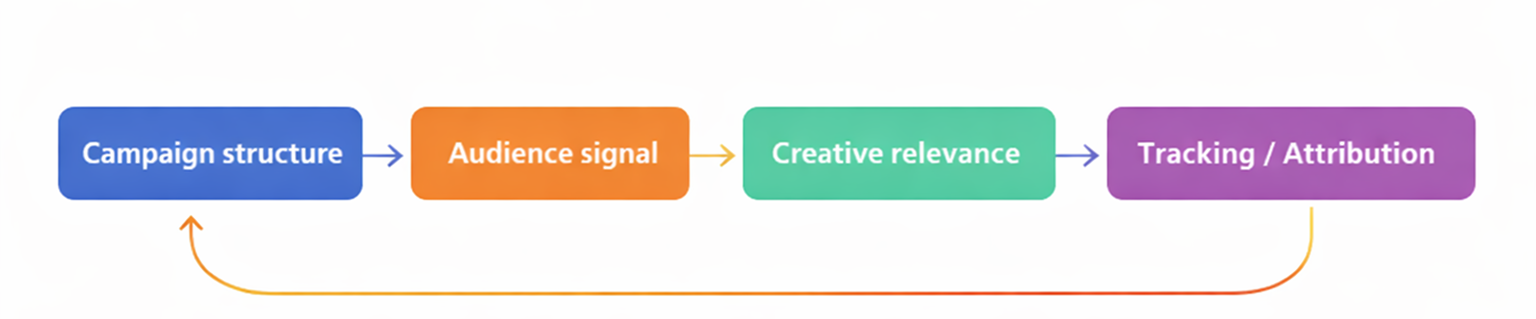
Below are the most common mistakes that stall growth, waste budget, and make scaling impossible — and how to fix them with smarter systems.
Misreading early performance data
One of the fastest ways to lose a good campaign is by acting too soon. Facebook’s learning phase isn’t just a formality — it’s when the system actively gathers conversion signal data to find the right buyers. If you kill an ad before it exits this phase, the algorithm doesn’t get enough data to optimize delivery.
It’s also easy to get distracted by vanity metrics in the first 24–48 hours. High CPMs don’t mean failure if you’re seeing strong click-through rates or solid add-to-cart rates. A low ROAS on day one doesn't mean the ad won’t recover over a 7-day attribution window.
Quick tips:
-
Avoid making decisions in the first 3 days unless there’s clear underperformance across the board (e.g., CTR below 0.5%, no conversions at all).
-
Wait until you hit at least 50 conversions per ad set before assuming it’s failing.
-
Watch blended funnel metrics (CTR, CPC, landing page bounce rate) rather than isolated platform stats.
Patience in early stages often means better long-term stability. For faster, more efficient learning, see How to Finish the Facebook Learning Phase Quickly.
Over-segmenting audiences
Advertisers often overcomplicate their targeting in the name of precision. Instead of consolidating, they build dozens of ad sets, each aimed at a niche demographic or interest bucket. The problem? These ad sets usually compete against each other in auctions, cannibalize performance, and limit scale.
Meta’s ad delivery system works best with larger audience pools that give it space to explore. Narrow segmentation might feel safer, but it actually prevents the algorithm from finding your best buyers.
To improve results:
-
Collapse similar interest audiences into one ad set and let the algorithm optimize delivery.
-
Avoid stacking too many lookalikes — test one at a time with exclusions to avoid overlap.
-
Use Advantage+ audiences or broad targeting with pixel data to power delivery.
Modern Facebook ads are less about micro-targeting and more about creative relevance plus signal quality. Learn more in Why Audience Overlap Is Killing Your Facebook Ad Performance.
Creative that fails in the first 2 seconds
In fast-scrolling environments like Facebook and Instagram, your ad only has a moment to make an impression. If your creative doesn’t communicate value fast, even the best audience strategy won’t save it.
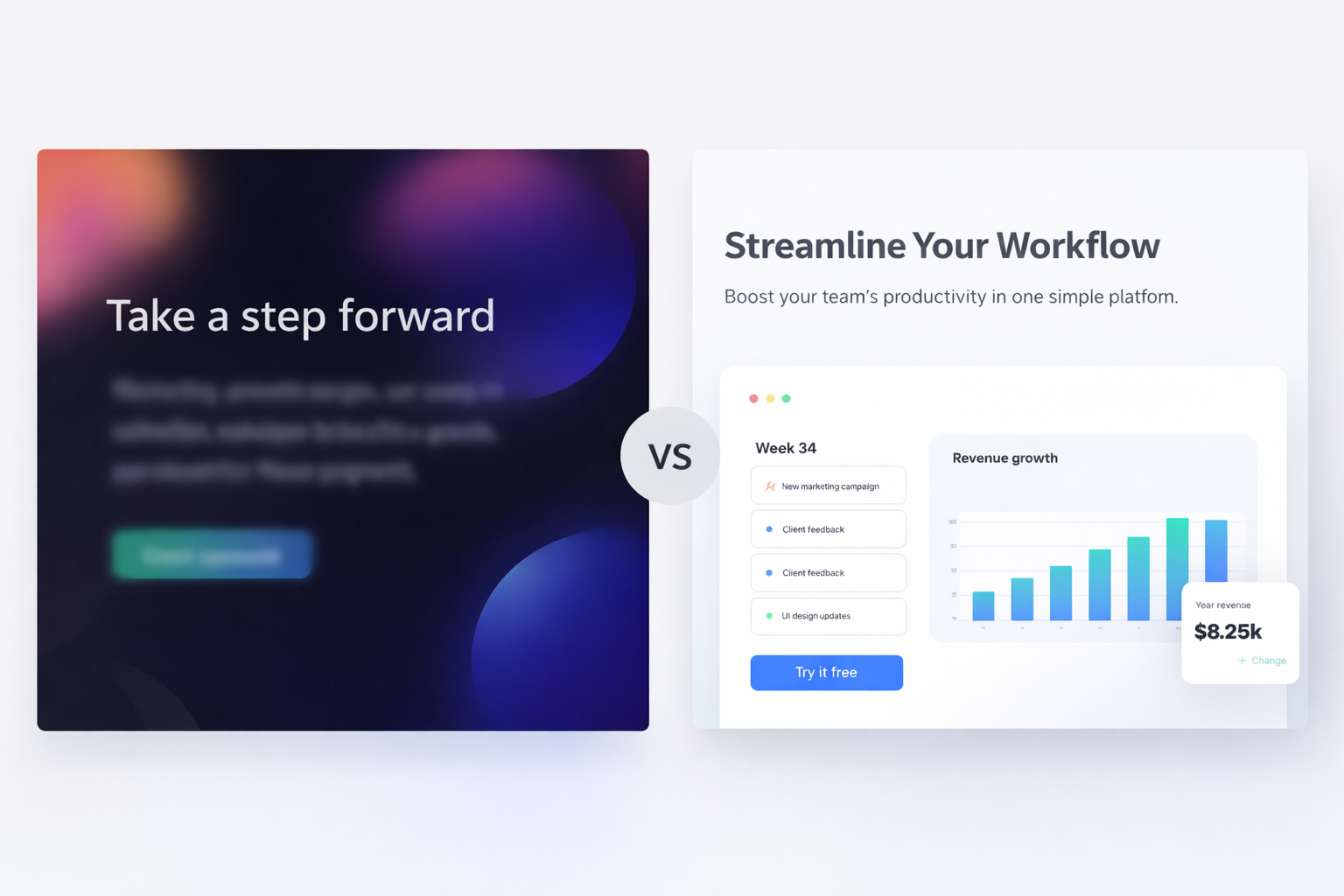
This is especially critical for mobile-first campaigns. Users scroll with their thumb, often without sound, and skip anything that doesn’t feel immediately relevant.
Strong creative execution includes:
-
Leading with the product or benefit in the first 1–2 seconds — no slow intros or brand logos.
-
Clear visuals that demonstrate what the product does, preferably in use (e.g., screen recordings, demos, or tutorials).
-
Mobile-first framing — avoid wide shots or complex visuals that don’t translate well to small screens.
Use attention hooks (questions, movement, user testimonials) and pair them with clear CTAs. Great creative does the job of qualifying the user before they click.
Treating every campaign like a test
Many advertisers treat every campaign as an experiment — constantly pausing, editing, and restarting. But Facebook’s algorithm relies on data consistency. When you reset learning by making frequent changes, the campaign loses momentum and can never stabilize.
Testing is essential, but it should be structured. Mixing testing and scaling in the same campaign often leads to noisy, unreliable results. You don’t need five ad sets to test five creatives — test one variable at a time.
Smarter testing practices:
-
Build separate test campaigns with isolated variables (e.g., creative-only or audience-only tests).
-
Use CBO (campaign budget optimization) for scaling, but ABO (ad set budget optimization) for controlled tests.
-
Keep a clean naming structure and tracking sheet to understand what’s actually working.
Test with purpose — not just because performance dropped. Often, fatigue, not failure, is the issue. Explore Key Strategies for Facebook Ad Testing: What You Need to Know.
Using the wrong attribution window
Facebook attribution settings determine how conversions are counted. If you’re using a 1-day click attribution, but your product has a longer consideration cycle, you’ll consistently undervalue your ads — especially for cold traffic or higher-ticket items.
Worse, you might pause ads that are driving delayed conversions, simply because you’re not looking at the full picture.
Here’s how to fix it:
-
Switch to 7-day click / 1-day view attribution in Ads Manager for a more accurate view.
-
Use server-side tracking (Meta’s Conversions API) to capture post-click data beyond browser sessions.
-
Align your attribution window to your sales cycle — longer cycles need broader windows.
To go deeper into attribution logic and tracking accuracy, read Meta Ads Attribution: What to Know About Windows, Delays, and Data Accuracy.
Letting the algorithm optimize for weak events
Facebook’s delivery optimization depends on the event you select. If you tell it to optimize for a low-signal event (like "View Content" or “Add to Cart”), you might get cheap clicks — but poor conversions.
This is especially risky when you use events that fire easily but don’t correlate strongly with actual revenue.
What to do instead:
-
Optimize for Purchase as early as possible — even with a smaller budget.
-
If volume is too low, use a proxy like Initiate Checkout or a high-value Lead event — but only if it has intent.
-
Always verify that your events are firing correctly using Meta’s Events Manager or test events tool.
Don’t train the algorithm to find users who take partial actions. Guide it to those who complete valuable ones.
Ignoring creative fatigue
If your ad frequency climbs and performance drops, it's a sign your audience has seen the ad too many times. Creative fatigue is especially common in retargeting campaigns and small-budget accounts that recycle the same ads for weeks.
Just because an ad worked well last month doesn't mean it will keep working. Even high-performing creatives burn out if they’re not refreshed regularly.
How to stay ahead:
-
Track frequency weekly. Anything above 2.5–3 for cold traffic should trigger a review.
-
Plan creative refreshes in cycles. Rotate visual styles, messaging angles, and formats (video, carousel, static).
-
Monitor engagement metrics (CTR, thumbstop ratio, comments). A dip here often signals fatigue before conversions drop.
Read How to Avoid Ad Fatigue and Keep Optimal Ads Costs for actionable ways to refresh your ad performance.
Final thoughts
Many advertisers focus on quick tricks or viral formats to boost ad performance. But the truth is, lasting results come from disciplined systems:
-
Build simplified, scalable campaign structures.
-
Match creative testing to your funnel stage.
-
Respect the algorithm's learning process.
-
Let data inform, not dictate, your decisions.
The most effective Facebook advertisers don’t guess — they build repeatable frameworks that turn insights into performance. Learn how to implement those systems in The Science of Scaling Facebook Ads Without Killing Performance.