Facebook continues to be one of the largest traffic and audience acquisition platforms for media businesses worldwide. With billions of monthly active users and highly sophisticated targeting capabilities, it allows publishers to reach niche audiences at scale.
Key industry statistics highlight its relevance:
-
Facebook reaches over 3 billion monthly active users globally, making it one of the largest addressable audiences for publishers.
-
Social media drives approximately 30–35% of referral traffic to news and media websites on average.
-
Publishers using paid social campaigns report up to 2–3x higher content discovery rates compared to organic-only distribution.
-
Subscription-based media brands using Facebook Ads often see cost-per-acquisition (CPA) reductions of 20–40% when leveraging retargeting and lookalike audiences.
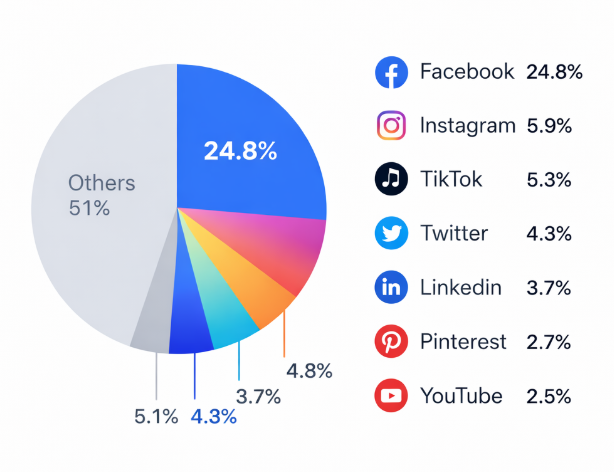
Social media referral traffic distribution shows Facebook as the leading source of referrals compared to other social platforms in 2025
For publishers facing declining organic reach and algorithm volatility, paid social provides predictable traffic and measurable ROI.
Core Facebook Ad Objectives for Publishers
To be effective, Facebook campaigns should be aligned with clear business goals rather than vanity metrics.
Audience Growth
Facebook Ads enable rapid audience scaling through interest targeting, lookalike audiences, and engagement-based segmentation. Media brands can promote top-performing articles, newsletters, or video content to attract new readers.
Subscription and Membership Sales
For paid media models, Facebook Ads support the full funnel—from awareness to conversion. Retargeting readers who consumed multiple articles or visited pricing pages significantly increases subscription conversion rates.
Content Amplification
Breaking news, evergreen features, podcasts, and video content benefit from paid distribution, extending lifespan and visibility beyond organic reach limitations.
Brand Authority and Recall
Consistent exposure through video, carousel, and story formats strengthens brand recognition and positions publishers as trusted sources in their niches.
Advanced Targeting Strategies for Media Brands
Effective targeting is the foundation of profitable Facebook campaigns.
Lookalike Audiences Based on High-Value Readers
Instead of building lookalikes from all visitors, publishers should focus on high-intent segments such as:
-
Newsletter subscribers
-
Paying members
-
Users with multiple session visits
This approach improves audience quality and lowers acquisition costs.
Engagement-Based Retargeting
Facebook allows retargeting users who watched videos, interacted with posts, or engaged with lead forms. These audiences convert significantly better than cold traffic.
Interest Layering for Niche Publications
For specialized publishers (finance, health, tech, education), layering interests with demographic and behavioral filters ensures ads reach readers most likely to engage deeply with content.
Creative Best Practices for Media Ads
Creative performance directly impacts cost efficiency and scalability.
Headlines That Signal Value
Ads should clearly communicate what readers will gain—exclusive insights, breaking updates, or expert analysis.
Visual-First Storytelling
Short videos, motion graphics, and bold imagery outperform static creatives, especially in feed and story placements.
Native Content Feel
Ads that resemble organic posts—rather than promotional banners—achieve higher click-through rates and longer session durations.
Continuous Creative Testing
Top-performing publishers rotate creatives frequently. A/B testing headlines, visuals, and formats helps prevent ad fatigue and maintains performance stability.
Measuring Success Beyond Clicks
For media brands, success is not just about traffic volume.
Key performance indicators include:
-
Cost per engaged session
-
Scroll depth and time on page
-
Return visit frequency
-
Subscription conversion rate
Publishers that optimize campaigns around engagement and lifetime value rather than clicks alone achieve more sustainable growth.
Common Mistakes Publishers Should Avoid
-
Optimizing solely for traffic without measuring engagement quality
-
Sending paid traffic to low-retention or slow-loading pages
-
Running broad targeting without segmentation
-
Ignoring frequency and creative fatigue
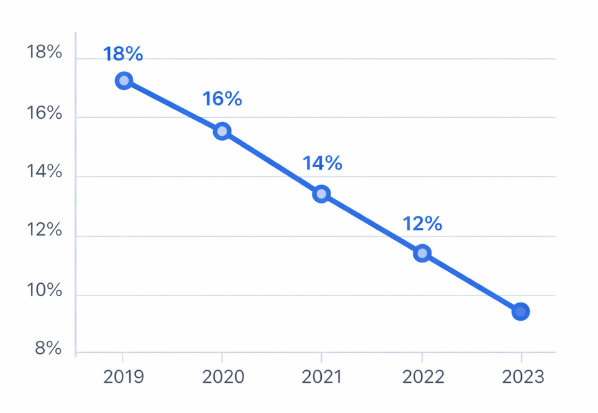
Trend line showing the decrease in Facebook’s share of referral traffic to news sites over the past four years, highlighting changes in social traffic patterns
Avoiding these pitfalls improves campaign efficiency and protects brand credibility.
Scaling Facebook Ads for Long-Term Growth
Sustainable scaling requires a structured approach:
-
Segment campaigns by funnel stage
-
Use automated rules to control costs
-
Refresh creatives every 10–14 days
-
Continuously feed high-quality first-party data into audience building
Media companies that treat Facebook Ads as a long-term growth channel—not a short-term traffic boost—see stronger retention and monetization outcomes.