If you’ve ever launched a Facebook or Instagram ad and quickly changed something — the budget, the audience, or the creative — you’re not alone.
But here’s the thing: ad platforms don’t like chaos.
The algorithm behind Facebook and Instagram ads is designed to learn and optimize over time. And when you keep changing things, it has to start over. That means higher costs, fewer conversions, and unpredictable results.
This article breaks down why stability matters — and how to create campaigns that actually improve with time.
What “stable” means in paid social campaigns
When advertisers hear “stable campaign,” they often think it means doing nothing.
But that’s not the case. Stability means your campaign runs long enough for the algorithm to understand what’s working — without being constantly interrupted.
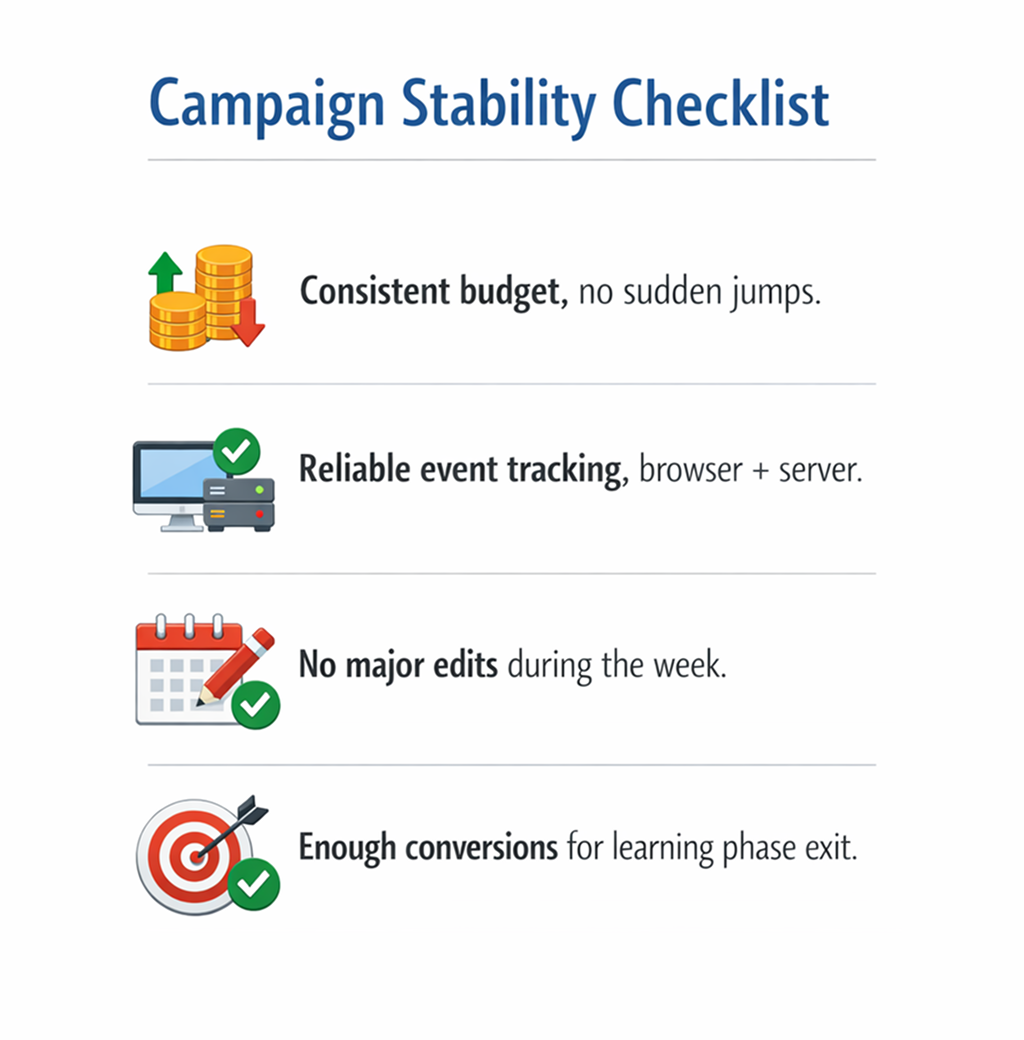
A stable campaign has:
-
A consistent structure: You’re not switching audiences, goals, or creative types every day.
-
Reliable event tracking: Your pixel or server events (like purchases, signups, leads) are firing accurately.
-
Room to learn: The ad is given time and spend to exit the learning phase — usually 50 conversions in 7 days.
To speed up this process without hurting stability, see how to finish the Facebook learning phase quickly.
What happens when you change campaigns too often?
Frequent edits don’t just waste your time — they confuse the algorithm. Each time you make a major change, the campaign re-enters the learning phase.
Here’s what that leads to:
-
Higher CPMs: The algorithm has to "guess" again who to show your ads to.
-
Unstable delivery: Results swing from good to bad without clear reasons.
-
Slower improvement: The system keeps restarting and never builds strong patterns.
Learn more in Why Your Facebook Ads Stop Performing After Two Weeks — a helpful guide on how to handle the dip in performance many advertisers face when they tweak too often.
Why stable campaigns get better over time
The algorithm rewards consistency. When your campaign runs without interruptions, it becomes easier for Meta to:
1. Identify patterns
The more data your campaign collects, the better Meta gets at showing your ads to people likely to convert.
Example: If your product appeals most to women aged 30–45 in urban areas, the algorithm will discover and prioritize that segment — but only if you give it time.
2. Lower your costs
As performance improves, the system starts to win more valuable impressions at lower prices. This is called delivery optimization.
Example: Campaigns that exit the learning phase often see a drop in CPR (cost per result) of 20–30% compared to the first few days.
3. Improve lookalike and retargeting audiences
Reliable signals — like purchases or add-to-carts — feed your custom audiences. Those, in turn, make future campaigns smarter.
If your pixel gets steady event data, your 1% lookalikes become much more accurate. Here's a detailed guide on how to build lookalike audiences that actually convert.
Common reasons campaigns stay unstable (and how to fix them)
Many advertisers unintentionally hurt their campaigns by making quick edits. Here are the biggest culprits.
Editing ad sets mid-flight
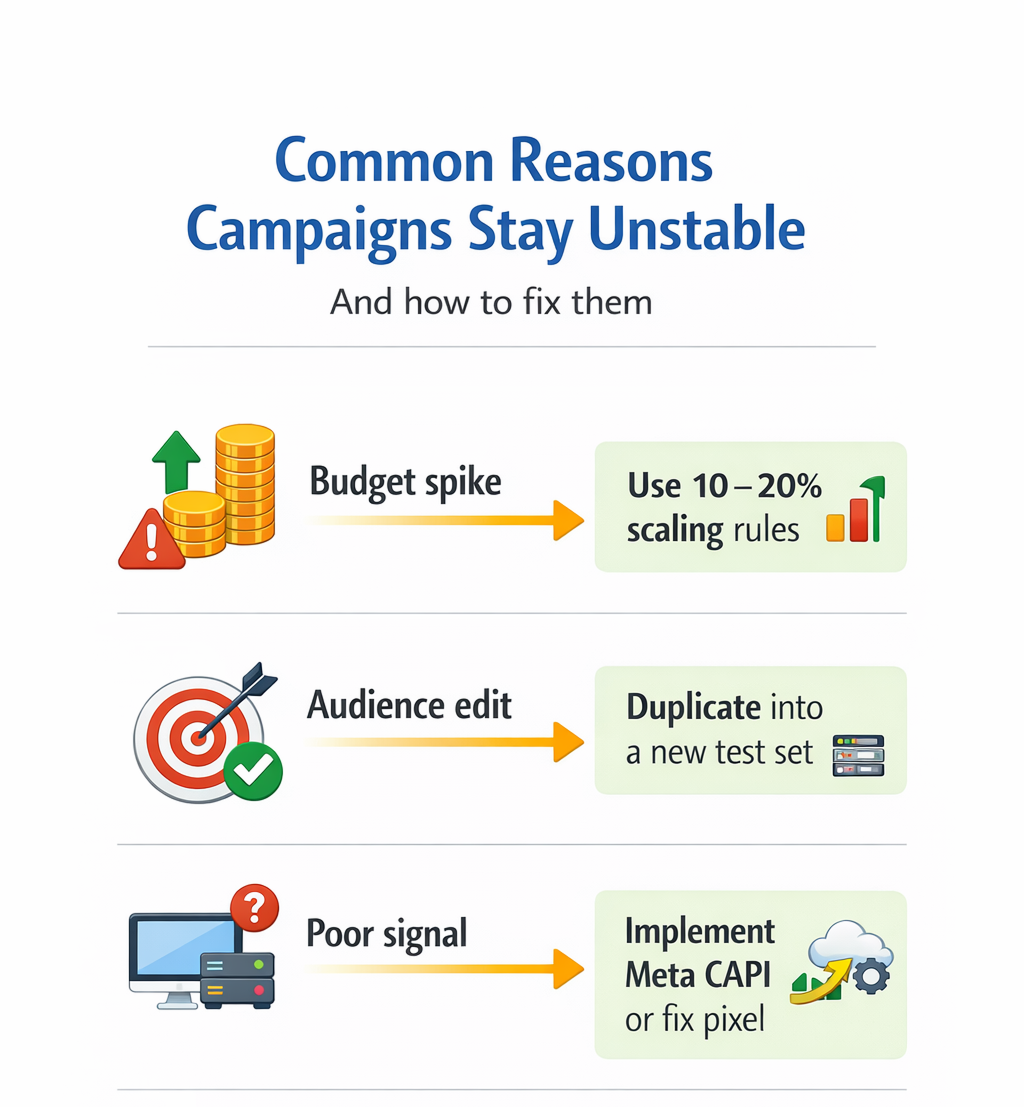
Making changes to targeting, placements, or optimization goals every few days resets the learning phase.
Fix: Wait 5–7 days before making changes. Track performance trends instead of reacting to one bad day.
Big budget jumps
Raising a campaign budget from $100/day to $300/day all at once often breaks delivery efficiency.
Fix: Use incremental scaling — increase budgets by 10–20% every few days. Or use Meta’s built-in automated rules to manage spend thresholds based on performance.
Learn more about this in Why Daily Budget Increases Can Hurt Your Performance (and What to Do Instead).
Poor tracking setup
If your pixel isn’t firing correctly or you're missing server-side events (like with Meta CAPI), the algorithm doesn’t have the data it needs.
Fix: Set up both browser and server tracking. Tools like Google Tag Manager or Shopify integrations make this easier.
How to stay stable and still test new ideas
Many marketers ask: “But how do I test without hurting performance?”
The key is to separate core campaigns from test campaigns.
Here’s a helpful weekly testing rhythm you can follow:
| Day | What to do |
|---|---|
| Monday | Launch 2–3 new creatives (ads only) |
| Wednesday | Check CTR, CPM, cost per add-to-cart |
| Friday | Turn off low-performers, duplicate winners to scale |
You can also improve results by using smarter testing frameworks. See Test Ads with New Experiments Section In Facebook Ads Manager for how to structure creative tests without resetting your core campaign.
Final thought: algorithm-friendly campaigns aren’t static — they’re smart
If your campaigns seem stuck or unpredictable, the solution might not be more tactics — it might be more patience.
Work with the system. Not against it.
Create a campaign structure that allows learning to happen. Track performance, but don’t jump at every dip. Test with purpose, not panic.
That’s how you build campaigns that get cheaper, smarter, and more effective over time.