The days of building hyper-specific Facebook audiences by stacking interests and exclusions are coming to an end. If you’ve relied on narrow targeting to control who sees your ads, 2026 will challenge that approach.
Meta is shifting control away from advertisers and toward automation. That means less micromanaging, and more dependence on machine learning to find the right people. The tools are still powerful — but how you use them has to change.
This guide explains what’s changed, what’s going away, and how to build campaigns that still deliver results.
Detailed Targeting Is Consolidating — and Shrinking
Meta has started combining and retiring many detailed interest options. These changes began rolling out in 2025 and will be fully enforced by January 15, 2026. If you're using affected interest selections past that date, your ads simply won’t deliver.
For a detailed breakdown of the 2025 targeting updates and how to adjust, read Facebook Ads Targeting Updates: How to Adapt in 2025.
What’s Changing
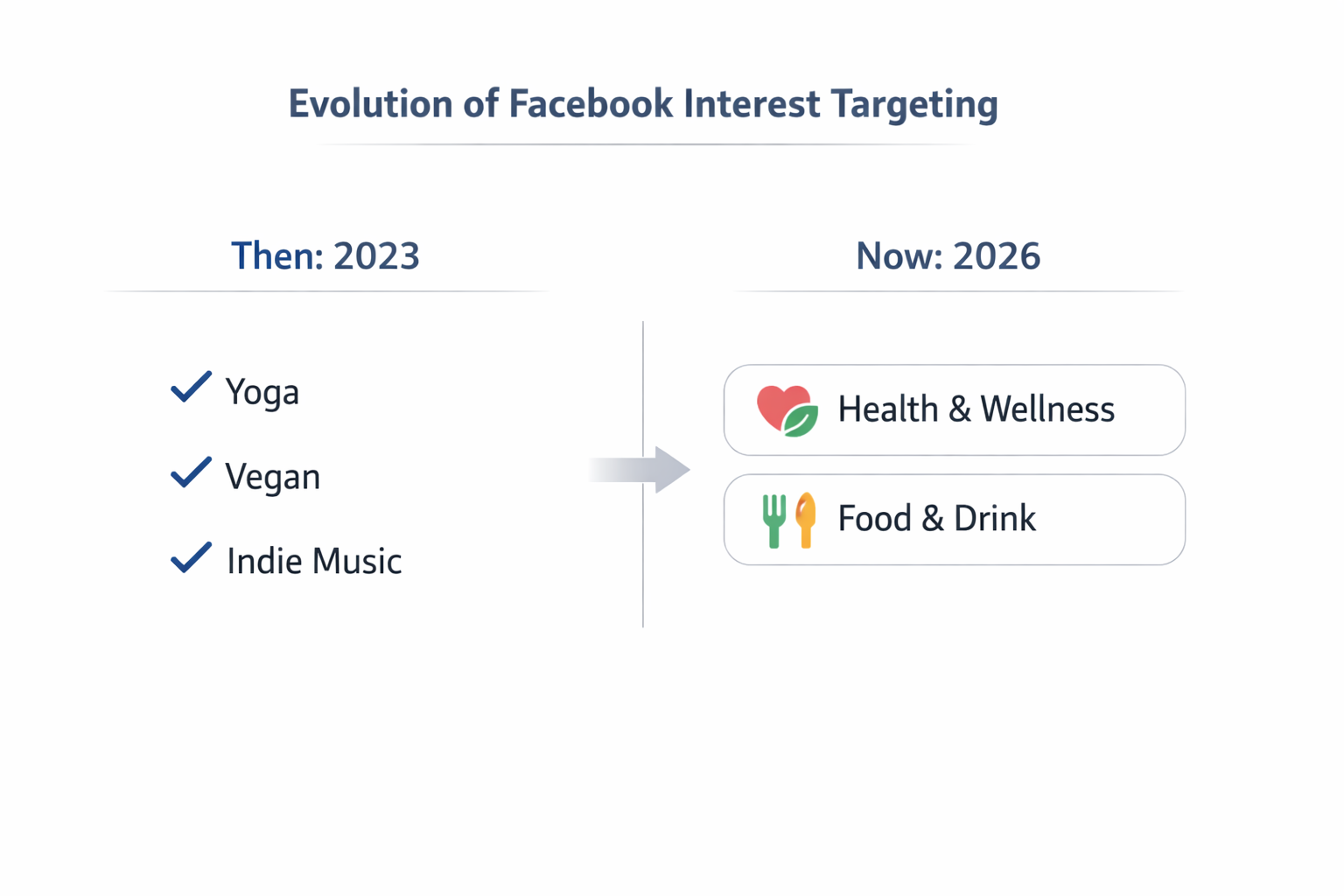
Interest targeting is still available, but fewer, broader categories are replacing specific options. For example:
-
Media: Instead of individual musicians or TV shows, you’ll see broader genres, such as rock music or reality TV.
-
Food: Options like sushi and vegan desserts may now be grouped under food & drink.
-
Hobbies: Interests such as trail running or urban gardening are merging into general themes, like fitness or outdoor activities.
This has two consequences. First, niche audiences are harder to isolate. Second, new groupings often dilute intent, which means less precision — and less control — for advertisers.
If you’re new to interest-based targeting or want a refresher, check out Facebook Ad Targeting 101.
Targeting Exclusions Are Being Removed
Meta also removed the ability to use detailed targeting exclusions. This change began in March 2025 and now applies across Ads Manager and post boosting.
You can no longer remove people based on specific interests or behaviors. If you relied on exclusions to eliminate poor-fit users or avoid overlap between funnel stages, this limitation matters.
You’ll still see warnings in Ads Manager if your ad sets use outdated exclusions. Those ads won’t publish until you remove them.
There are, however, a few workarounds — and some still offer precise control.
What You Can Still Use
-
Custom audience exclusions: Upload customer lists to suppress past buyers or segment existing leads.
-
Pixel-based exclusions: Exclude users who triggered a specific conversion event, such as purchases or sign-ups.
-
Account-level audience controls: Particularly useful for sensitive industries, like employment, finance, or healthcare. These aren’t replacements for interest exclusions, but they can help maintain compliance and relevance.
Advantage+ Targeting Is Becoming the Default
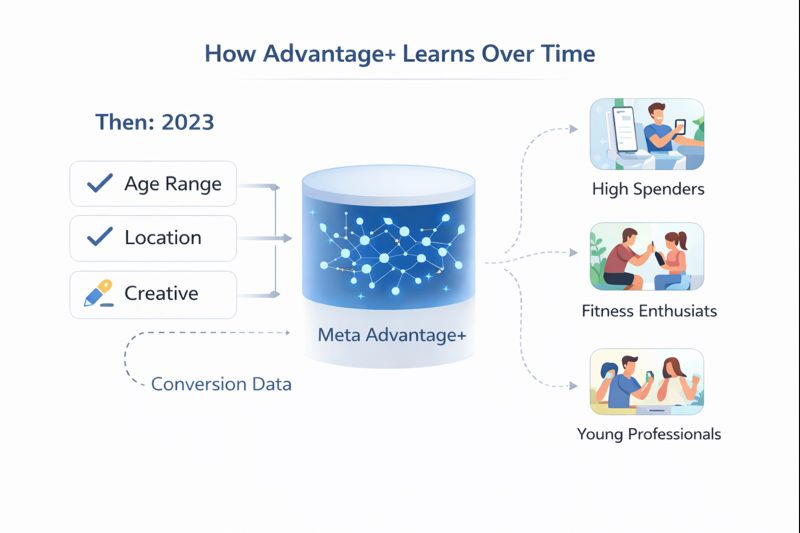
As Meta removes manual controls, it’s steering advertisers toward Advantage+ targeting. This system uses your basic inputs — age range, gender, location — as soft suggestions. From there, Meta expands or narrows your audience automatically, based on performance.
Advantage+ is no longer optional. If you create a new campaign today, it’s likely already applied unless you opt out (and even that is increasingly difficult).
Why This Matters
Advantage+ works best when:
-
You feed the algorithm strong conversion signals; for example, purchase events tracked through the pixel or Conversions API.
-
Your ads are designed to appeal to more than one narrow persona; broad, clear offers work better than niche copy tied to one specific group.
-
You trust the system to optimize delivery based on results; not assumptions.
Still trying to decide between Advantage+ and manual audience setup? This guide breaks it down: Meta Advantage+ or Manual Setup: How to Make the Right Choice.
How Advertisers Should Adapt in 2026
Meta’s changes may seem limiting, but advertisers who adapt can gain efficiency, scale, and better performance. Here’s how to work with the system — not against it.
Use Custom Audiences More Strategically
Custom audiences haven’t changed. In fact, they’ve become more important now that detailed targeting is shrinking.
Use them to:
-
Retarget recent website visitors: People who viewed a product or pricing page in the last 7 days are still high intent.
-
Upload CRM segments: Target or exclude leads based on stage, region, or source.
-
Build layered lookalikes: A 1% lookalike based on your highest-value customers will outperform generic interest-based targeting.
To go beyond pixel data, you can even target by behavior within communities. Learn how in How to Build Your Target Audience from a Facebook Group.
Rethink Funnel Structure
Without targeting exclusions, separating funnel stages becomes more difficult. But not impossible — if you lean on behavior and timing.
Instead of this:
-
Top of funnel: Broad interest targeting.
-
Middle of funnel: Retargeting with interest-based exclusions.
-
Bottom of funnel: Retargeting with purchase-based exclusions.
Try this instead:
-
Top of funnel: Advantage+ with no exclusions; use engaging creative to attract wide interest.
-
Middle of funnel: Target users who engaged with video, visited the site, or clicked on your ad within the last 14 days.
-
Bottom of funnel: Exclude converters using pixel data or custom uploads; show urgency-focused creative to previous cart abandoners.
You can also refine these layers by choosing your sources carefully. Here's a full walkthrough: How to Select Facebook and Instagram Sources for Targeting with LeadEnforce.
What’s Coming Next
2026 will bring further shifts in how audiences are built and how ads are delivered. Smart advertisers are preparing for a landscape that’s even more automated and privacy-focused.
What to watch for:
-
AI-generated audience expansion: Meta will continue blending audience inputs with predicted behaviors. Expect less transparency into “who” is seeing your ads — and more pressure to focus on “what” drives conversions.
-
Increased importance of signal quality: If your pixel and Conversions API setup is weak, Advantage+ won’t perform well. The quality of your event tracking will directly affect your ROI.
-
More account-level controls: Instead of targeting changes at the campaign level, Meta will introduce broader, brand-level settings — especially for regulated industries.
Final Takeaway
The old way of building Facebook ad audiences is gone. You can no longer rely on stacking niche interests or removing irrelevant users with exclusions. In 2026, your targeting success will come from a different set of skills:
-
Structuring first-party data correctly.
-
Feeding clean signals into the system.
-
Designing creative that aligns with real user behavior — not hypothetical personas.
If you're willing to shift your approach, Facebook and Instagram ads still work. But the platform decides more than it used to — and that’s the new reality.