You launch a campaign and expect steady reach growth. Instead, the same users keep seeing your ads. Frequency rises fast, engagement drops, and costs creep up.
This issue is common in Meta campaigns. It usually signals structural limits in targeting, budget, or audience design.
Let’s break down why this happens and how to fix it.
Why Your Ads Keep Showing to the Same Audience
Meta’s delivery system optimizes for predicted outcomes. If it finds a small group likely to convert, it keeps returning there.
When your setup restricts expansion, delivery narrows even further.
Audience Size Is Too Small
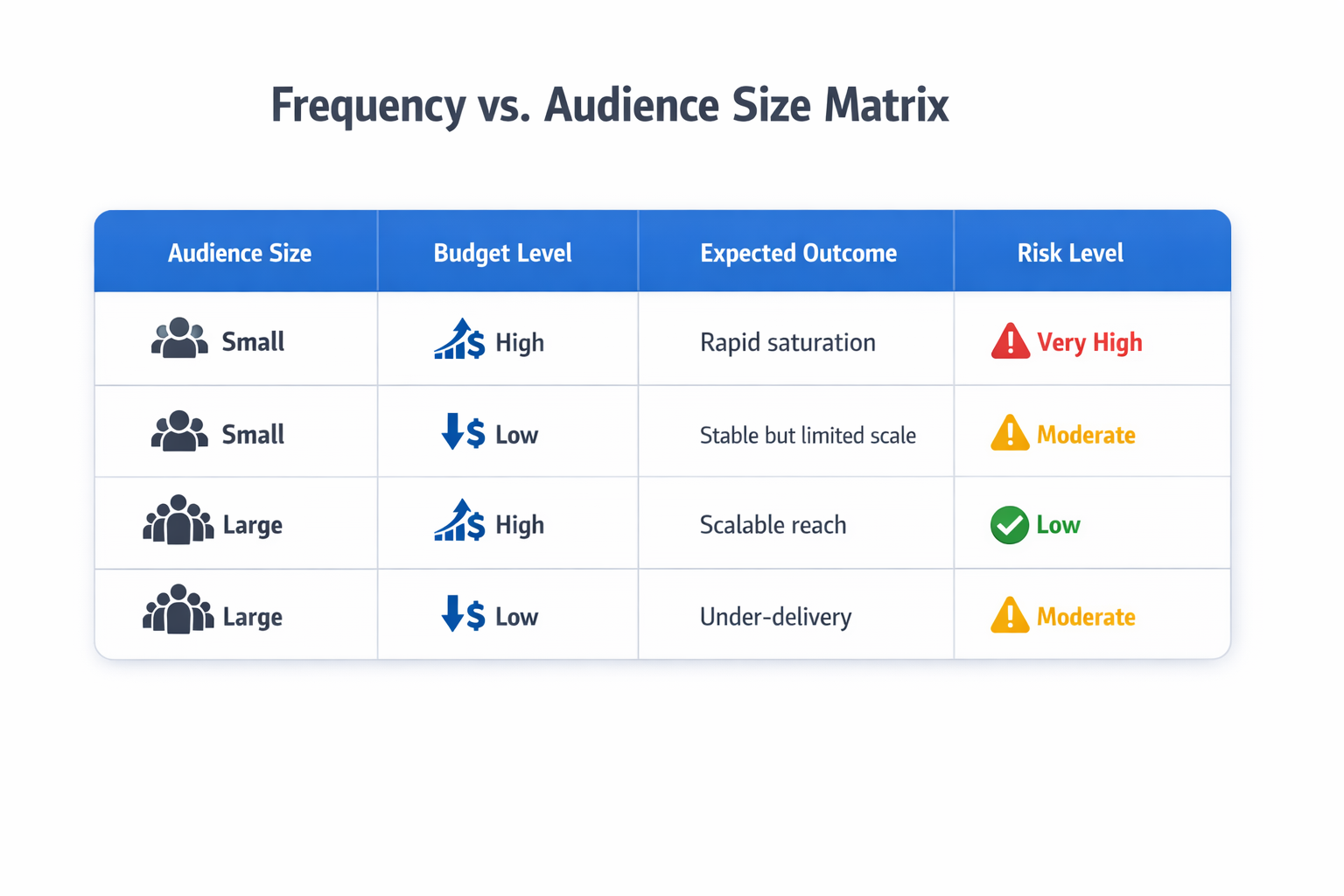
The most frequent cause is limited audience volume. Many advertisers underestimate how quickly small audiences saturate.
Common examples include:
-
Retargeting windows under 14 days; these often contain only recent visitors and exclude broader intent signals.
-
Lookalike audiences built from fewer than 1,000 seed users; small seeds reduce model stability.
-
Detailed targeting stacked with multiple narrow interests; each layer shrinks reach.
If your audience is restricted, you may also see delivery warnings or limited reach signals. In that case, review this guide on troubleshooting a Facebook audience that is too narrow .
When the available pool is small, Meta increases frequency rather than expanding reach.
Budget Is Too High for the Available Audience
Budget and audience size must align. If you push high spend into a small pool, repetition becomes inevitable.
Watch for these signals:
-
Frequency above 3 within the first few days; this suggests rapid saturation.
-
Rising CPM combined with flat impressions; inventory is constrained.
-
Declining click-through rate while spend remains constant.
If you are unsure how audience scale affects delivery, this breakdown of why audience size matters in Facebook ads explains the mechanics .
Lowering the budget or expanding the audience usually resolves the issue.
Overlapping Audiences Across Ad Sets
Audience overlap forces Meta to choose one ad set per user. That creates internal competition and limits distribution breadth.
You may see:
-
Ad sets stuck in learning phase; insufficient unique conversions.
-
Similar reach numbers across multiple ad sets; shared user pools.
-
Cost instability; auction pressure inside your own account.
If you suspect cannibalization, review how audience overlap impacts Facebook ad performance and restructure accordingly.
Use the Audience Overlap tool in Ads Manager. If overlap exceeds 20 percent, consolidate targeting.
How Meta’s Delivery Algorithm Affects Reach
Understanding the delivery logic helps diagnose repetition problems.
Optimization Locks Onto Predictable Converters
Meta optimizes for probability, not fairness. Once it identifies high responders, it prioritizes them.
This effect increases when:
-
Conversion events are scarce; the system relies on limited data.
-
Attribution windows are short; fewer users qualify as converters.
-
Creative variations are minimal; fewer signals guide distribution.
The algorithm narrows focus when uncertainty is high.
Learning Phase Constraints
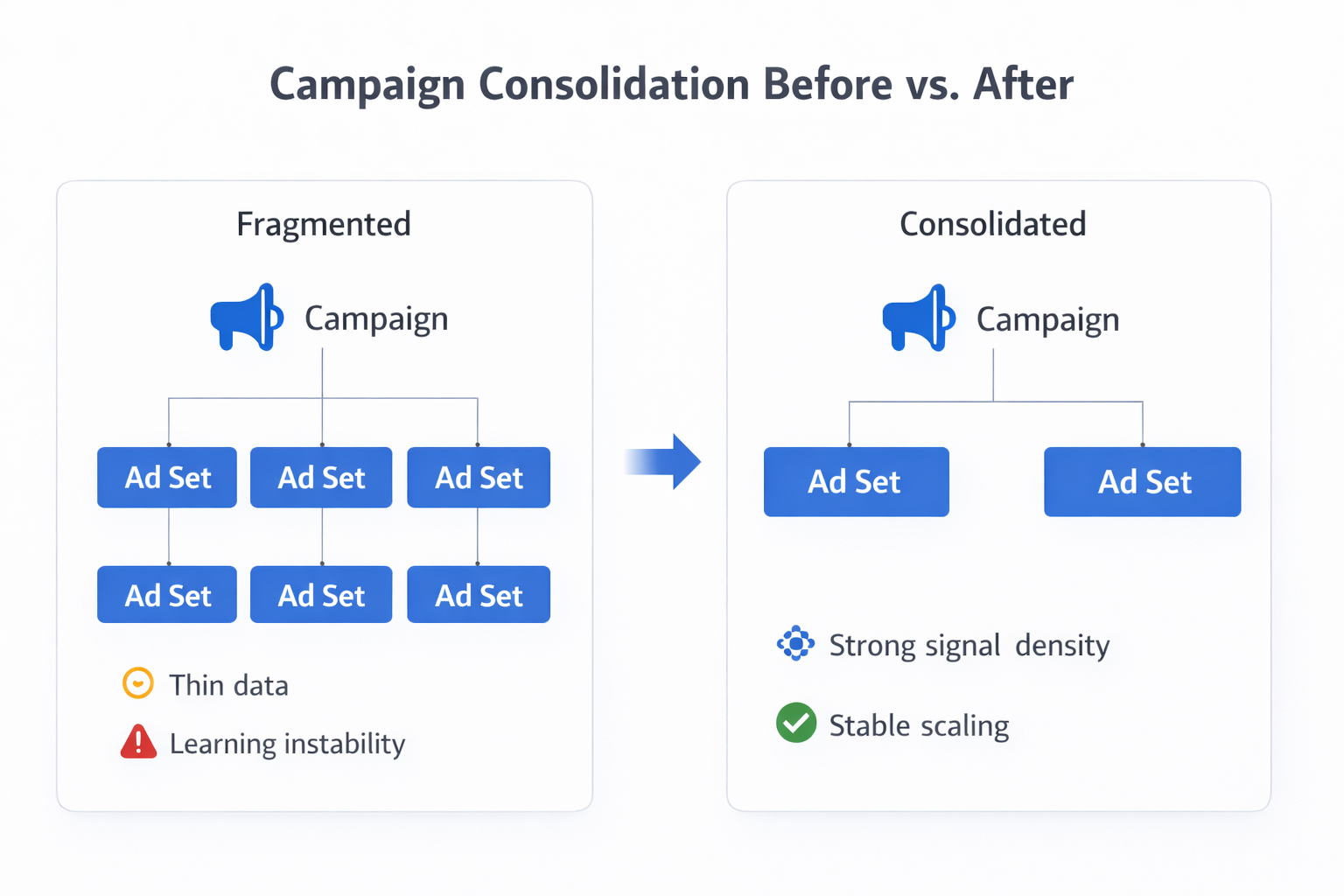
During the learning phase, Meta needs stable signals. If your campaign never exits learning, delivery stays concentrated.
This often happens when:
-
You split budget across too many ad sets.
-
You change creatives frequently.
-
You optimize for low-volume events like purchases in small markets.
If your campaigns remain unstable, this article on why some campaigns never exit the learning phase provides deeper context .
Consolidation improves stability. Fewer ad sets with stronger budgets allow broader reach.
Retargeting Is Designed to Repeat Exposure
Not all repetition is a problem. Retargeting depends on frequency to drive action.
However, issues arise when frequency climbs without incremental conversions.
When Retargeting Becomes Overexposed
Monitor these metrics closely:
-
Frequency above 6 within short windows; fatigue likely sets in.
-
Declining conversion rate over time; diminishing response.
-
Rising cost per result without audience growth.
To refine sequencing and exclusions, explore this complete guide to Facebook retargeting .
Extend your retargeting windows or segment by engagement depth. Separate cart visitors from general site visitors to control exposure.
Short Time Windows Create Micro-Audiences
Seven-day or three-day retargeting pools are extremely small for most brands. They recycle impressions quickly.
Test broader windows such as 30 or 60 days. Then layer exclusions to maintain relevance.
Creative Fatigue Amplifies the Problem
Even with a healthy audience, limited creatives increase repetition impact.
When users see identical visuals repeatedly, performance drops faster.
Signs of Creative Saturation
Look for:
-
Falling click-through rate at stable frequency; interest fades.
-
Negative feedback signals; hides or reports increase.
-
High frequency with flat reach growth; limited expansion.
Introduce meaningful creative variation. Change angles, hooks, and offers rather than minor visual tweaks.
Dynamic Creative Can Help, But Has Limits
Dynamic Creative distributes combinations automatically. It still depends on audience volume.
If the audience is small, the same users will see different combinations repeatedly. Audience expansion must accompany creative testing.
Advanced Fixes to Broaden Delivery
Basic adjustments help. Structural improvements create lasting change.
Consolidate Campaign Structure
Too many ad sets fragment data. Each ad set competes for similar users.
Instead:
-
Merge similar interest groups; allow the algorithm to allocate budget.
-
Use broader targeting with strong creative messaging.
-
Limit ad sets per campaign to those with distinct strategic roles.
This approach improves learning and expands reach.
Rebuild Lookalike Inputs
Poor seed quality limits expansion. A small or low-intent seed produces narrow results.
Improve seeds by:
-
Using high-value customer lists; prioritize revenue-based segments.
-
Excluding recent converters; prevent redundancy.
-
Combining multiple high-quality events into one seed source.
Better inputs produce broader, more stable audiences.
Align Objective With Funnel Stage
If you optimize for purchases at the top of the funnel, the system hunts a tiny subset of ready buyers.
Match objectives carefully:
-
Use engagement or traffic for cold audiences; gather scalable signals.
-
Shift to conversion objectives after building retargeting depth.
-
Avoid skipping mid-funnel stages in competitive markets.
Objective misalignment often explains restricted reach.
When Repetition Is Actually Strategic
High frequency is not always negative. In niche B2B markets, total audience size may be limited.
If your total addressable audience is 5,000 users, repetition is unavoidable. In that case, measure incremental conversions rather than raw frequency.
Focus on cost per qualified lead and sales cycle progression. If performance holds, frequency alone is not a failure metric.
A Practical Diagnostic Checklist
Use this framework before making changes:
-
Check audience size; ensure it supports your daily budget.
-
Review overlap; remove competing ad sets.
-
Compare frequency trends against conversion rates.
-
Audit creative rotation; introduce new messaging angles.
-
Evaluate objective alignment; confirm it matches funnel depth.
Treat repetition as a structural signal, not a surface metric.
Final Thoughts
When Facebook ads show only to the same people, the cause is rarely random. It stems from limited audience volume, fragmented structure, or aggressive budgets.
Fix the inputs and delivery expands. Ignore the structure and frequency will keep rising.