At first glance, Facebook lead forms and website forms do the same thing — they give you a lead. But once those leads reach your sales team, the difference becomes clear.
Facebook leads usually come in fast and in large numbers. Website leads come in slower, but they tend to turn into real opportunities more often.
This isn’t random. Each method shapes how much intent a user has before they submit the form.
Why the Same Person Acts Differently
A person who fills out a Facebook form is in a very different situation than someone who fills out a form on your website.
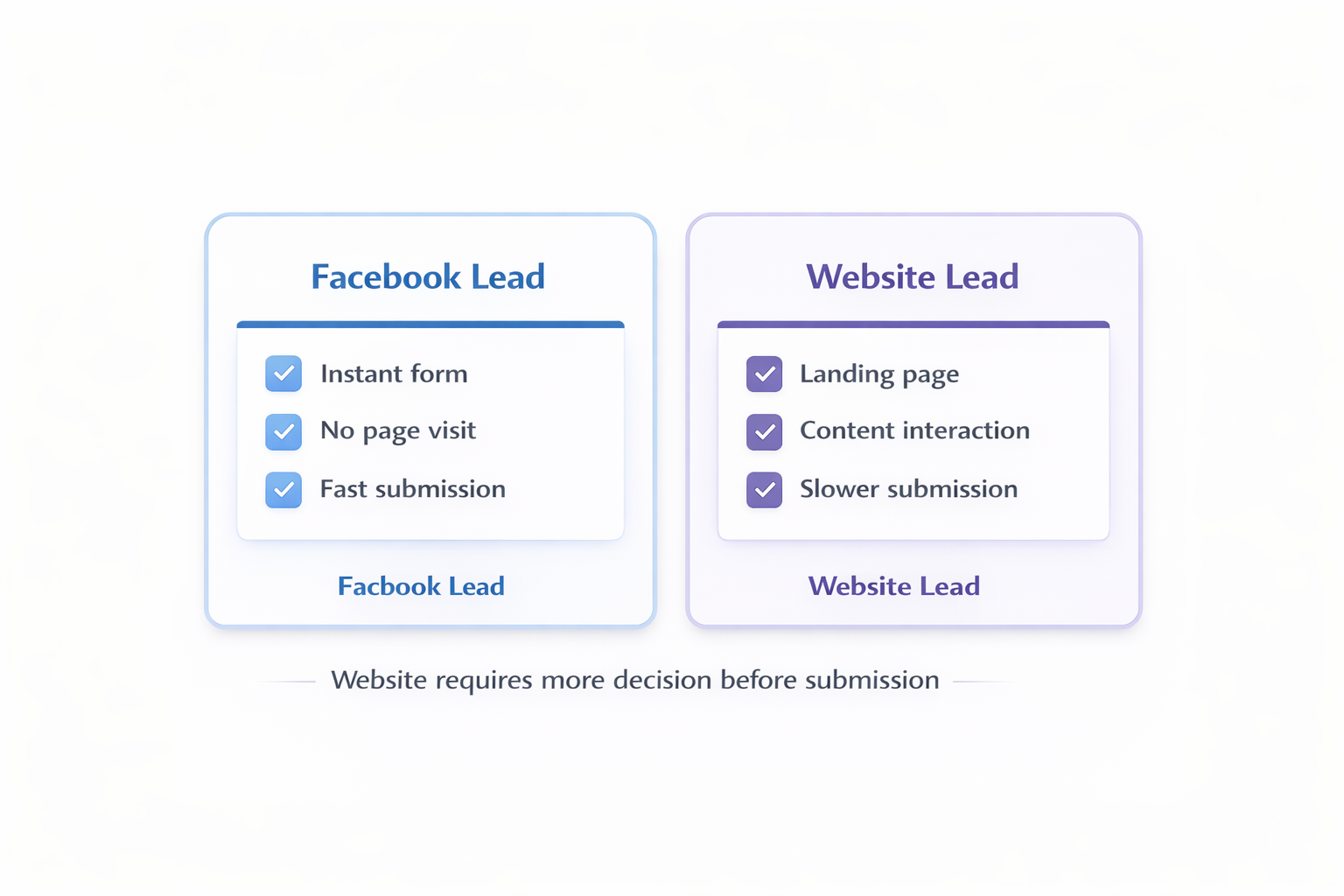
On Facebook, the process is compressed:
-
The form opens instantly inside the feed, so there is no real interruption.
-
Most fields are pre-filled, which removes effort and reduces thinking.
On a website, the user has to slow down. They click, wait for the page to load, scan the content, and then decide whether to continue.
That pause matters. Even a few seconds of evaluation is enough to filter out weak intent.
Friction Filters Your Leads
Friction is not just a problem — it’s a filter.
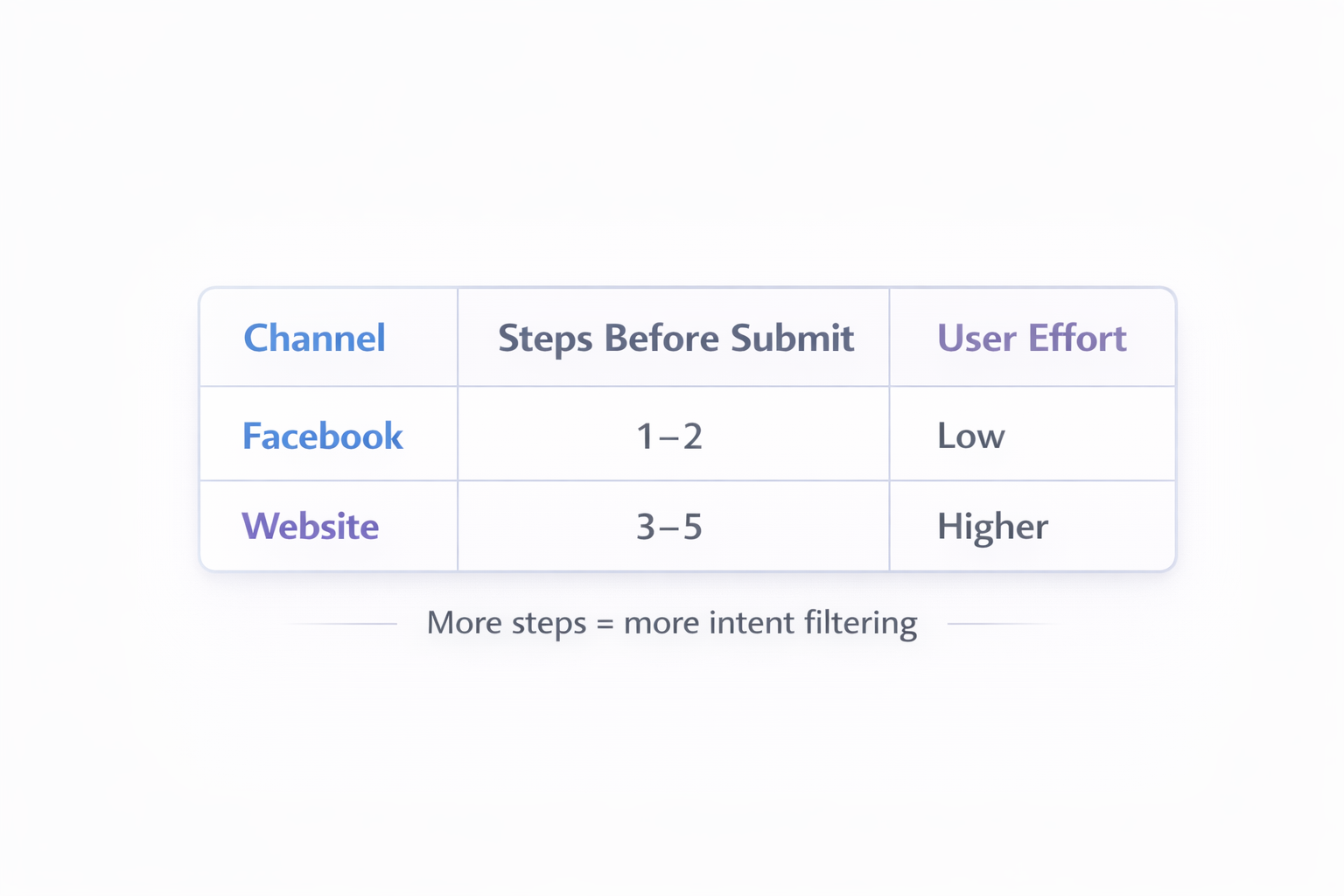
When there is almost no friction, people submit forms quickly, often without fully understanding the offer. When there is some effort involved, fewer people convert, but those who do are more likely to be relevant.
You can see this pattern in campaign results:
-
Facebook lead forms usually produce cheaper leads because the action is quick and easy.
-
Website forms tend to cost more because users need to process the offer before submitting.
This is why campaigns can look strong in Ads Manager but weak in the pipeline.
If you want to understand how this connects to the full journey, see Facebook Ads Funnel Strategy.
How Meta Learns From Each Source
Meta optimizes based on what it can measure.
With Facebook lead forms, the signal is immediate. A user submits the form, and the system treats it as a successful outcome. Over time, it learns to find more users who complete quick, low-effort actions.
Website leads create a longer signal path. The user clicks, loads a page, spends time reading, and then converts. If tracking is set up correctly, Meta receives more context about user behavior.
That’s why proper tracking matters. Without it, the system cannot distinguish between weak and strong intent. A good reference here is How to Create Facebook Pixel and Track Conversions.
Over time, this leads to different scaling patterns. Facebook lead campaigns grow fast but lose precision. Website campaigns grow slower but stay more consistent.
What to Check in Your Data
You don’t need to guess which source is performing better. The difference shows up clearly if you look beyond surface metrics.
Start with two signals:
-
Lead acceptance rate — if many Facebook leads are rejected by sales, it usually means low intent.
-
Lead-to-opportunity conversion — if website leads move further into the pipeline, they are better qualified.
You may also notice that Facebook leads require very fast follow-up. If you wait too long, they lose interest quickly.
These are real patterns you can verify inside Ads Manager and your CRM.
When Facebook Leads Make Sense
Facebook lead forms work best when speed matters more than filtering.
They are effective when:
-
you need to capture interest quickly, for example in time-sensitive campaigns,
-
your team can respond immediately and qualify leads through direct contact.
In this setup, the goal is to capture demand first and filter it later.
To improve results, it helps to focus on stronger signals even within this format — see How to Use Facebook Ads for High-Quality Lead Generation.
When Website Leads Work Better
Website forms work better when users need context before acting.
This is common in B2B campaigns, high-ticket services, or offers that require explanation. The landing page becomes part of the qualification process.
It explains the offer and filters out users who are not a good fit.
But this only works if the page is strong. If it’s weak, you lose volume without improving quality. That’s why optimizing it is critical — see How to Create a High-Converting Landing Page.
The Measurement Mistake That Skews Results
Most teams compare Facebook leads and website leads using cost per lead.
That’s the core mistake.
Cost per lead only shows how easy it is to generate a submission. It doesn’t reflect how valuable that lead is.
A better view comes from looking at downstream results — how many leads turn into real opportunities and revenue. When you shift to these metrics, website leads often perform better despite higher upfront cost.
How to Use Both Without Confusion
You don’t have to choose one system.
A more effective approach is to assign clear roles:
-
Facebook lead forms capture early interest and generate data quickly.
-
Website campaigns convert that interest into more qualified demand.
This keeps your optimization clean and prevents mixed signals.
Final Takeaway
Facebook leads and website leads are not interchangeable.
Facebook makes it easy to submit.
Your website makes people think before they do it.
That one difference shapes lead quality, sales outcomes, and how your campaigns scale.
If performance feels inconsistent, the issue is often not targeting or creative. It’s how your lead capture process filters intent before the lead even exists.