The digital marketing landscape is evolving faster than ever, and one of the most significant driving forces behind this transformation is Artificial Intelligence (AI). AI-powered marketing automation tools are revolutionizing how businesses reach, engage, and retain their customers. These tools not only improve efficiency but also enhance the personalization and scalability of marketing campaigns. In this article, we’ll explore how AI marketing automation tools are changing daily marketing practices and why you should consider adopting them for your business.
Revolutionizing Personalization
One of the key ways AI marketing automation tools are reshaping marketing is by enabling businesses to create highly personalized customer experiences at scale. AI algorithms can analyze vast amounts of data from various touchpoints, such as customer behaviors, past interactions, and preferences. By processing this data, AI tools can predict what content, products, or services a customer is most likely to engage with, enabling marketers to tailor messages and offers for each individual.
For instance, AI can recommend personalized email subject lines, content recommendations, or product suggestions based on a customer's browsing and purchase history. According to a report from McKinsey, companies that use AI for personalization see a 10-30% increase in revenue.
Enhancing Efficiency and Saving Time
Marketing teams are constantly under pressure to create and execute campaigns that drive results, all while managing multiple tasks at once. AI marketing automation tools streamline many of these tasks, freeing up marketers to focus on higher-level strategy and creativity. These tools can automatically send personalized emails, schedule social media posts, track website traffic, and even optimize ad spending without constant oversight.
AI tools also improve workflow efficiency by automating repetitive tasks, such as lead nurturing and customer segmentation. A study from Salesforce revealed that 52% of marketers say AI helps them improve the efficiency of their marketing efforts.
Data-Driven Insights for Smarter Decision-Making
AI marketing automation tools leverage data to offer marketers actionable insights that can guide their decision-making. These tools analyze customer behaviors, campaign performance, and market trends to generate valuable reports that help businesses optimize their strategies. Whether it's A/B testing, sentiment analysis, or predictive analytics, AI provides marketers with a data-driven foundation for making informed decisions and continuously improving campaigns.
In fact, a survey by Deloitte found that 62% of marketing executives believe AI helps them understand customer needs more effectively and make data-driven decisions that lead to better outcomes.
How AI Tools Impact Daily Marketing Activities
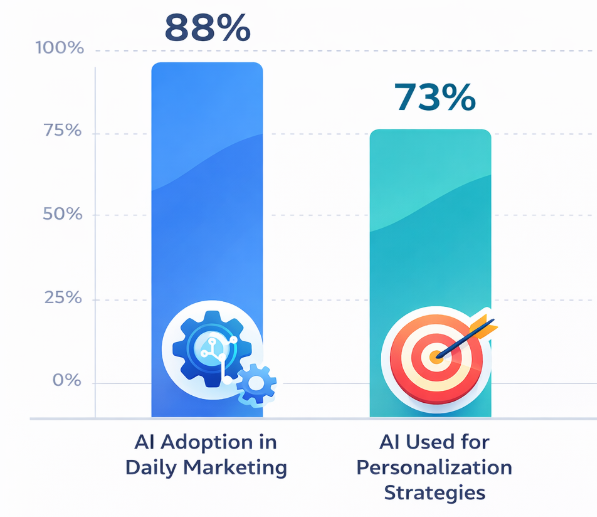
Widespread AI Adoption in Marketing — Percentage of marketers using AI daily and those applying AI for personalization strategies
In daily marketing operations, AI automation tools are already playing a key role in various tasks:
-
Email Campaigns: AI tools can automatically segment audiences based on behavior and preferences, and send personalized emails with tailored content. They can even determine the best time to send emails for each individual to maximize open rates and engagement.
-
Social Media Management: AI-powered tools can schedule social media posts, optimize hashtags, analyze audience engagement, and suggest content ideas based on trends. This helps businesses maintain a consistent social media presence without spending hours on manual posting.
-
Customer Service: AI chatbots are being used for customer service, providing immediate responses to customer inquiries and resolving issues around the clock. These tools can also direct customers to the appropriate resources or human agents if necessary, improving overall customer satisfaction.
-
Advertising: AI tools can analyze ad performance in real-time and make adjustments to bidding, targeting, and ad creatives to improve ROI. They can also identify patterns in user behavior to suggest optimized targeting strategies.
AI-Driven Marketing Automation Statistics
-
62% of marketers say AI helps them understand customer needs better, enabling them to make smarter, data-driven decisions. (Deloitte)
-
30% increase in revenue for companies using AI for personalized marketing. (McKinsey)
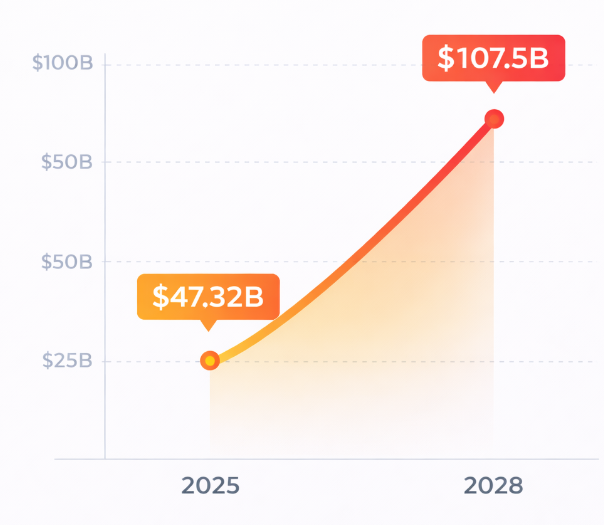
Projected Growth of the AI Marketing Industry — Global market value in 2025 and forecast for 2028
These statistics highlight the significant impact AI can have on a company’s bottom line and the efficiency of its marketing efforts.
Future Outlook: The Role of AI in Marketing
As AI continues to advance, its role in marketing automation will only grow. The future of AI-driven marketing includes even more sophisticated tools for hyper-personalization, smarter predictive analytics, and deeper integration with various marketing channels. Businesses that embrace these technologies will be better equipped to stay ahead of the competition and meet the ever-evolving expectations of their customers.
Suggested Reads: