Every funnel leaks. The question is where and why. If you run digital campaigns, small leaks often hide in plain sight.
Most teams look at overall conversion rate and stop there. That hides the mechanics behind lost revenue. Real optimization starts when you break the funnel into measurable stages and inspect each one.
This guide explains how to analyze funnel drop-off points across channels, platforms, and traffic sources.
Why Funnel Drop-Off Analysis Matters
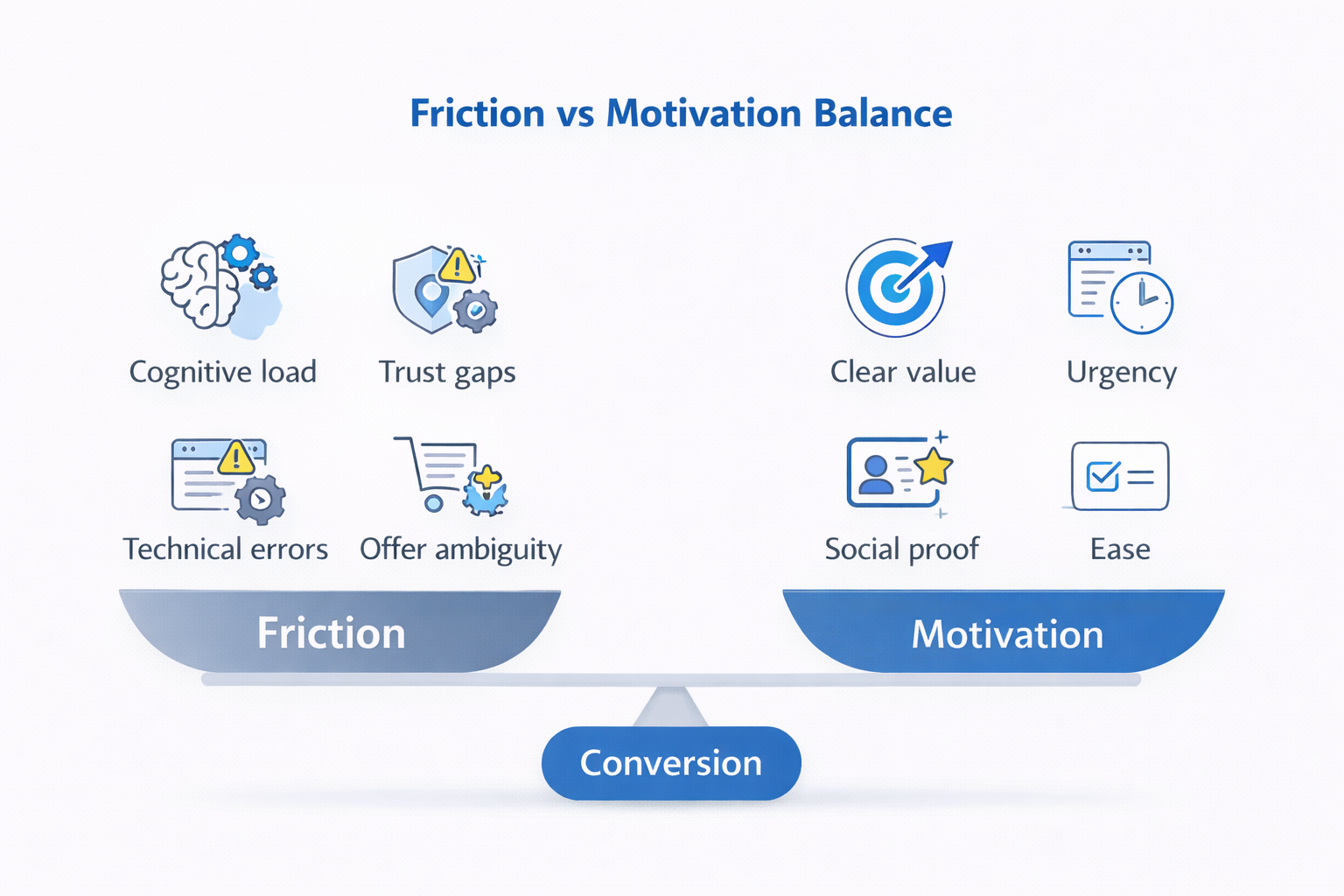
A funnel is not a single conversion event. It is a sequence of behavioral steps. Each step has its own friction.
When revenue stalls, the issue rarely sits at the final step. It usually starts earlier in the journey. Fixing the wrong stage wastes budget and effort.
Drop-off analysis helps you:
-
Identify the exact step where intent collapses; this prevents random changes.
-
Separate traffic quality problems from on-page friction; these require different fixes.
-
Quantify revenue impact per stage; you can prioritize work by financial weight.
Without this breakdown, optimization becomes reactive.
Map Your Funnel Before You Analyze It
Define Clear Behavioral Stages
Start by documenting the real user journey. Keep each step measurable and tied to behavior.
A typical online funnel may include:
-
Traffic entry; ad click, organic visit, or referral.
-
Landing page view; confirmed page load.
-
Engagement; scroll depth, video watch, or product view.
-
Intent signal; add to cart, form start, or account creation.
-
Conversion; purchase, submission, or booking.
If you skip this mapping, your analysis will blur stages together. That leads to incorrect conclusions.
For a structured approach, review our guide on how to build a high-performing digital marketing funnel.
Align Tracking Across Systems
Your ad platform tracks clicks and impressions. Analytics tools track sessions and events. Your CRM or backend tracks real revenue.
You need consistent definitions across all systems. If one platform reports 500 conversions and your backend shows 350 sales, reconcile attribution before analyzing drop-off.
This issue often relates to attribution logic, which we explain in attribution windows explained: how to measure true ad impact.
Break Down Drop-Off by Funnel Stage
Traffic to Landing Page
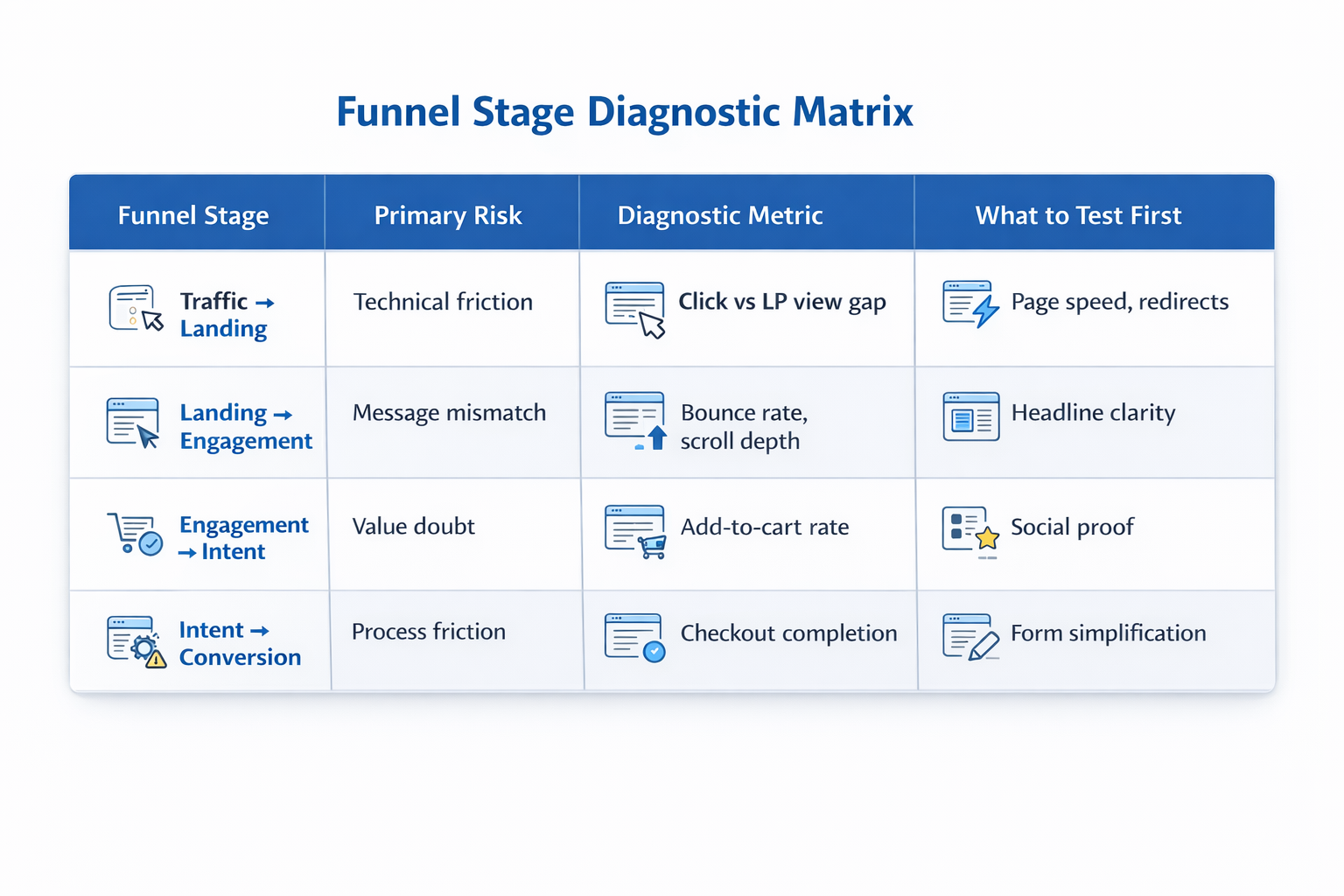
This stage measures the gap between click and actual page load. Many teams ignore it.
Track:
-
Clicks versus landing page views; large gaps signal load or redirect issues.
-
Page load speed; slow pages increase abandonment.
-
Bounce rate by device; mobile often behaves differently.
If users never truly land, deeper funnel analysis becomes irrelevant.
For a focused breakdown, see click-to-landing page drop-off: how much is too much.
Landing Page to Engagement
Now you measure whether your message holds attention. Users who leave within seconds rarely return.
Analyze:
-
Scroll depth distribution; where does attention stop.
-
Time on page; short sessions may signal weak alignment.
-
Content interaction; clicks on tabs, FAQs, or product images.
If drop-off is high here, the issue is usually clarity or expectation mismatch.
Engagement to Intent Signal
This stage reveals whether interest turns into action. For e-commerce, this may be add to cart. For B2B, it may be form start.
Investigate:
-
Percentage of engaged users who trigger intent events.
-
Heatmaps; identify hesitation zones.
-
Exit pages; pinpoint friction points.
Often the issue is perceived risk. Missing trust elements or unclear value blocks movement.
Intent to Final Conversion
This is where technical and psychological friction combine. Even high-intent users abandon at this step.
Measure:
-
Checkout or form completion rate.
-
Field-level abandonment.
-
Error frequency and payment failures.
If users abandon late, simplify the path and reduce cognitive load. For common structural problems, review why most product pages fail to convert.
Segment Drop-Off to Reveal Hidden Patterns
Aggregated data hides truth. Segmentation exposes it.
By Traffic Source
Compare organic, paid, email, and referral traffic. A channel with high click volume but low engagement may send low-intent users.
By Device
Desktop and mobile users behave differently. Mobile drop-off often reflects usability constraints, not weak demand.
By Audience Type
New visitors and returning users follow different patterns. Retargeted visitors should show lower drop-off in mid and bottom stages.
Segmentation prevents you from optimizing the wrong audience.
Quantify the Financial Impact of Each Leak
Not all drop-offs deserve equal attention. A small percentage loss at high volume can cost more than a large percentage loss at low volume.
Calculate:
-
Stage conversion rate; users at step B divided by users at step A.
-
Absolute user loss; difference between stages.
-
Revenue impact; lost users multiplied by average order value or lead value.
This shifts your analysis from metrics to money.
For a broader perspective on performance interpretation, see how to analyze ad metrics like a pro.
Advanced Signals Most Teams Ignore
Some issues hide beyond standard dashboards.
Look at:
-
Time lag between first visit and conversion; long gaps suggest comparison behavior.
-
Multi-session paths; users may leave and return through another channel.
-
Assisted conversions; top-of-funnel traffic may influence later sales indirectly.
This prevents mislabeling awareness traffic as unprofitable.
Common Analytical Mistakes
Even experienced marketers misread funnel data.
Avoid these errors:
-
Focusing only on percentages; raw volume reveals scale.
-
Ignoring cohort behavior; new users differ from returning ones.
-
Changing multiple variables at once; this destroys causal clarity.
-
Blaming traffic when the offer is weak; confirm message fit first.
Precise diagnosis always precedes testing.
Build a Repeatable Funnel Review Process
Funnel analysis should not happen only when results drop. It should be routine.
Create a structured review cycle:
-
Export stage metrics for the last 30 days.
-
Calculate conversion rates between each step.
-
Compare by source, device, and audience.
-
Rank leaks by revenue impact.
-
Design one focused test per major leak.
This keeps optimization systematic rather than reactive.
Final Thoughts
Funnel drop-off analysis is not about finding a weak metric. It is about understanding behavioral transitions between stages.
When you isolate each step and connect it to financial impact, decisions become clearer. You stop reacting to surface numbers and start addressing structural friction.
Every funnel leaks. The teams that grow are the ones that measure where and fix it precisely.