Many advertisers know their customers better than their Facebook ad targeting suggests.
They can describe who buys, what problems customers face, which objections come up in sales calls, and which industries or lifestyles show the strongest fit. But when they build the ad audience, that knowledge often gets reduced to age, location, and a few broad interests.
That gap is expensive. A Facebook ad audience built from vague traits produces vague results. A better audience starts by translating real customer traits into targeting signals, source audiences, exclusions, and creative direction.
The Problem
The problem is that customer traits often stay trapped in documents, sales notes, CRM fields, founder intuition, or agency briefs.
Advertisers may know that their best customers are “time-strapped consultants,” “new homeowners,” “multi-location service businesses,” “fitness enthusiasts who already buy premium products,” or “marketing managers at growing SaaS companies.” But those traits are not automatically useful inside a campaign.
To improve Facebook ad performance, traits must become audience logic.
That means identifying which traits indicate fit, which indicate intent, which indicate buying power, and which should disqualify someone from the campaign.
Without this translation step, campaigns often target people who resemble the customer at a surface level but do not behave like a buyer.
Why This Problem Hurts Performance
Weak audience translation hurts performance because Meta receives unclear inputs.
If your best buyers are premium customers, but your audience is built around broad category interest, your campaign may find bargain shoppers. If your best leads are operations leaders, but your targeting only says “business,” your ads may reach students, freelancers, job seekers, or casual entrepreneurs.
This affects every major performance metric.
CPC may rise because the message does not resonate. CPA may rise because clicks do not convert. CAC may rise because sales spends time on poor-fit leads. ROAS may fall because the audience includes too many low-value buyers.
It also slows testing. When the audience is poorly defined, you cannot tell whether the creative failed, the offer failed, or the wrong people saw the ad.
Common Scenarios Where This Happens
A startup knows its best customers are founders who recently raised funding, but the campaign targets “entrepreneurship.”
An ecommerce brand knows repeat buyers care about premium materials, but the audience targets everyone interested in the product category.
A local service business knows its strongest customers come from specific neighborhoods, income bands, and life events, but the campaign uses a broad city-level audience.
A B2B lead-generation team knows closed-won deals come from certain job titles and industries, but the Facebook campaign targets generic business interests.
An agency receives a client brief with buyer personas but turns them into broad interests because there is no structured audience-building process.
Why the Problem Happens
This problem usually happens because marketers treat customer traits as messaging inputs only. They use traits to write copy, but not to build the audience.
It also happens because customer traits vary in usefulness. Some traits are descriptive but weak. Others are predictive.
For example, “likes fitness content” is descriptive. “Follows niche strength coaches, buys supplements, and engages with recovery content” is more predictive. “Works in operations” is descriptive. “Operations manager at a logistics company with 50–500 employees” is more useful for B2B audience planning.
Another cause is overreliance on demographic traits. Age and location matter, but they rarely explain buying intent on their own.
Finally, many advertisers do not separate customer traits into categories. They mix demographic traits, behavior traits, firmographic traits, funnel-stage traits, and disqualification traits into one generic audience.
The Solution
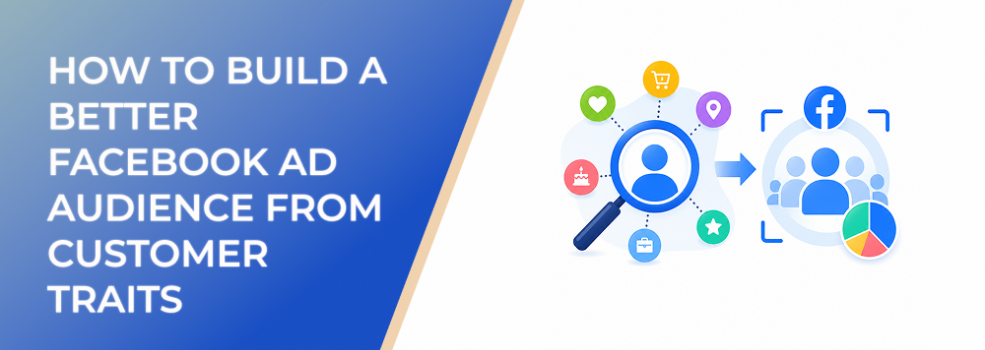
The solution is to build a customer-trait audience map before creating the ad.
Start with your best customers, not all customers. Look for traits among high-LTV buyers, qualified leads, repeat customers, high-AOV customers, booked-call prospects, or sales-accepted leads.
Then sort traits into five categories.
Fit traits
These define whether someone belongs in your market. Examples include location, industry, company size, role, income band, life stage, product category, or use case.
Intent traits
These show that someone is more likely to act. Examples include following niche experts, joining relevant groups, visiting product pages, engaging with competitor content, asking buying questions, or consuming specific educational content.
Value traits
These indicate whether the customer is worth acquiring. Examples include repeat purchase behavior, high order value, enterprise potential, household income, budget range, or sales-qualified status.
Friction traits
These reveal what may stop the buyer. Examples include price sensitivity, long decision cycles, lack of authority, unclear urgency, or need for education.
Exclusion traits
These identify people you should avoid. Examples include existing customers, unqualified leads, students, job seekers, freebie seekers, inactive contacts, or segments outside your service area.
Once you have the map, build the audience around the traits that predict action, not just the traits that describe the category.
How LeadEnforce Helps
LeadEnforce helps when customer traits need to become practical audience sources.
Advertisers can use LeadEnforce to create audience inputs from Facebook groups, Instagram profile followers, LinkedIn job-title and company data, and custom social-profile links.
That matters because customer traits often point to where people gather. If your best buyers follow certain Instagram educators, participate in specific Facebook groups, work in defined LinkedIn job categories, or appear in a list of social-profile URLs, those sources can become stronger audience inputs than broad interests.
For example, a B2B SaaS team might turn customer traits into LinkedIn-derived professional audiences and then reach those professionals through Meta placements. A niche ecommerce brand might build audiences from Instagram accounts followed by high-intent buyers. An agency might use Facebook group-based audiences to match client campaigns to real community behavior.
LeadEnforce is not a substitute for customer research. It is a way to activate that research inside paid campaigns.
Risks and Considerations
Customer traits can mislead you when they are based on assumptions rather than evidence.
A founder’s view of the ideal customer may not match actual purchase data. A sales team may remember memorable customers more than profitable ones. A CRM list may contain outdated contacts. An Instagram follower source may look relevant but include too many passive fans.
There is also a risk of over-segmentation. If you build too many narrow audiences, each ad set may lack enough scale to deliver meaningful results.
Audience quality also depends on message quality. A strong audience will not rescue an ad that fails to speak to the customer’s real problem.
Prerequisites and Dependencies
You need a clear definition of your best customer. That should include business value, not just who is easiest to reach.
You need data sources that can validate traits. These may include CRM records, purchase history, lead-quality notes, sales feedback, website behavior, engagement data, customer interviews, and ad account results.
You need a campaign objective that matches the audience. A high-intent audience should not be wasted on a vague engagement campaign if the business goal is qualified pipeline.
You also need enough audience size for delivery. Strong traits are useful, but the audience must still be large enough to test.
If LeadEnforce is used, you need relevant source groups, Instagram accounts, LinkedIn criteria, or social-profile data that truly represent your customer traits.
Practical Recommendations
Start with the traits of your best customers, not average customers.
Prioritize traits that predict conversion behavior. Buying triggers, professional role, community participation, competitor interest, and repeated engagement are usually more useful than generic interests.
Build separate audiences for different customer types. Do not mix SMB buyers, enterprise buyers, beginners, advanced users, cold prospects, and warm leads into one audience if they need different messaging.
Use your creative to reinforce the audience definition. Mention specific pain points, use cases, categories, or qualifiers so irrelevant users are less likely to click.
Use LeadEnforce after customer research, not before it. The best workflow is: define traits, identify where those traits show up socially or professionally, build the audience, launch a focused test, and compare results against business metrics.
Final Takeaway
A better Facebook ad audience starts with better customer interpretation. The goal is not to describe everyone who could be interested. The goal is to identify the people most likely to become valuable customers and turn their traits into campaign-ready audience inputs.
When your customer traits become audience strategy, your ads become easier to test, optimize, and scale.
Join the free 7-day LeadEnforce trial period to turn real customer traits into more relevant Facebook and Instagram ad audiences.
Related LeadEnforce Articles
- How to Define a Target Audience for Marketing: a Step-by-Step Guide — Helps marketers clarify buyer traits before building paid audiences.
- Facebook Ad Targeting 101: How to Reach the Right Audience — Explains core Facebook audience types and how they fit different funnel stages.
- A Beginner's Guide to Custom Audience Targeting — Useful for turning known customer data into practical custom audiences.
- How to Build High-Performing Custom Audiences in LeadEnforce — Explains how LeadEnforce supports more precise custom audience creation.
- Creating High-Value Custom Audiences from CRM Exports — Relevant for advertisers using CRM traits, lifecycle stage, and revenue data.