Most digital advertising campaigns fail quietly — not because of bad creative, but because there was no real strategy to begin with.
It’s easy to launch ads quickly. Platforms like Meta and Google encourage it. But if you're serious about results, you need a system — something you can learn from and scale.
This guide shows you how to build a smart, flexible digital advertising strategy from the ground up.
Start with a real business goal — not just “more sales”
Before you run any ads, ask yourself: What exactly are we trying to achieve right now?
Vague goals like “grow the business” or “drive awareness” don’t guide your decisions. You need to focus on outcomes that support your current business priorities.
| Business stage | Awareness | Lead gen | Trial | Upsell |
|---|---|---|---|---|
| Launch | Brand awareness | Email sign-ups | Free trials | — |
| Growth | Engagement ads | Lead forms | Discount offers | Soft upsells |
| Scale | Reach campaigns | Webinar sign-ups | Product demos | Cross-sell offers |
| Retention | Re-engagement ads | Loyalty referrals | Subscription trial | Loyalty programs |
Different goals need different strategies:
-
A new product launch may require top-of-funnel awareness and engagement.
-
A subscription service should focus on trial-to-paid conversion rates.
-
A service business might want more sales-qualified leads, not just traffic.
For help translating these into ad objectives, see Meta campaign objectives explained.
Map the full customer journey — not just the ad
An ad click is just one step in the customer journey. To make your campaigns effective, you need to design what happens after the click.
Your funnel should include:
-
The first interaction — usually an ad.
-
The landing experience — page or app destination.
-
The conversion goal — like a sign-up or purchase.
-
Post-conversion follow-up — email, retargeting, or onboarding.
Think beyond the click. Many campaigns fail because users land on a weak page or never hear from you again.
Choose the right channels — based on user behavior
Each ad platform offers different kinds of user intent and attention.
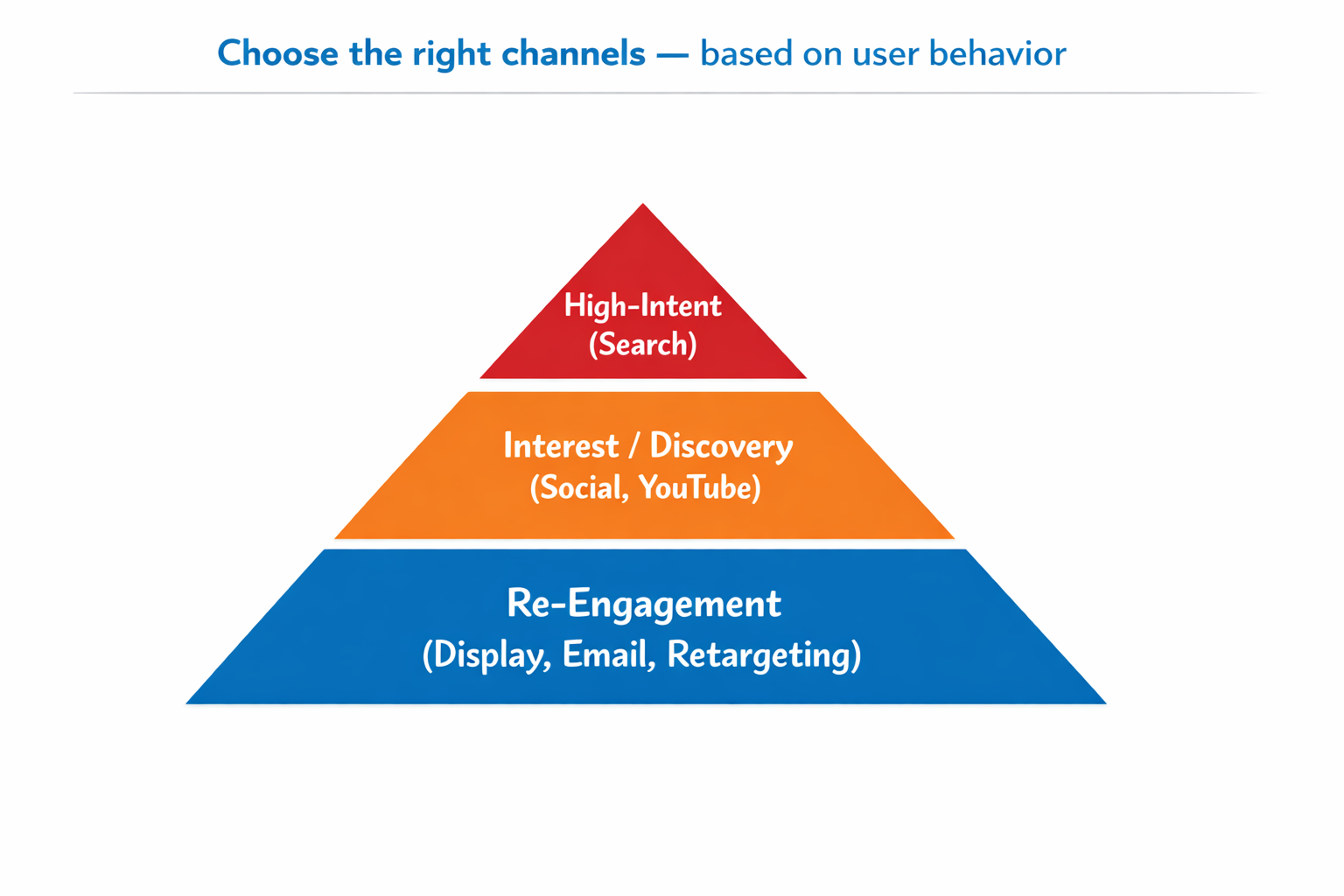
Here’s how they differ:
-
Search ads (e.g. Google Ads) target users with active buying intent.
-
Social ads (Meta, TikTok, LinkedIn) are better for discovery and storytelling.
-
Video ads (YouTube, Reels) are great for education and brand trust.
-
Display/retargeting helps re-engage previous visitors.
Match your message to how people use the platform. Selling a complex product? Use long-form video and lead ads. Launching something visual? Go social-first.
Start broad, then refine targeting as data grows
One of the most common mistakes is jumping into ultra-specific targeting too soon. Early campaigns need volume to learn and optimize.
Start with broader targeting, then narrow in later:
-
Use wide lookalike audiences.
-
Let the algorithm test and optimize.
-
Speak to your ideal customer in the creative, not just the targeting.
Then, once you see performance data, start segmenting:
-
Use custom audiences from your CRM or site traffic.
-
Build lookalikes from best-performing segments.
-
Layer interest or behavioral filters.
For more on this progression, check out smart audience building for Facebook campaigns.
Use creative that’s modular, not just flashy
You don’t need expensive video shoots or polished ads to win. You need flexible, testable creative that speaks to the right people.
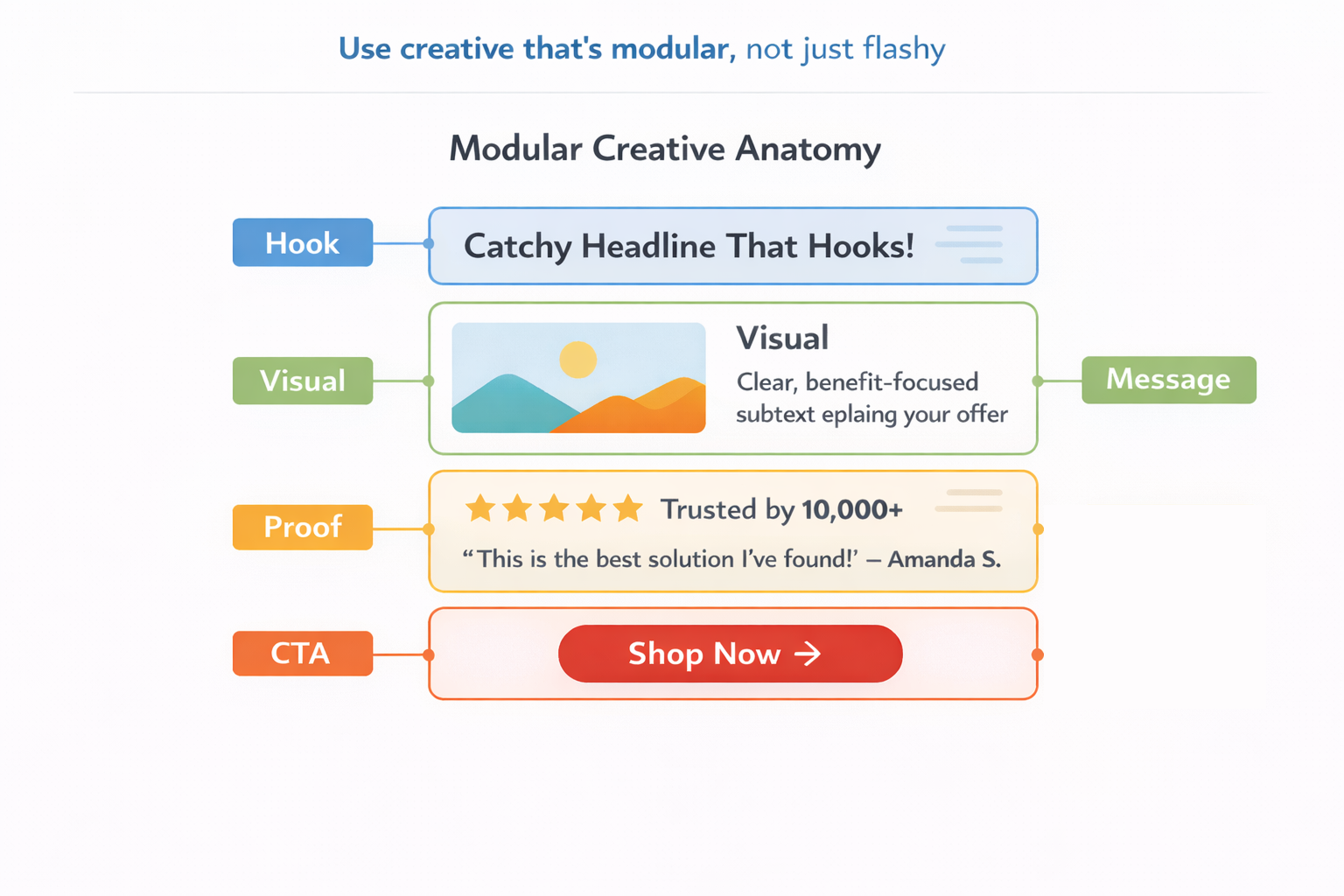
Build ad content from mix-and-match elements:
-
Hooks — attention-grabbing openers or questions.
-
Value props — clear reasons to choose you.
-
Proof points — stats, reviews, recognitions.
-
CTAs — tell users what to do next.
For example, a modular ad setup might use the same value prop with five different opening lines. This helps you test ideas without creating entirely new assets every time.
Track the right metrics — and set them up early
If you're not tracking real outcomes, you're just guessing. But tracking only clicks or impressions isn't enough either.
Set up end-to-end tracking:
-
Pixel and server-side tracking.
-
UTM tags for channel-level visibility.
-
CRM integration to capture real business outcomes (e.g. revenue, repeat purchases).
-
Events that matter — not just form fills, but “calls booked,” “second purchase,” or “plan upgrade.”
Need help connecting your systems? Here’s a guide on setting up Facebook Pixel and tracking conversions.
Use budget to learn — not just to scale
In the early phase, your goal isn’t profit — it’s signal. You’re buying learning, not just results.
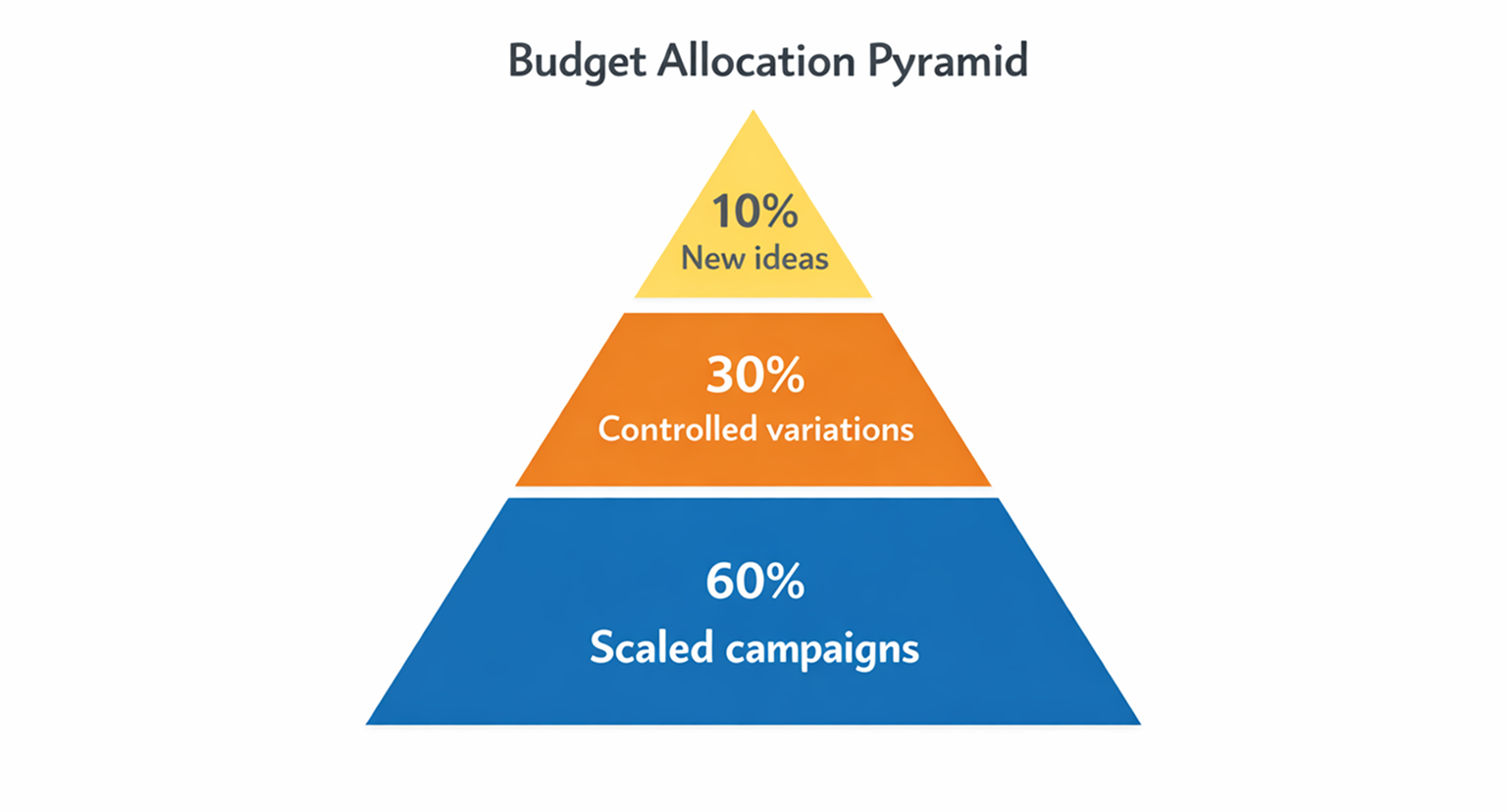
Split your ad budget intentionally:
-
60% to the best-known performers.
-
30% to close variants (e.g. new hooks, audiences).
-
10% to totally new ideas (offers, channels, formats).
If a test fails, that’s not wasted spend. It’s a cost-saving insight. You now know what not to do.
Frame your tests as narrow, focused questions
Testing doesn’t mean changing everything at once. The most useful tests answer one small, clear question.
Examples of focused tests:
-
“Does a testimonial in the first 3 seconds increase video watch time?”
-
“Does switching the CTA from ‘Get Demo’ to ‘See Pricing’ improve clicks?”
-
“Which performs better: single image or carousel for this offer?”
Avoid testing too many variables at once. Isolate one change at a time and document the result.
Final thoughts — strategy is a system, not a guess
Building a digital ad strategy from scratch doesn’t mean doing everything perfectly. It means creating a structure that helps you:
-
Launch with purpose.
-
Learn from real results.
-
Adapt as you go.
Start with clear goals. Design the full journey. Use broad inputs, simple creative, and reliable tracking. Then layer in complexity when you have the data to guide it.
Over time, this system becomes your competitive edge — more resilient than trends, cheaper than guesswork, and more powerful than any single tactic.