Communities—whether built around shared interests, professional topics, or niche conversations—are among the richest data sources for modern audience building. Members of online groups, forums, and follower clusters already demonstrate intent and engagement by participating in those spaces. When this data is used effectively, advertisers can reach people who are not just demographically aligned but contextually motivated.
A recent survey shows that 76 percent of consumers prefer brands that engage within the communities they already trust. Additionally, brands using community-driven insights see up to a 2.8 times improvement in relevance scores across their campaigns. These numbers highlight the competitive advantage of community-based audience creation.
Why Community-Based Data Works
Community environments encourage organic behavior. Users ask questions, share experiences, and self-identify their needs and challenges. This creates layers of behavioral signals that are far more actionable than broad demographic or interest targeting.
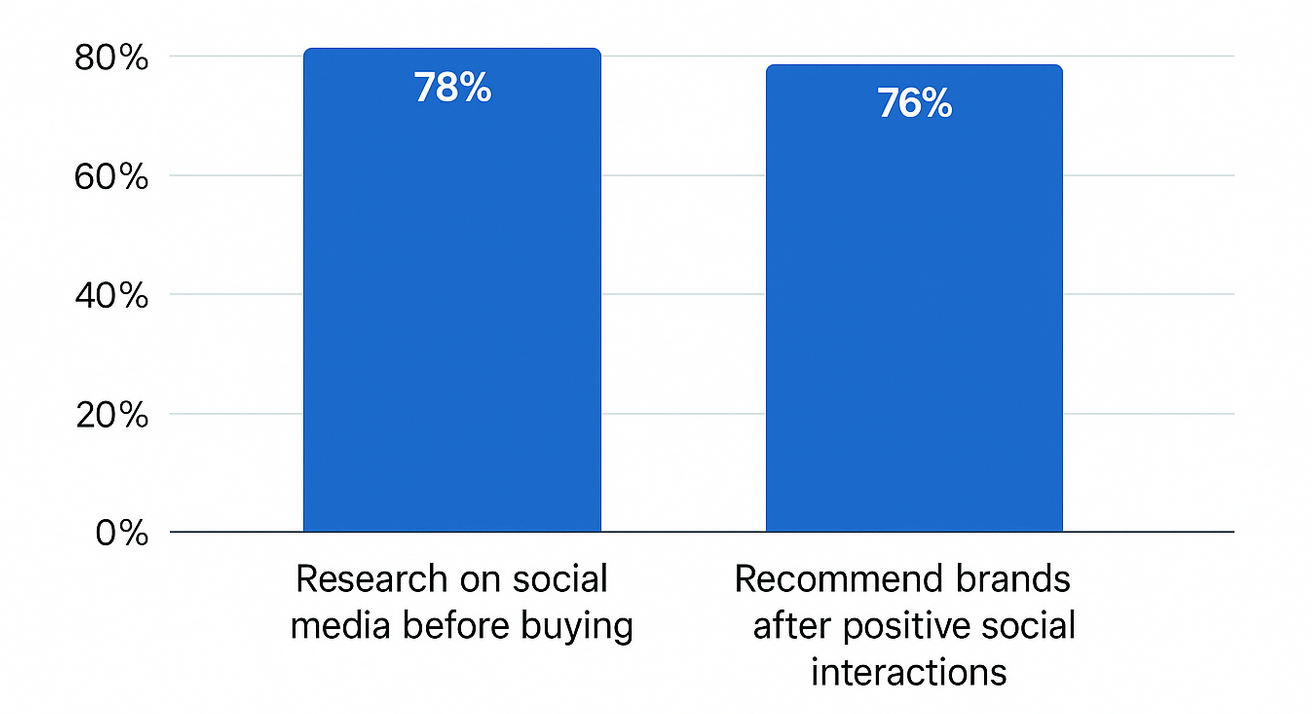
Percentage of consumers who (a) research on social media before buying and (b) recommend brands after positive social interactions
Key benefits include:
-
Higher intent signals: Members actively engage in discussions relevant to their interests.
-
Reduced targeting waste: You avoid reaching people who are uninterested in the topic.
-
Better conversion likelihood: Studies indicate that audiences formed from community data can drive up to 41 percent higher conversion rates in niche verticals.
Types of Community-Based Data
Community-driven audience building pulls from a variety of data sources, including:
-
Group membership behavior: Membership in a professional or hobby-based group often correlates with specific motivations or needs.
-
Follower communities: Users who follow niche industry accounts tend to represent highly concentrated interest clusters.
-
Engagement data: Comments, replies, and reactions indicate stronger intent than views alone.
-
Topic-driven clusters: Communities form around specific problem sets or goals, allowing brands to target based on contextual alignment.
How to Build Audiences Using Community-Based Data
1. Identify High-Value Communities
Start by mapping the communities that align with your product or service. Look for:
-
Active discussion threads
-
High engagement rates
-
Clear thematic alignment
-
Consistent member growth
Communities with consistent engagement often provide the highest-performing audience pools.
2. Analyze Member Intent
Not every community is equally valuable. Evaluate user intent by identifying patterns:
-
Frequency of problem-focused conversations
-
Signals of purchase readiness
-
Repeated mentions of tools, solutions, or services
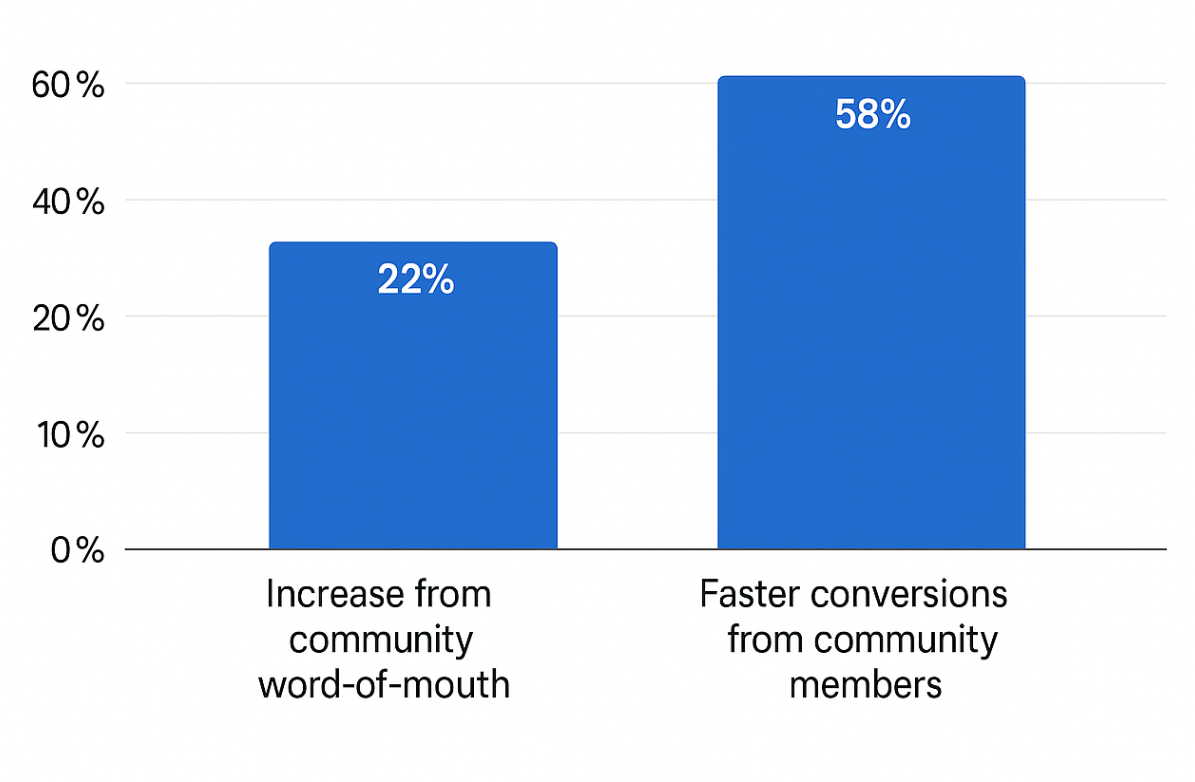
Conversion performance: community word-of-mouth boosts conversions by 22%, and 58% of companies see faster conversions from community members
Audiences built from intent-rich communities have shown up to 32 percent higher click-through rates.
3. Build Segment Variations
Once you’ve identified high-quality communities, create multiple audience segments based on:
-
Subtopics within the community
-
Engagement levels
-
Behavioral clusters
-
Professional or demographic attributes visible in the group dynamic
Segment variation enables more precise testing and ultimately lower acquisition costs.
4. Test and Optimize
After launching campaigns, evaluate metrics such as CTR, conversion rate, and engagement depth. Research shows that community-informed segments stabilize faster than broader audiences, reducing the testing cycle by an average of 23 percent.
Use insights from early performance to:
-
Refine messaging
-
Adjust creative angles
-
Narrow or broaden audience variations
5. Scale Your Best-Performing Segments
Once you identify strong audience performers:
-
Expand into lookalike models
-
Replicate across platforms
-
Layer additional behavioral signals
This scaling process maximizes reach while preserving the intent-driven nature of the core audience.
Common Mistakes to Avoid
-
Targeting overly broad communities: This dilutes the relevance of your audience.
-
Ignoring engagement depth: Not all members actively participate, and passive members often signal lower intent.
-
Failing to refresh audience data: Community dynamics shift rapidly, and outdated segments lose efficiency.
Conclusion
Community-based data offers unparalleled precision and relevance for modern audience building. By tapping into the organic behaviors, discussions, and interests that shape online communities, brands can create targeting strategies that outperform traditional methods in both cost efficiency and conversion impact.
You May Also Like
Here are three related articles that expand on strategies for improving audience targeting and campaign performance: