Custom audiences are the backbone of effective digital advertising. While Facebook Ads Manager offers convenient tools for audience creation, relying solely on in-platform data significantly limits reach, precision, and resilience. Privacy regulations, signal loss, and rising acquisition costs have made it essential to diversify how audiences are built and activated.
Building custom audiences beyond Facebook Ads Manager means leveraging first-party data, external platforms, and advanced segmentation strategies to maintain targeting performance across the full marketing funnel.
Why Going Beyond Facebook Ads Manager Is Necessary
Several industry shifts have reduced the effectiveness of platform-only audience building:
-
Over 70% of online consumers express concern about how their data is used, leading to stricter consent requirements and reduced third-party tracking.
-
iOS privacy changes caused an estimated 25–40% reduction in measurable conversion events for many advertisers.
-
Brands using diversified first-party data strategies report up to 2× higher return on ad spend compared to those relying solely on platform audiences.
These trends highlight the need for audience strategies that are owned, portable, and privacy-compliant.
Core Data Sources for External Custom Audiences
1. First-Party Customer Data
First-party data is the most reliable foundation for building custom audiences outside ad platforms. This includes:
-
CRM records (email, phone, lifecycle stage)
-
Website behavior (page views, content engagement, session depth)
-
Purchase history and frequency
-
Subscription and lead capture data
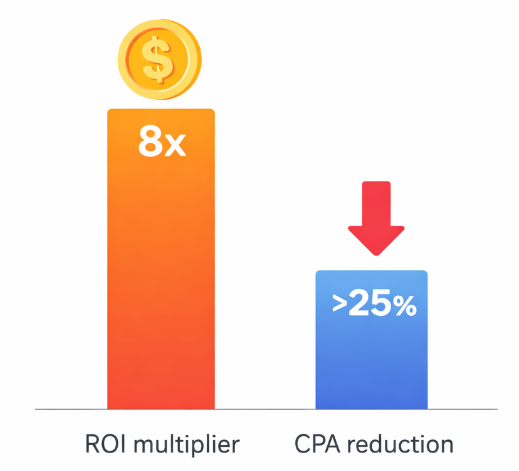
Effect of first-party data on advertising efficiency and cost per acquisition
According to industry benchmarks, campaigns powered by first-party data achieve up to 50% higher conversion rates than those using third-party segments.
2. Website and Event-Based Tracking
Advanced tracking setups allow you to create granular audiences based on real user behavior rather than broad platform signals. Examples include:
-
Visitors who viewed pricing pages but did not convert
-
Users who engaged with product demos or calculators
-
Returning visitors within specific time windows
Behavioral segmentation can increase click-through rates by 2–3× compared to generic retargeting.
3. Email and Marketing Automation Platforms
Email engagement data is a powerful yet underused audience source. You can segment users based on:
-
Open and click activity
-
Engagement recency
-
Content or product interest
-
Lead qualification status
Marketers who align email engagement with paid media targeting see up to a 30% improvement in lead quality.
Audience Modeling Without Native Lookalikes
As lookalike audiences become less predictable, alternative modeling approaches are gaining traction:
-
Predictive scoring based on historical conversion data
-
Value-based segmentation using customer lifetime value
-
Behavioral clustering using on-site and CRM signals
Companies applying predictive audience models report up to 20% lower cost per acquisition compared to standard interest-based targeting.
Cross-Channel Audience Activation
Building audiences outside Facebook Ads Manager enables activation across multiple channels while maintaining consistency. Common use cases include:
-
Syncing CRM segments to multiple ad platforms
-
Coordinating paid media with email and SMS campaigns
-
Suppressing existing customers from acquisition campaigns
Cross-channel audience alignment can reduce wasted ad spend by 15–25% while improving overall campaign efficiency.
Privacy, Compliance, and Data Ownership
Audience building beyond ad platforms must be privacy-first by design. Key principles include:
-
Explicit user consent for data collection and usage
-
Secure storage and controlled access to customer data
-
Clear data retention and deletion policies
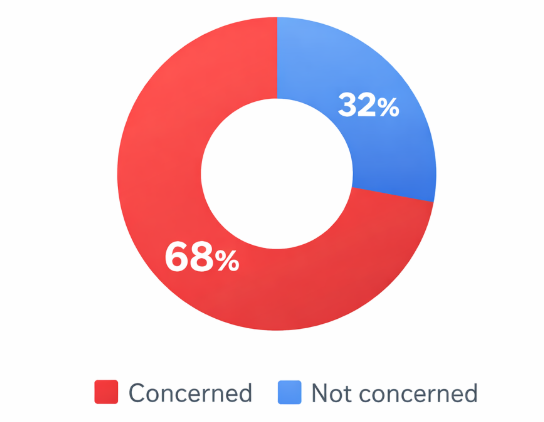
Global consumer levels of concern about online privacy
Organizations prioritizing data governance are better positioned to adapt to future regulatory and platform changes without major performance disruptions.
Measuring Success Outside the Platform
When audiences are built externally, measurement should also evolve. Key performance indicators include:
-
Incremental lift rather than platform-reported conversions
-
Match rates between data sources and ad platforms
-
Long-term customer value, not just initial acquisition cost
Brands that focus on incremental measurement report more stable performance during platform algorithm changes.
Conclusion
Building custom audiences beyond Facebook Ads Manager is no longer optional—it is a strategic necessity. By leveraging first-party data, behavioral insights, and cross-channel activation, marketers can regain control over targeting accuracy, scalability, and compliance. The result is more resilient performance in an increasingly privacy-driven advertising landscape.
Recommended Reading
To deepen your understanding of advanced audience and performance strategies, consider exploring these related articles on our blog: