Most brands pause their ad campaigns at the end of December. CPMs are high, attention is low, and creative burnout is real. But when is the right time to restart?
Relaunching too soon can burn budget on distracted users. Waiting too long can cost you early momentum. The answer lies in your product type, audience behavior, and Q1 strategy — not the calendar date.
This guide walks through what to watch for, when to restart, and how to adjust your creative and targeting for early-year success on Facebook and Instagram.
Why Ad Performance Drops After the Holidays
January feels like a reset — for users and advertisers. The change in behavior is driven by more than just holiday fatigue.
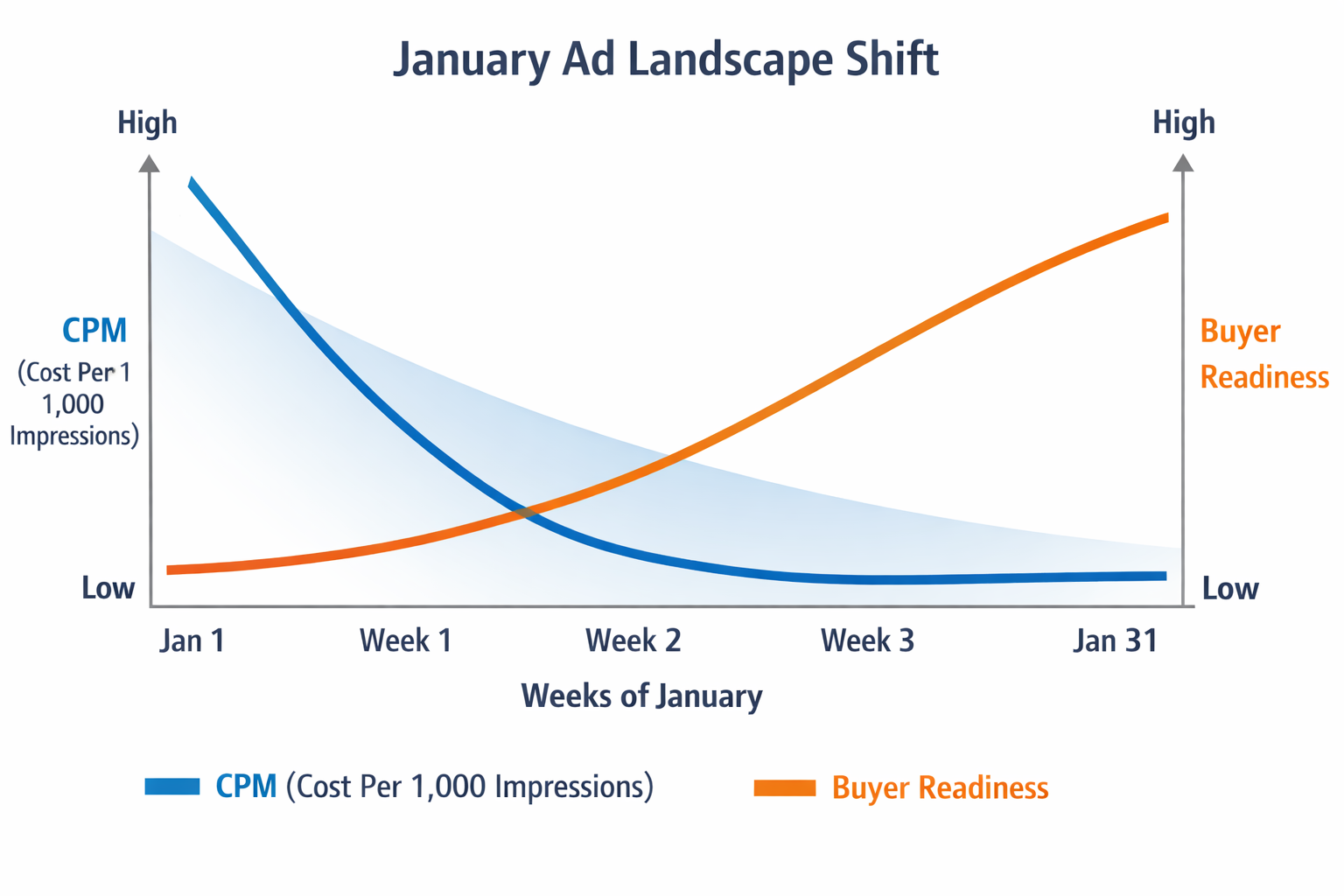
Here’s what typically happens in the first weeks of January:
-
CPMs drop quickly. As many advertisers go dark, competition thins out, temporarily lowering costs. Learn how to capitalize on lower CPMs in early Q1 to rebuild traction affordably.
-
Buyer intent is inconsistent. Some users are eager to act on new goals. Others are recovering — financially and mentally — from Q4 spending.
-
Creative fatigue sets in. Audiences have seen the same visuals and messages for weeks. They tune out reused assets quickly. Here’s how to avoid ad fatigue and keep optimal ad conversion rate.
If you’ve paused campaigns, this dip can be an opportunity — but only if you restart with intention.
Timing Depends on More Than Just the Date
Not every brand should restart ads the first week of January. Instead, use these factors to guide your relaunch strategy.
1. Your Product Category
Some products align naturally with New Year energy and motivation. Others need more time before buyers are ready to engage again.
If you sell products related to self-improvement, early January is your window. This includes:
-
Health, wellness, or fitness products
-
Organizational tools or planners
-
Coaching or habit-building apps
These are all areas where motivation peaks in the first two weeks of the year.
If your product is considered non-essential or high-ticket, it may take longer to regain traction. This includes:
-
Luxury items or discretionary spending categories
-
Holiday-themed products
-
Giftable accessories that had strong Q4 performance
See how others adjust by reviewing New Year Ads for High-Ticket Products: What Changes.
2. Your Audience’s Post-Holiday Behavior
Different segments return to normal routines at different speeds. Timing your campaigns around these shifts improves both efficiency and engagement.
Consumer audiences (B2C) usually become active again after the first week of January. However, they often show signs of:
-
Delayed purchase intent
-
Higher interest in value-driven or practical content
-
More cautious click behavior early in the month
Business and professional audiences (B2B) tend to resume activity later. Many decision-makers are out of office or not yet planning new initiatives. For B2B brands, expect:
-
Low engagement during the first week
-
Better lead quality from mid-January onward
-
Slower conversion cycles, even if engagement picks up
If your audience includes parents or families, keep in mind that many are still transitioning back to routines. Waiting until schools reopen can also affect when campaigns perform best.
To plan more effectively, explore Q1 Campaign Planning: What Most Brands Get Wrong.
3. Your Funnel Objectives
January isn't the time to pick up where you left off in December. The goals have shifted, and your funnel should reflect that.
Here’s a simplified way to structure your campaign layers:
-
Top of funnel: Focus on awareness, engagement, and low-barrier entry points (short videos, lead magnets, or simple interactions).
-
Middle of funnel: Retarget people who interacted with your site, ads, or email campaigns in December but didn’t convert.
-
Bottom of funnel: Reserve for mid-to-late January, once you see stable behavior patterns and stronger signals of buying intent.
Need help building that structure? Here’s a breakdown of a Facebook Ads Funnel Strategy: From Audience Identification to Conversion.
A Practical January Rollout Timeline
There’s no universal “restart date,” but based on performance patterns and advertiser data, here’s a structure that works for most brands.
Phase 1 — Light Reentry (January 2–7)
The first week back is for testing and observation, not scaling. This is your opportunity to gauge audience mood and channel health.
Start with:
-
Low-budget retargeting campaigns
-
Ads focused on engagement goals — such as video views or post interactions
-
Messaging that references the fresh start of the year without making big promises
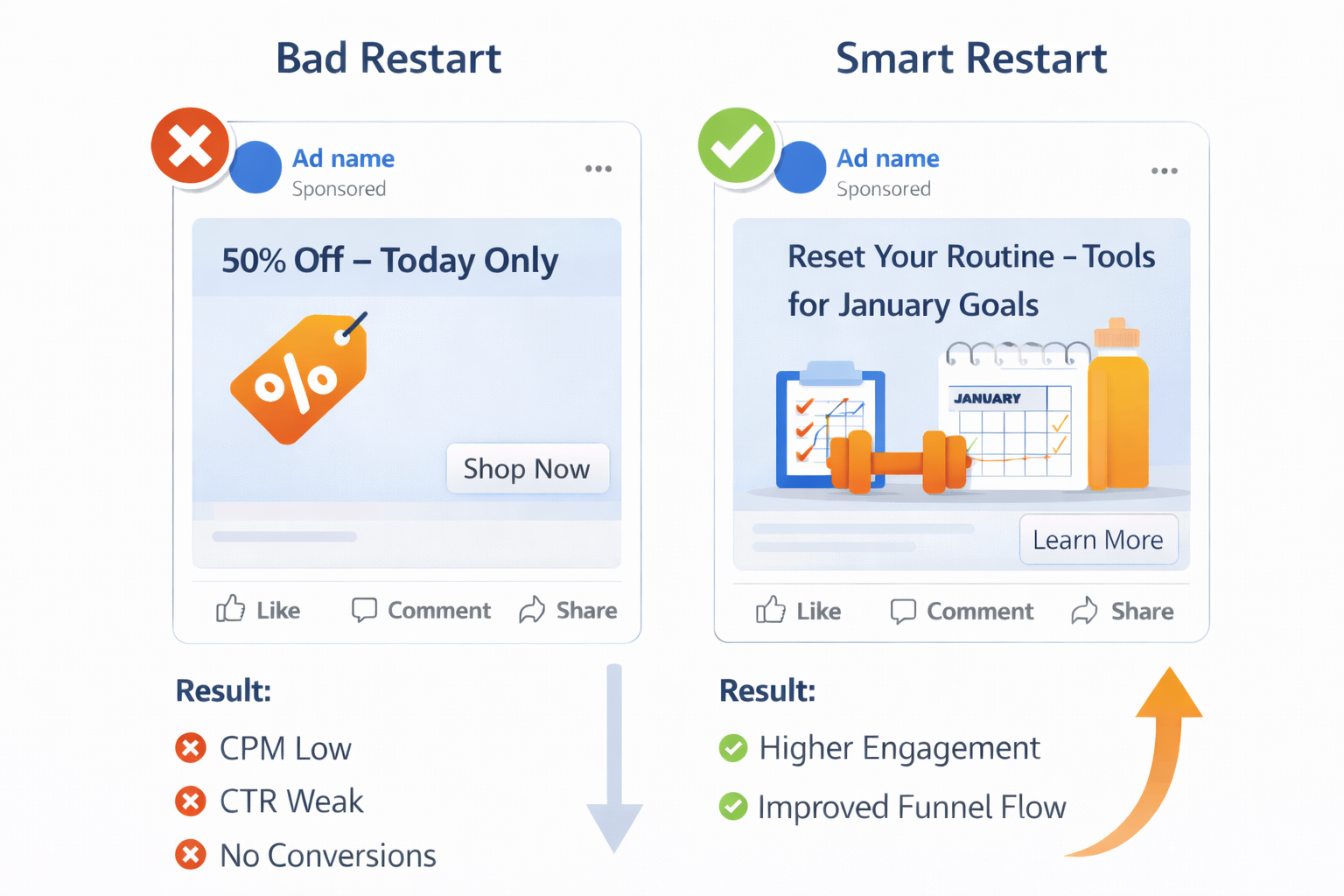
Avoid hard selling or time-sensitive offers during this stage. Focus on learning what tone and creative direction get attention.
Phase 2 — Controlled Scaling (January 8–15)
By the second week, attention improves and users begin responding more predictably. If you’ve gathered some early performance signals, you can start scaling gradually.
Here’s what to do in this phase:
-
Reintroduce conversion campaigns — starting with warm audiences
-
Increase budgets in small increments (no more than 20–30% daily)
-
Monitor for clear signs of engagement recovery: click-through rates, on-site actions, and comment quality
Get testing ideas from January Ad Campaigns: What to Test First.
Phase 3 — Full Relaunch (January 15–31)
Mid-January is when most advertisers see campaigns normalize — assuming the offer and targeting are strong.
This is when you can:
-
Launch new creative for cold audiences
-
Test broader interest or lookalike campaigns
-
Layer in urgency or time-sensitive incentives if it aligns with your strategy
If you’re not getting traction by this point, it's likely due to messaging, offer alignment, or funnel setup — not the January slowdown.
Prep Work to Do Before You Relaunch
Too many advertisers restart campaigns with the same problems that caused weak performance in December. Take this short pause to fix what matters most.
Clean Up Your Creative and Copy
Your ads need to look and sound like Q1 — not leftover holiday campaigns. That means:
-
Removing red, gold, or gift-related design elements
-
Using whitespace, fresh imagery, and calmer tones
-
Updating language to focus on progress, clarity, and long-term value
Not sure where the disconnect is? Read Why Your Facebook Ads Look Great But Still Don’t Sell.
Sync Your Ads and Landing Pages
Even strong ads fail if the post-click experience breaks trust. Double-check that:
-
Landing pages match the tone and promise of the ads
-
Any holiday-specific offers have been removed or updated
-
Product pricing and details are consistent from ad to page
These small mismatches can quietly kill conversion rates — especially in early Q1, when users are more cautious.
Recheck Your Tracking and Segments
January is a good time to do a full audit of your targeting and pixel health.
Confirm that:
-
Events are firing correctly after holiday dev freezes
-
Warm audiences are still fresh (remove people who purchased or bounced weeks ago)
-
Email and retargeting lists are updated based on December behavior
If you're unsure how to clean your segments, this guide to Audience Quality vs Quantity offers clarity.
Final Takeaway: Reenter with Intention, Not Habit
Don’t restart your ads just because the calendar flipped to January. Restart when your offer, targeting, and audience behavior align.
Let early January be your test window. Use data, not gut instinct, to scale. Watch for signs of readiness, and shift your message to fit the moment.
Your audience isn’t frozen — they’re just recalibrating. If your ads meet them where they are, Q1 can outperform your expectations.