Many Instagram campaigns fail before the first impression is delivered.
The targeting looks reasonable on paper. Interests match the niche. Age ranges feel accurate. Locations seem relevant. But once delivery starts, the campaign pulls low-quality traffic, weak engagement, or expensive clicks that never turn into conversions.
This usually happens because the audience was built from assumptions instead of platform behavior.
Instagram Insights helps reduce that problem before budget enters the auction. It gives advertisers a clearer picture of who already responds to the account, which content creates meaningful interaction, and whether the current audience profile aligns with the actual buyer.
Weak Targeting Often Starts With Generic Audience Assumptions
A lot of advertisers still build Instagram audiences using broad demographic logic.
A fitness brand targets everyone interested in workouts. A SaaS company targets entrepreneurs. A local business targets an entire city radius. These setups can generate reach, but reach alone does not help Meta identify conversion-ready users.
The issue becomes visible inside campaign metrics very quickly.
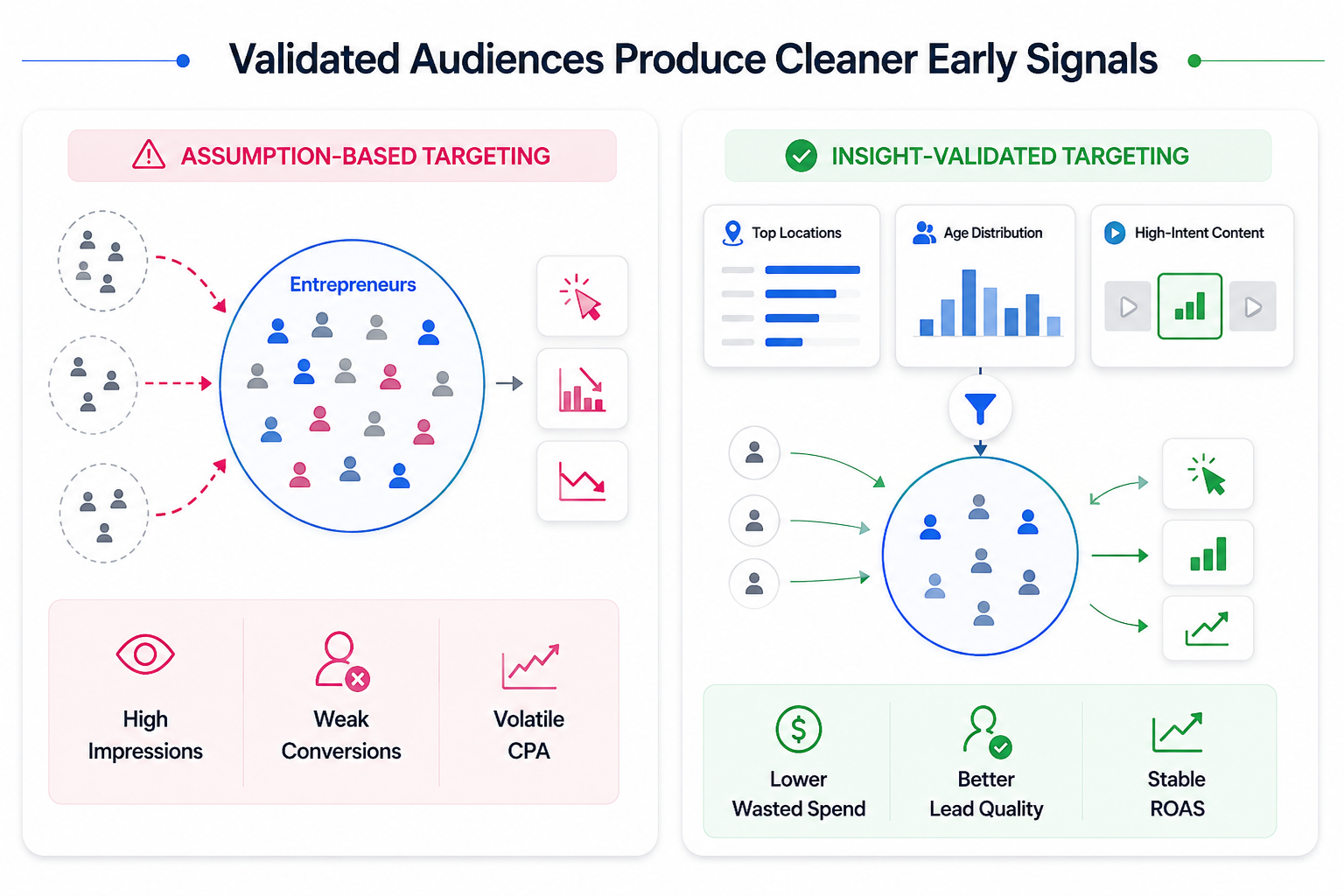
You may see:
- Low CPC with weak lead quality.
- Strong CTR but almost no downstream conversions.
- High impressions with very few profile actions.
- Traffic spikes that never produce revenue.
Those patterns usually indicate audience mismatch rather than creative failure.
If the campaign starts learning from low-intent interactions, Meta’s optimization system keeps searching for more users with similar behavior. That creates unstable performance early in the campaign lifecycle.
Use Instagram Insights to Validate Audience Direction Before Spending
Instagram Insights is most useful before launch, not after performance drops.
Instead of treating it as a reporting dashboard, use it as a validation layer. The goal is to confirm whether your current audience assumptions match observable account behavior.
Several metrics are especially useful here.
Follower location data can expose geographic mismatch. Some brands discover that most engaged users come from regions they never planned to target.
Age distribution can reveal that the account attracts a completely different segment than the offer was designed for.
Content interaction patterns also matter. If carousel posts consistently drive profile visits while Reels mainly generate passive views, the campaign should not treat those audiences equally.
This is where many advertisers accidentally waste testing budget. They launch campaigns before checking whether their organic audience behavior supports the targeting strategy.
A more detailed breakdown of this process appears in how to use Instagram Insights to improve ads.
How Audience Validation Improves Early Campaign Stability
Meta performs best when early signals are clean.
During the first days of delivery, the system evaluates who engages, who clicks, and who converts. Weak audience alignment creates noisy signals that slow optimization and increase CPA volatility.
This is especially noticeable in smaller accounts and niche campaigns where conversion volume is limited.
For example, a B2B software company may attract large numbers of students or freelancers organically because educational posts receive broad engagement. If that audience profile carries into paid campaigns unchecked, Meta may optimize toward cheap clicks instead of decision-makers.
The problem is not the creative. The problem is that the campaign entered the learning phase with weak directional input.
That is why advertisers should validate audience assumptions before launch instead of relying on post-launch optimization to fix everything.
Use Instagram Insights to Reveal When Your Positioning Is Attracting the Wrong Audience
Sometimes the targeting settings are technically correct, but the account itself trains the wrong expectations.
This happens when content attracts curiosity instead of buying intent.
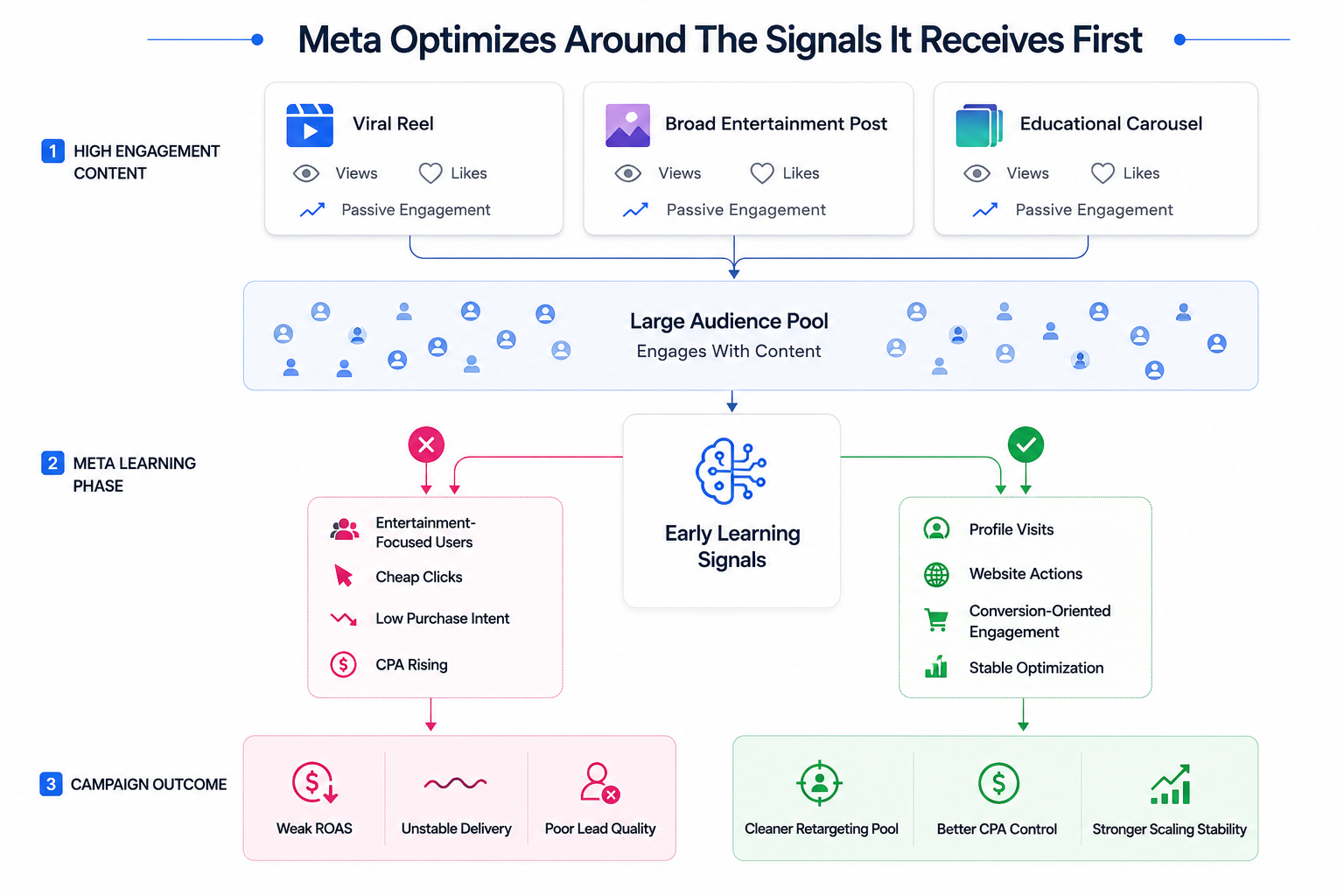
You can often spot this through engagement imbalance:
- High reach with very low website actions.
- Strong Reel views but weak profile conversions.
- Large engagement spikes from unrelated content themes.
- Audience growth that does not improve campaign efficiency.
Those patterns suggest the account may be building the wrong type of attention.
That distinction matters because Instagram campaigns frequently inherit behavioral patterns from existing account engagement. If the content attracts entertainment-focused users, the ads may struggle to generate purchase intent later.
This is one reason why a target audience looks right but performs wrong once campaigns begin scaling.
How Better Audience Validation Protects CPA and ROAS Earlier
Most advertisers think optimization starts after launch.
In practice, some of the biggest performance improvements happen before the first ad set goes live.
When audience assumptions are validated early:
- Testing budgets produce cleaner data.
- Campaigns exit learning with fewer wasted impressions.
- CPA volatility becomes easier to control.
- Retargeting pools contain more relevant users.
- Scaling decisions become less reactive.
That does not guarantee instant profitability. It simply gives Meta stronger starting conditions.
Campaign efficiency improves when the algorithm receives better behavioral direction from the beginning.
If the goal is to avoid wasting budget before launch, audience validation is one of the highest-leverage steps available.
Final Takeaway
Instagram Insights should not be treated as a passive analytics tab.
Used correctly, it helps advertisers validate whether the current audience profile matches the intended customer before campaigns begin spending heavily.
Weak Instagram targeting often starts with assumptions that never get tested against real account behavior. Insights reduce that guesswork by exposing the gaps between who engages with the account and who is actually likely to convert.
That makes campaign optimization more stable long before scaling decisions happen.