Managing ads doesn’t have to mean checking your dashboard ten times a day or reacting to every small change in performance. Still, a lot of advertisers feel stuck in that loop.
If that sounds familiar, this article is for you. We’ll walk through how to manage Facebook and Instagram campaigns in a calmer, more focused way without losing control of your results.
Why Managing Ads Can Feel So Draining
Running Meta ads is powerful, but it’s also complicated. You’re juggling creative, targeting, tracking, bidding, and reporting — all while the platform keeps changing.
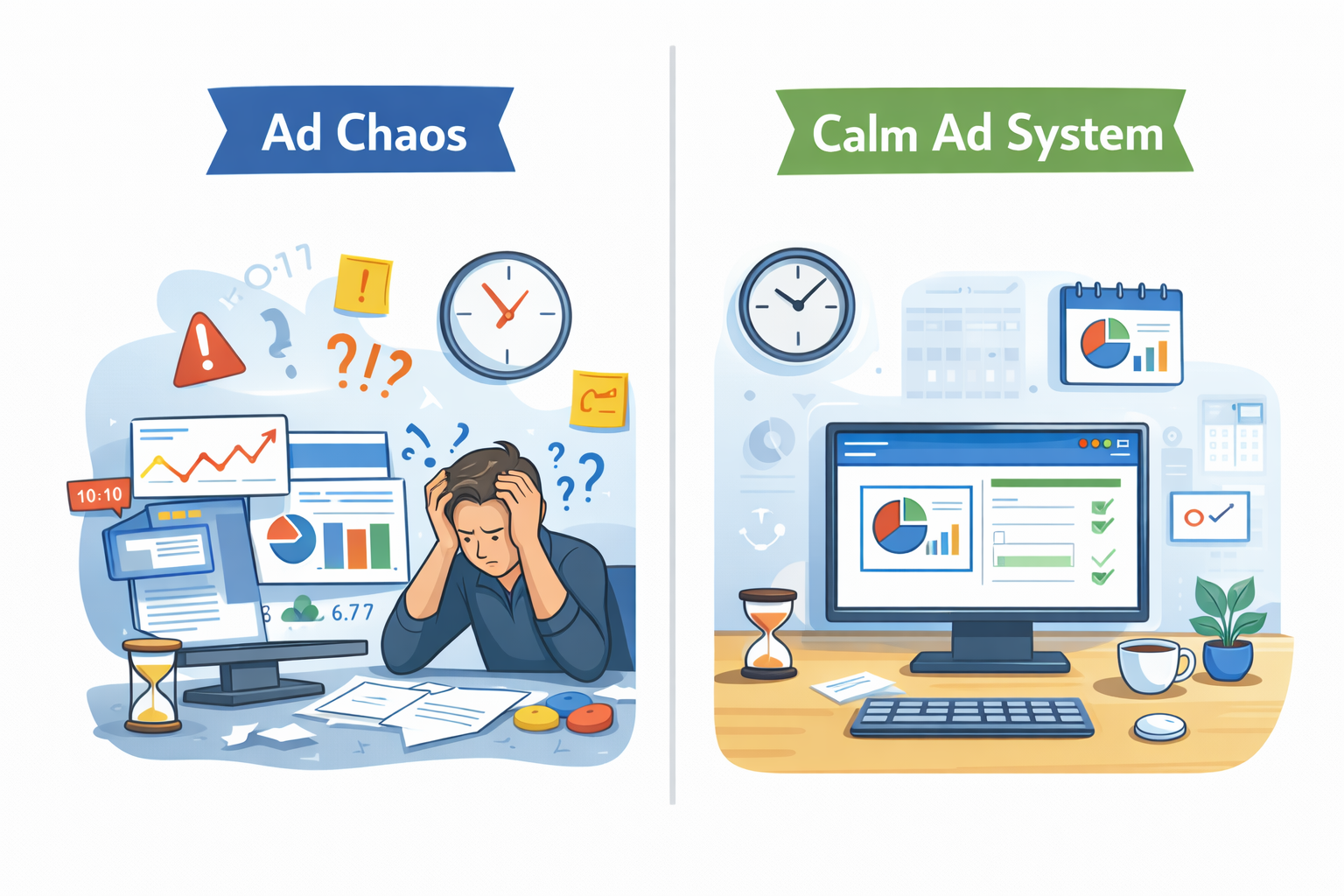
If you’re feeling burned out, it’s often because of one (or more) of these reasons:
-
You don’t have a system in place. Every campaign feels like you’re starting from scratch, instead of following a clear framework that scales over time. Related: How to Build a Facebook Ads Framework That Scales Over Time.
-
You check performance too often. This creates fake patterns and leads to constant second-guessing.
-
You react too fast to small changes. Metrics always fluctuate. Making quick edits can hurt more than help.
These problems don’t mean you’re bad at ads. They just mean it’s time to shift how you manage them.
Build a Simple System That Works
When you have a clear structure, managing ads becomes less stressful. You stop chasing numbers and start focusing on what actually matters.
Start With a Clear Goal
Before launching a campaign, get specific about what you want the ads to do. Different goals need different setups. For example:
-
Conversions: Use Purchase or Lead objectives. Make sure tracking is set up properly and you’re optimizing for the right event.
-
Awareness: If you're introducing a new product or brand, focus on reach or video views to warm up your audience.
-
Engagement: Use Post Engagement only when you want feedback on creatives or social proof for cold traffic.
Having a clear objective also makes it easier to judge performance without panic. If you’re unsure how to evaluate results properly, Simple Questions for Measuring Facebook Ad Effectiveness is a useful reference.
Clean Up Your Tracking Setup
Good data removes a lot of stress. But if your pixel events are messy or misfiring, you’ll never know what’s working.
Here’s how to keep your event setup simple and reliable:
-
Stick to a few key events. For example, Purchase, Add to Cart, and Lead are usually enough.
-
Avoid duplicates. Don’t track the same thing in multiple ways.
-
Use Custom Conversions when needed. If you want to track people who reach a specific thank-you page, this gives you more control.
Clean tracking lets you trust your numbers and that trust makes everything easier.
Manage Ads With a Weekly Routine
You don’t need to live inside your ad manager. Most campaigns do better when you give them space to breathe.
A consistent weekly routine helps you stay on top of things without burning out.
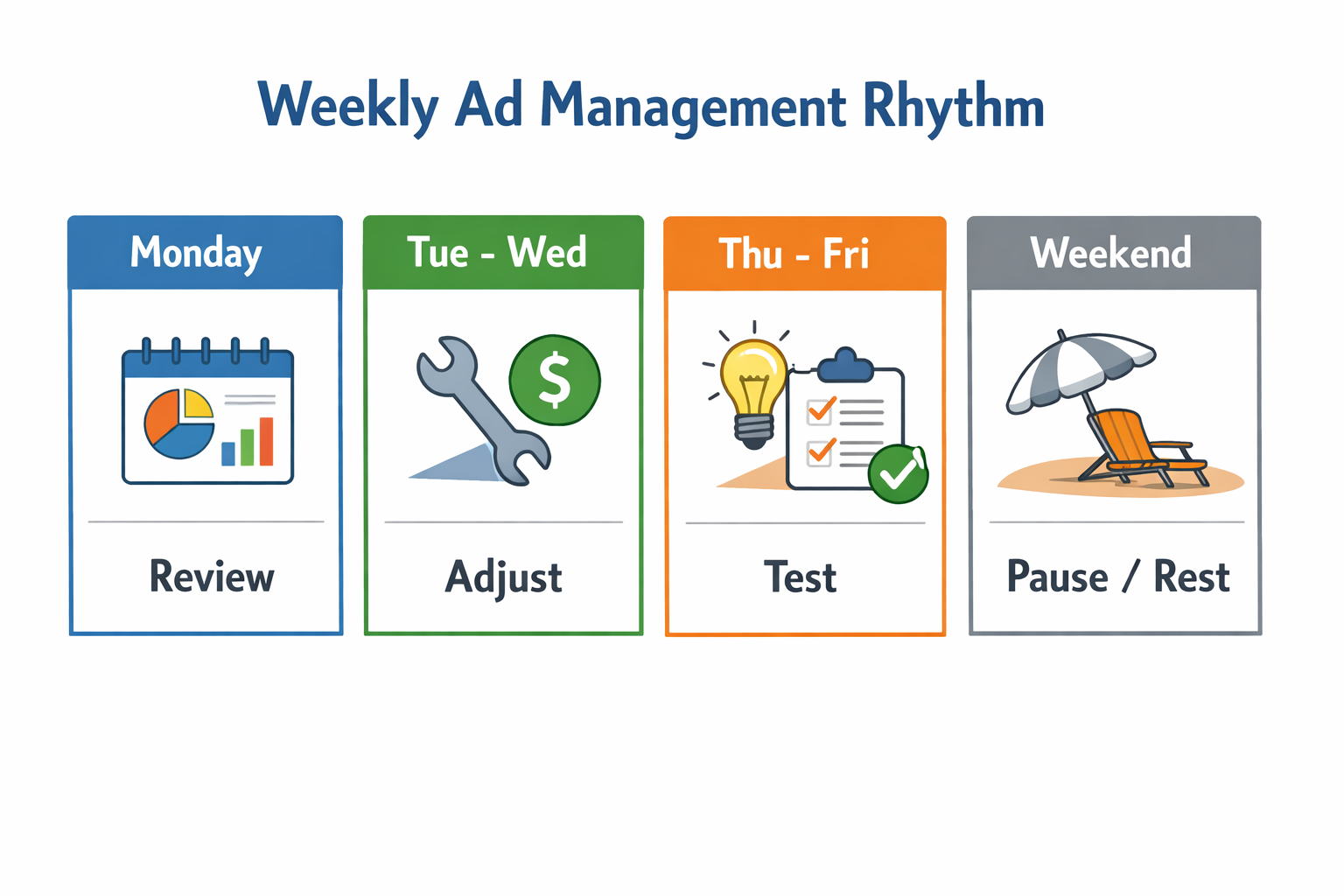
Try This Weekly Rhythm
This framework keeps your campaigns moving without constant oversight.
-
Monday: Review the past 7 days. Look at big trends instead of daily swings.
-
Tuesday or Wednesday: Make thoughtful changes. Swap out underperforming creatives or adjust budgets if needed.
-
Thursday or Friday: Launch new tests. Let them run for a few days before making calls.
-
Weekend: Leave things alone. Let Meta’s system collect clean data.
This approach also helps reduce creative burnout and performance drops over time. How to Avoid Ad Fatigue and Keep Optimal Ads Costs expands on this idea in more detail.
Don’t Panic Over Short-Term Results
It’s easy to get stressed when ROAS drops or CPM spikes. But not every dip needs a fix. Ads go through natural ups and downs, and trying to control every detail usually backfires.
The solution? Zoom out.
Focus on Trends, Not Spikes
Looking at the bigger picture helps you make smarter, calmer decisions. Here’s how:
-
Use 3- to 7-day views. Daily results are noisy and often misleading.
-
Compare week over week. Mondays might always perform worse than weekends, and that’s okay.
-
Split by funnel stage. Don’t judge a cold audience campaign by bottom-funnel metrics.
Not every performance drop is a problem. When you understand patterns, you make better moves.
Automate What Doesn’t Need You
You don’t need to do everything by hand. Meta’s ad platform can help reduce the mental load — as long as you keep control of the important stuff.
Where Automation Actually Helps
Used well, automation can save you time and improve consistency. Try this:
-
Campaign Budget Optimization (CBO): Let Meta shift budget between ad sets to get better results.
-
Auto placements: Allow Meta to test across Facebook, Instagram, Reels, and Stories.
-
Rules: Set up auto-pause if an ad’s cost per result goes too high. Or increase budget if performance improves.
For a practical walkthrough, see Facebook Ad Automation: How to Create Facebook Automated Rules.
What You Should Still Handle Manually
Not everything should be automated. Some decisions need your input:
-
Creative testing: You still need to choose which messages and visuals to test.
-
Landing page experience: Even the best ad won’t convert if the page it links to is slow or confusing.
Let automation do the heavy lifting but don’t hand over the keys completely.
Focus on What Moves the Needle
It’s easy to get stuck optimizing tiny things that don’t actually change your results. Instead, spend your time where it counts.
High-Impact Areas
These parts of your campaign usually make the biggest difference:
-
Creative clarity: Use simple, direct messaging. Ads should make it obvious what you offer and why it matters.
-
Offer strength: Make sure the product, service, or promo is valuable and clear.
-
Audience quality: Build high-value seed audiences (like past buyers) to fuel better lookalikes and retargeting.
Things That Matter Less Than You Think
You can safely spend less time on:
-
Watching CTR or engagement without looking at conversion data.
-
Testing dozens of small interest audiences.
-
Making constant budget tweaks to chase daily results.
Simplifying your process doesn’t mean you’re cutting corners. It means you’re working smarter.
Final Thoughts
Running ads shouldn’t feel like a full-time crisis. With the right systems in place, you can stay in control without the stress.
The key is to plan ahead, trust your setup, and focus on the inputs that drive results — not just the outputs.
Calm ad management is possible. And when you’re not overwhelmed, your performance usually improves too.