Most campaigns generate more than conversions and impressions—they generate insight. Audience reactions, creative performance, cost fluctuations, and conversion paths all contain information about what actually works. The challenge is not collecting data, but turning that data into clear strategic decisions.
Marketers who consistently outperform their peers are not the ones launching the most campaigns, but the ones extracting the most value from each one.
Step 1: Separate Signals from Noise
Not every metric deserves equal attention. Early in the analysis phase, focus on indicators that reflect real business impact rather than surface-level engagement.
Key signals to prioritize:
-
Cost per conversion over time (trend, not snapshot)
-
Conversion rate by audience segment
-
Frequency and creative fatigue indicators
-
Time-to-conversion and path length
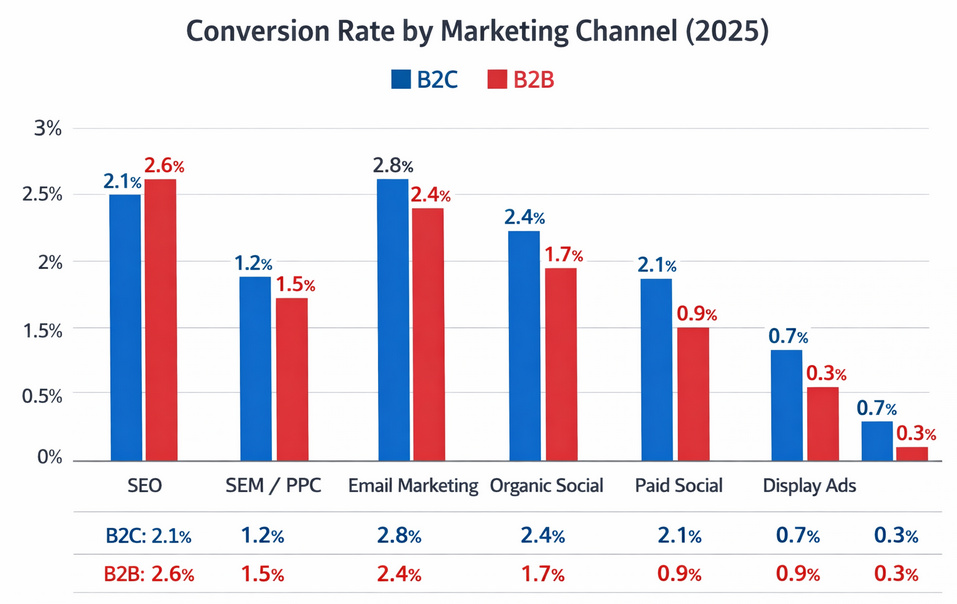
Conversion rate benchmarks across major marketing channels in 2025, highlighting where campaign traffic most efficiently turns into conversions
According to industry benchmarks, campaigns optimized around conversion-focused signals can reduce wasted spend by 20–30% compared to campaigns optimized primarily for clicks or impressions.
Step 2: Identify Repeatable Patterns
Single wins are useful, but patterns are strategic. Review campaign data in clusters rather than in isolation.
Look for repeating answers to questions such as:
-
Which audience segments consistently convert below average cost?
-
Which creatives maintain performance after frequency increases?
-
Which offers shorten the conversion cycle?
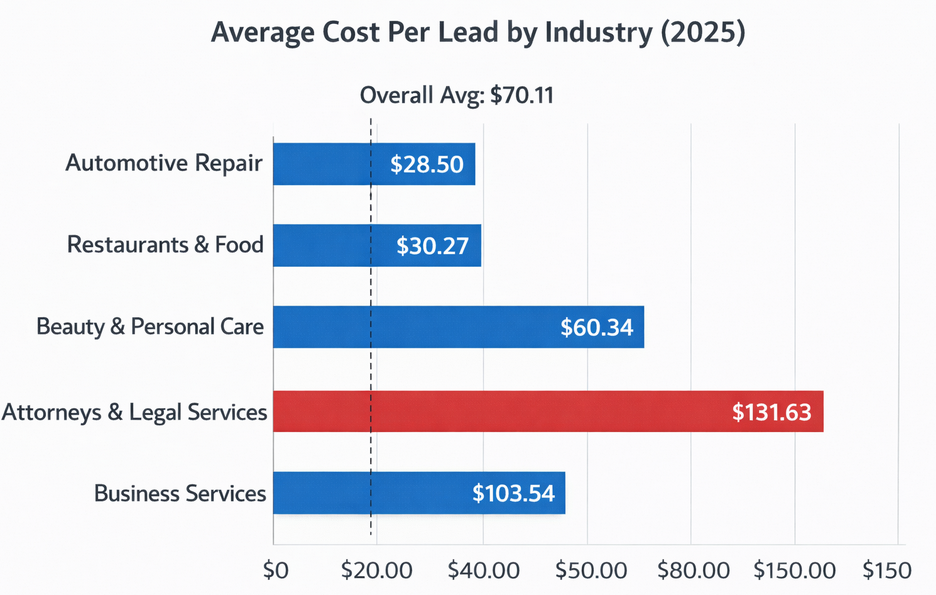
Average cost per lead (CPL) across select industries in 2025, illustrating the relative efficiency of lead generation efforts by sector
A meta-analysis of performance campaigns shows that strategies based on repeated patterns outperform one-off optimizations by roughly 25% in long-term return on ad spend.
Step 3: Translate Insights into Strategic Rules
Insights become strategy only when they influence future decisions. Turn findings into simple, actionable rules.
Examples:
-
Prioritize audience segments that deliver at least 15% higher conversion rates than account average
-
Refresh creatives once frequency exceeds the historical fatigue threshold
-
Allocate budget toward segments with the shortest time-to-conversion
Clear rules reduce guesswork and help teams scale without relying on intuition alone.
Step 4: Test Strategy, Not Tactics
Instead of testing isolated changes, test strategic assumptions.
For example:
-
Instead of testing a single headline, test a messaging angle across multiple creatives
-
Instead of testing one audience, test a segmentation approach
Campaigns structured around strategic hypotheses are shown to reach statistical confidence up to 40% faster than fragmented A/B tests, accelerating learning cycles.
Step 5: Document and Operationalize Learnings
Insights lose value if they live only in dashboards. Create a centralized learning log that captures:
-
What was tested
-
What changed
-
Why it worked or failed
-
How it should influence future campaigns
Teams that document learnings systematically are up to 2× more likely to apply insights consistently across future campaigns.
From Insight to Advantage
Turning campaign learnings into strategy is not about more data—it’s about better decisions. By focusing on meaningful signals, identifying repeatable patterns, and turning insights into clear strategic rules, marketers can transform every campaign into a stepping stone toward sustained growth.
Over time, this approach compounds, creating a strategic edge that competitors relying on surface-level optimization struggle to match.