If you're running Facebook or Instagram campaigns regularly, a clear calendar is essential.
It’s not just about planning promotions. It’s about building momentum, pacing your budget intelligently, and aligning performance with business goals.
A well-structured Facebook Ads calendar helps you test strategically, avoid ad fatigue, and stay consistent, even when things get busy.
For a foundational overview of calendar planning principles, read How to Create a Campaign Calendar That Keeps Results Consistent.
Why a Facebook Ads Calendar Matters More Than You Think
Treating Facebook campaigns as one-off projects makes performance harder to control. Peaks and valleys in results usually trace back to poor planning.
An ad calendar gives you structure. It helps you stay proactive instead of reacting to performance drops or sudden opportunities.
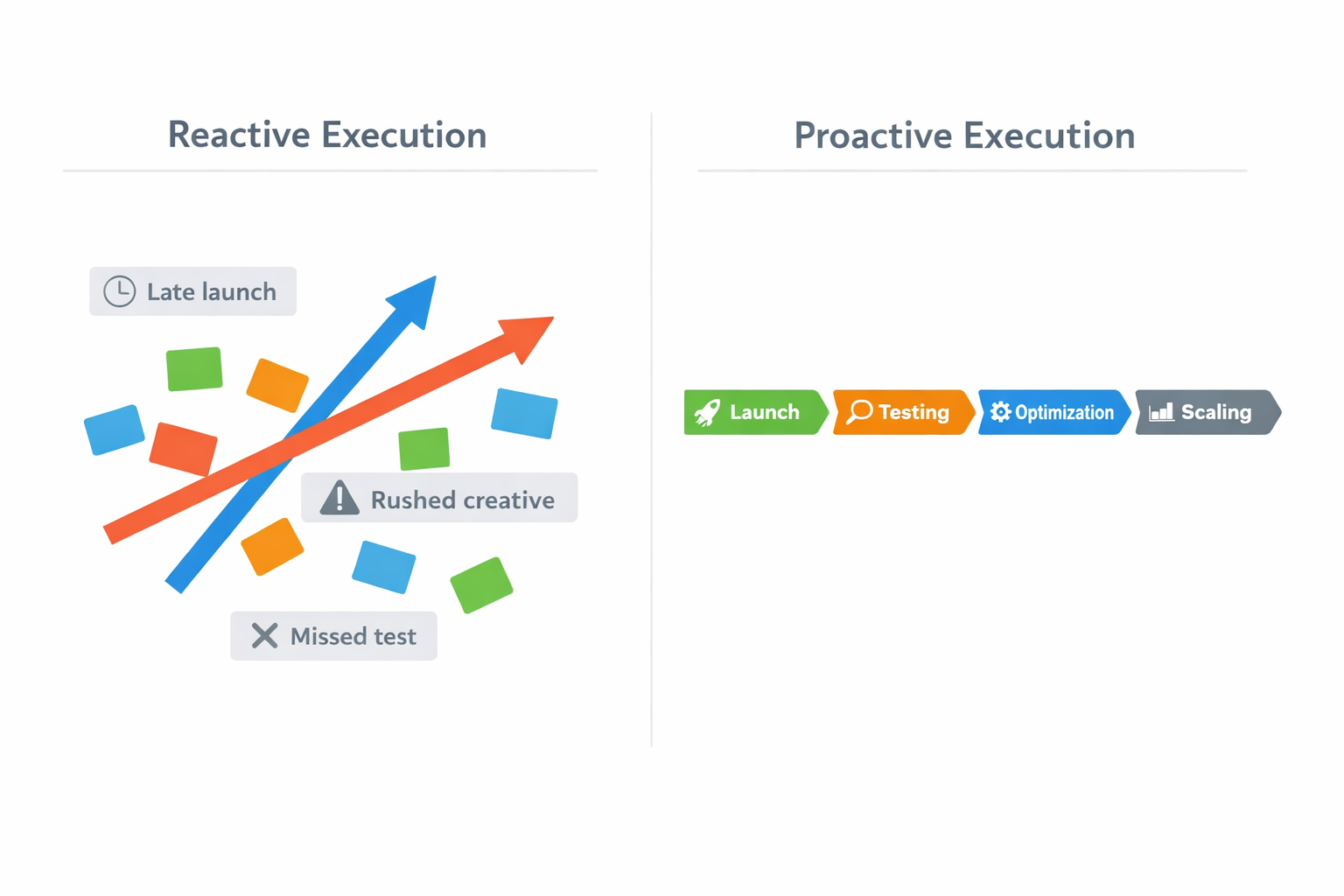
Here’s what a strong Facebook Ads calendar supports:
-
Coordinated launches that match business goals and creative deadlines.
-
Time blocks for testing, optimizing, and scaling.
-
More consistent performance by avoiding neglected periods or creative burnout.
-
Clear collaboration across creative, media buying, and analytics roles.
Set Clear, Tiered Objectives for Each Campaign
Start by identifying what you want each campaign to achieve. Go deeper than “get more leads.”
Think in layers:
-
Primary goal. For example, drive sales of a new product.
-
Supporting behavior. Encourage add-to-cart or initiate checkout, not just purchases.
-
Platform-specific outcome. On Facebook, this might include video views or engagement to warm up cold audiences.
Defining layered objectives helps you build support campaigns around your main push. It also improves optimization and measurement.
Build Around Business-Specific Timing, Not Just Holidays
Seasonality isn’t only about Black Friday or year-end sales. Every business has its own rhythms. Use those patterns to your advantage.
To go deeper, check out Building Facebook Campaigns Around Product Launch Cycles.
Plan your calendar around:
-
High-conversion windows. Times when your audience is most likely to buy, such as tax season for financial products.
-
Strategic off-peak periods. Quieter months when CPMs drop, which are ideal for audience building or education.
-
Internal launch timelines. Product drops, beta rollouts, or membership pushes.
Work backward from these moments. Give yourself at least 4 to 6 weeks of prep time to develop assets, test creatives, and warm up your audience.
Plan for Creative Fatigue Before It Happens
Even high-performing ads will wear out. Frequency rises, engagement drops, and your CPA climbs. Prevent this with a refresh cycle built into your calendar.
To manage creative fatigue:
-
Rotate ads every 4 to 6 weeks for most campaigns.
-
If using broad targeting, refresh even sooner — every 2 to 3 weeks.
-
Track frequency in Ads Manager. A frequency over 2.5 often signals fatigue.
-
Create “families” of ads — different angles or visuals around one theme — so rotation is fast and easy.
Add recurring reminders in your calendar to review and replace creatives on schedule.
Build in Dedicated Testing Periods with Clear Boundaries
Testing is not the same as launching. It deserves its own place in your calendar.
Plan 7 to 14 days for each test campaign. Keep variables limited and goals specific.
Examples of what to test:
-
Offer types. Compare 10% off vs. free shipping.
-
Creative approaches. Emotional vs. rational copy, product-focused vs. lifestyle visuals.
-
Audience segments. Interest-based targeting, broad, or lookalike.
For help with interpreting early campaign results, see What to Watch in the First 24 Hours of a Facebook Campaign Launch.
Label tests clearly in your ad account. Schedule a performance review 2 to 3 days after the test ends. This avoids guesswork when deciding what to scale.
Plan in Weekly Layers, Not Just Monthly Blocks
Monthly calendars show the big picture, but real performance is built in the weekly details.
Break your plan into three levels:
-
Quarterly view. High-level themes, seasonal campaigns, and strategic goals.
-
Monthly planning. Campaign objectives, budget shifts, audience changes, and creative briefs.
-
Weekly execution. Launch timelines, creative deadlines, ad account setup, and performance check-ins.
Weekly planning helps catch issues early, keeps workloads manageable, and improves overall results.
Use Warmup Campaigns to Pre-Qualify Your Audience
Launching to cold audiences with high-commitment offers often leads to poor results. A better approach is to warm them up first.
Ways to build intent before a major push:
-
Video view campaigns. Retarget people who watch 50% or more.
-
Lead ads for waitlists. Build a pool of prospects before launch day.
-
Engagement-focused content. Create saves, comments, or shares around teaser messages.
Start warmup 2 to 3 weeks before your main campaign. This lowers CPA and increases conversion rates when it counts.
Sync Your Ads with Your Entire Marketing Stack
Your Facebook Ads calendar should not live in isolation. Align it with your email marketing, landing pages, and product roadmap.
Make sure to:
-
Match offer timelines across platforms.
-
Sync messaging with organic content and email sequences.
-
Confirm that landing pages and ad copy are fully aligned.
-
Coordinate with CRM follow-up and automation rules.
Small gaps in coordination often result in missed conversions and lower ROAS.
Review Your Calendar Like a Media Buyer
At the end of each month, take a structured look at your calendar’s performance. Not just the ads, but the plan itself.
Ask:
-
Did you meet campaign launch and creative deadlines?
-
Were budgets spread evenly across testing, learning, and scaling?
-
Did each test lead to clear conclusions? Or were variables too mixed?
Use the answers to adjust next month’s calendar. Over time, this process compounds into smarter planning, fewer mistakes, and stronger results.
Advanced Tip: Use Tiered Campaign Structuring
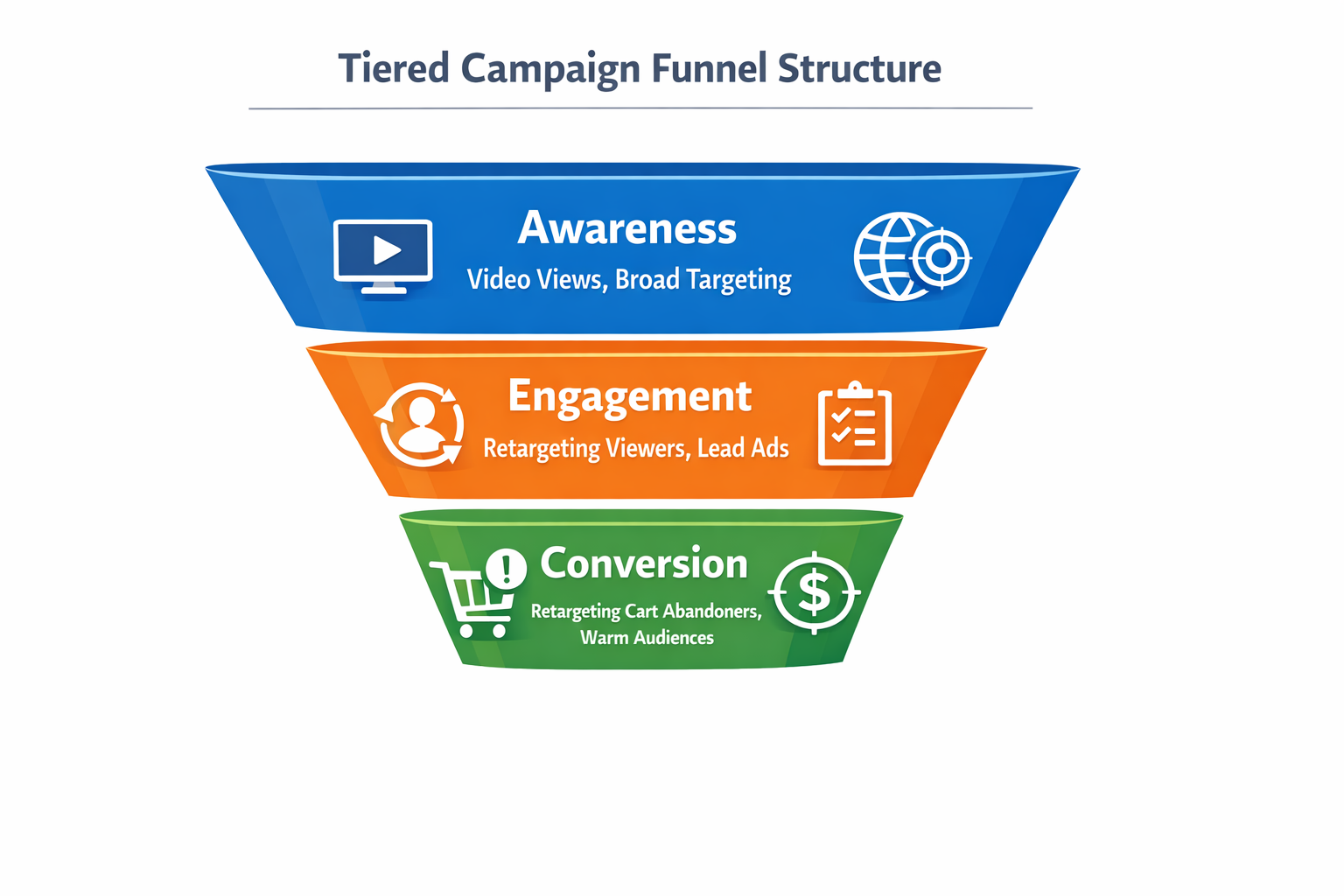
For better budget control and clearer optimization, organize your campaigns into three distinct levels.
-
Top-of-funnel (cold traffic). Broad targeting, light content, and video views.
-
Middle-of-funnel (engaged). Retargeting based on website visits or ad interaction.
-
Bottom-of-funnel (intent). High-converting offers for hot leads and cart abandoners.
Structure your calendar so each tier runs in parallel. Don’t launch cold ads without a warm follow-up already planned.
Final Thoughts
A Facebook Ads calendar isn’t just a way to organize campaigns. It’s a strategic tool for scaling consistently without losing control.
Start small. Plan 30 days with clear goals, testing slots, and creative deadlines. From there, layer in longer-term planning and more detailed weekly structure.
The payoff isn’t just smoother execution. It’s better results across the board.