A Facebook ad can be technically correct and still waste money.
You can choose a campaign goal, set a budget, pick an audience, publish a creative, and see delivery start. That does not mean the campaign has a clear reason to exist.
The problem starts earlier. Many advertisers launch ads before they can explain who the offer is for, what problem it solves, and why someone should act now. Meta can distribute that message, but it cannot fix confusion inside the offer.
Problem: Meta can help you launch faster, but it cannot clarify the message
Creating ads from a Facebook Page makes the launch process feel simple. The advertiser chooses a goal, selects creative, defines an audience, sets a budget, and starts delivery.
That workflow is useful for speed. It is risky when the business message is still vague.
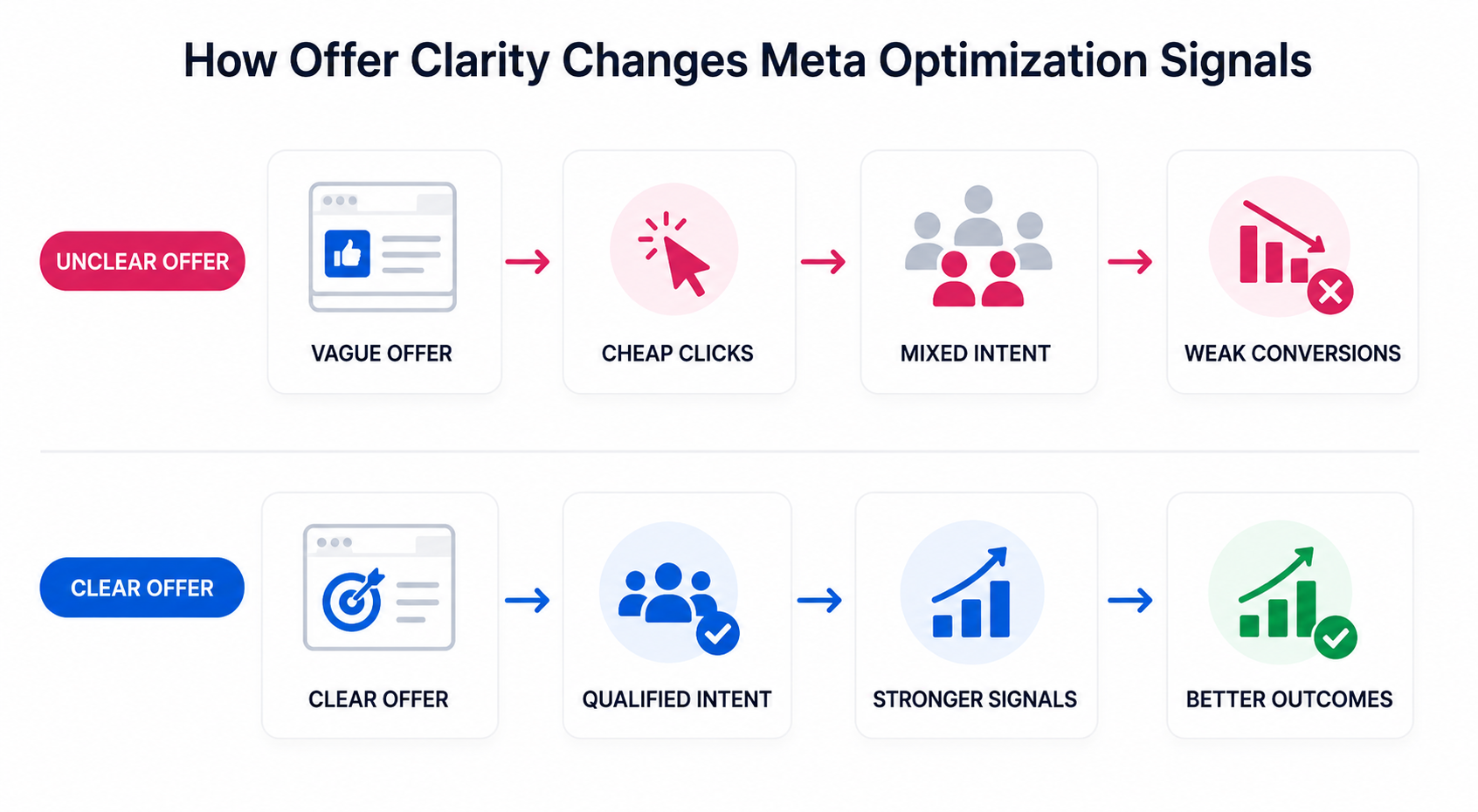
If the ad says “grow your business,” “save time,” or “get better results,” Meta has very little meaningful context. The algorithm can still find people who click, watch, or engage. But those actions may come from curiosity, not purchase intent.
This is where many early campaigns go wrong. The ad gets cheap clicks, but the landing page does not convert. The advertiser then blames targeting, placements, or budget. The real issue is that the ad never gave the right buyer a specific reason to care.
That is why weak value propositions hurt paid social performance before the auction even begins.
Fix #1: Clarify the offer before choosing a campaign objective
A campaign objective tells Meta what type of user behavior to prioritize. If the objective does not match the business outcome, the campaign trains on the wrong signals.
This gets messy when the advertiser does not know what they want the ad to achieve.
A local service business might say it wants “more awareness,” but the real need is booked consultations. A SaaS startup might optimize for leads, while sales only accepts demo-ready accounts. An e-commerce brand might run traffic ads for a product that needs education before purchase.
The objective should follow the offer logic:
- Awareness works when the offer needs recognition first. This fits new categories, local launches, and products where the buyer needs repeated exposure before action.
- Traffic works when the page can qualify intent. It should not be used just because clicks look cheaper than leads or purchases.
- Lead campaigns work when the sales process can filter fast. If the form attracts low-intent users, CPL may look strong while sales efficiency drops.
- Sales campaigns work when the offer, page, and conversion event are already clear. Meta needs enough purchase or conversion signals to find repeatable patterns.
When the offer is unclear, every objective becomes a guess. That guess affects delivery, reporting, and the way Meta allocates spend.
Fix #2: Match the ad message to one specific buyer problem
A broad promise usually increases irrelevant engagement. People click because the message sounds useful, not because the offer matches their situation.
This creates a familiar Ads Manager pattern. CTR looks acceptable. CPC looks manageable. Comments or reactions may even look healthy. Then the cost per qualified lead rises, demo bookings stay flat, or ROAS never clears breakeven.
The campaign is buying attention from people who are not ready to act.
For B2B lead generation, this can damage sales capacity. A form that promises “free growth tips” may produce many leads, but few have budget, urgency, or decision authority. Sales wastes time chasing contacts who never understood the offer.
For service businesses, vague messaging often brings price shoppers. The ad promises a broad benefit, so users submit forms without knowing the scope, location, or price range. CPA rises once you measure real booked calls instead of form fills.
For e-commerce, the same issue appears after the click. Users land on the product page, scan the offer, and leave because the ad did not pre-frame the product’s value.
How to clarify the offer before building the ad
Before setting up the campaign, write the offer in plain operational terms. If the sentence sounds like homepage copy, it is probably too broad.
Use this diagnostic check:
- Who is the buyer? Name the role, business type, situation, or audience segment. “Small businesses” is too wide for most campaigns.
- What problem is active right now? The ad should speak to a current friction point, not a general aspiration.
- What result does the offer create? Tie the promise to a measurable outcome, such as booked calls, lower CPL, faster setup, or fewer wasted clicks.
- Why should they act now? Use urgency only when it is real. A deadline, seasonal window, limited capacity, or rising cost can justify action.
Once this is clear, you can stress-test your offer before running ads instead of letting paid traffic expose the weakness.
Turn the clarified offer into campaign planning inputs
A clear offer should change the campaign setup.
If the buyer is problem-aware but not vendor-aware, the first ad should educate and qualify. If the buyer already knows the category, the ad can compare outcomes, pricing, speed, or trust signals. If the buyer is ready to act, the landing page should remove friction instead of adding more explanation.
The same logic applies to audience selection. Broad targeting may work when the creative carries strong qualification cues. Precise targeting may work better when the category is niche, regulated, or B2B-specific.
Creative should also reflect the offer stage. A vague business message produces vague ads. A clear offer gives the creative a job: filter, educate, compare, or convert.
This is why ads often fail at the offer level, even when the campaign settings look fine.
Final takeaway
Do not treat Facebook ad setup as the planning process.
The setup screen asks for goals, audience, budget, and creative. It does not force you to define the buyer, sharpen the offer, or prove that the message can attract qualified demand.
If the business message is unclear, paid traffic turns that confusion into CPC, CPA, and ROAS problems. Fix the offer first. Then use Meta’s tools to distribute a message that deserves budget.