Before budgets go live, smart advertisers test audience intent, saturation, and fit. This guide explains how to forecast audience responsiveness using signals you already have—so you can reduce waste, set realistic benchmarks, and launch campaigns with confidence.
Launching ads without understanding how an audience will respond is one of the fastest ways to burn budget. While no prediction is perfect, modern marketers can estimate responsiveness with a high degree of confidence by analyzing behavioral signals, historical patterns, and market dynamics—before spending a single dollar.
This article breaks down practical, data-backed methods to forecast engagement, conversion likelihood, and scalability early in the planning phase.
Why Audience Prediction Matters
Audience selection accounts for a major share of campaign performance variance. Industry studies consistently show that targeting and audience fit explain more than 40–50% of performance differences across paid campaigns, outweighing even creative and bidding strategies.
Predicting responsiveness upfront helps you:
-
Avoid testing on low-intent or oversaturated audiences
-
Set realistic CPA and CTR expectations
-
Choose the right funnel depth before launch
-
Decide whether an audience is worth scaling at all
1. Analyze Intent Signals, Not Just Demographics
Demographics describe who an audience is. Intent signals reveal what they are likely to do.
High-quality intent indicators include:
-
Membership in niche or problem-specific communities
-
Engagement with competitor content or tools
-
Interaction with solution-oriented posts, videos, or discussions
-
Repeated exposure to related offers (retargetable behavior)
According to multiple paid media benchmarks, audiences built on behavioral or interest-based signals convert 2–3× better than purely demographic audiences.
Key takeaway: the closer an audience is to an active problem, the higher its predicted responsiveness.
2. Measure Audience Saturation Before Launch
Even high-intent audiences underperform when they are oversaturated.
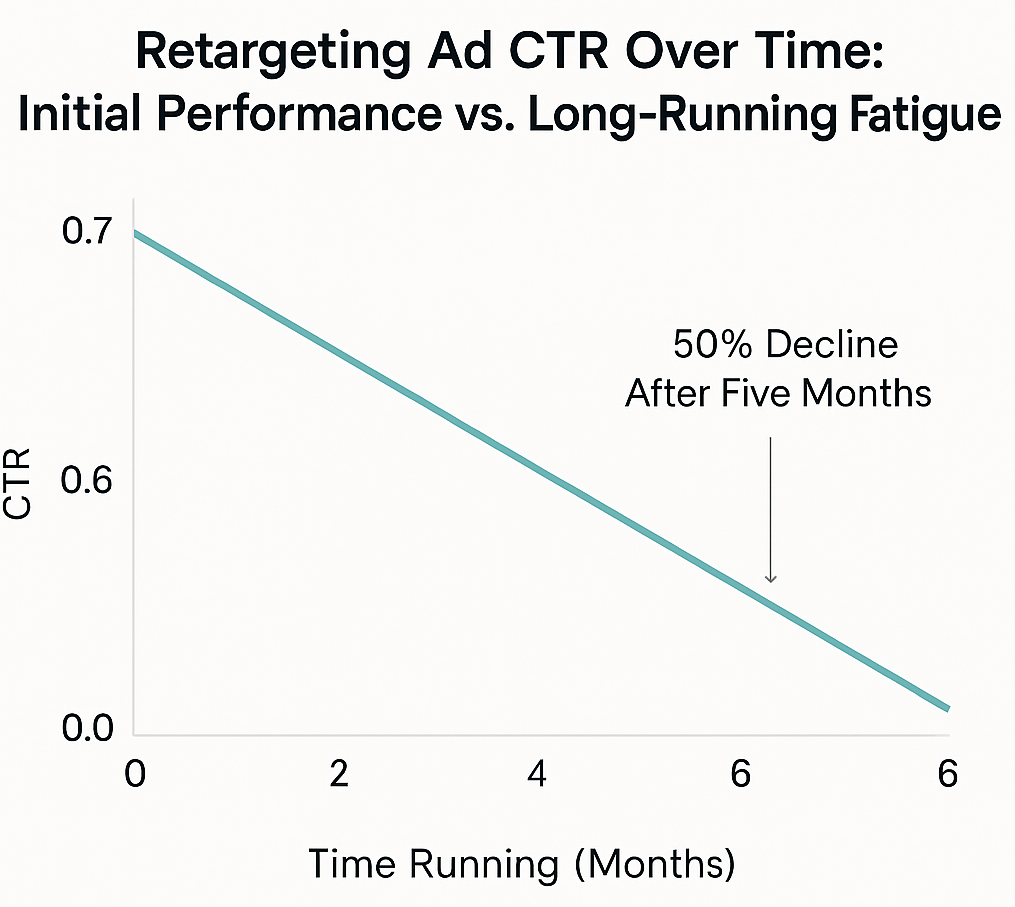
Line chart showing retargeting ad CTR starting around 0.7% and decreasing by about 50% after five months
Warning signs of saturation:
-
The same advertisers repeatedly targeting the same niche
-
High content repetition across ads and offers
-
Declining engagement rates on organic or community posts
Research from major ad platforms shows that when average frequency exceeds 4–5 impressions per user in a short window, click-through rates drop by 20–35% on average.
Before launch, estimate:
-
Audience size vs. number of active advertisers
-
Likely weekly reach relative to audience depth
-
Whether the audience can sustain testing and scaling
3. Use Proxy Metrics From Existing Data
You don’t need active ad spend to predict performance. Proxy metrics often provide strong signals.
Useful proxies include:
-
Email open and click rates from similar segments
-
Organic content engagement on comparable topics
-
Past campaign data from adjacent offers or markets
-
Landing page conversion benchmarks for similar traffic types
For example, if a similar audience historically delivered a 1.8% CTR and 8% landing page conversion rate, you can model early CPA ranges with reasonable accuracy.
Across performance marketing reports, campaigns launched with benchmark-based forecasting reduce first-month budget waste by up to 30%.
4. Score Audiences With a Pre-Launch Framework
A simple scoring model helps compare audiences objectively before spending.
Rate each audience (1–5) across four dimensions:
-
Intent strength
-
Audience freshness
-
Problem-solution alignment
-
Estimated scale
Audiences scoring 16+ out of 20 consistently outperform lower-scoring segments in early-stage tests, with faster time-to-positive ROI and lower learning-phase volatility.
This approach also clarifies which audiences deserve aggressive testing—and which should be deprioritized.
5. Forecast Performance Ranges, Not Exact Numbers
Precision is less important than direction.
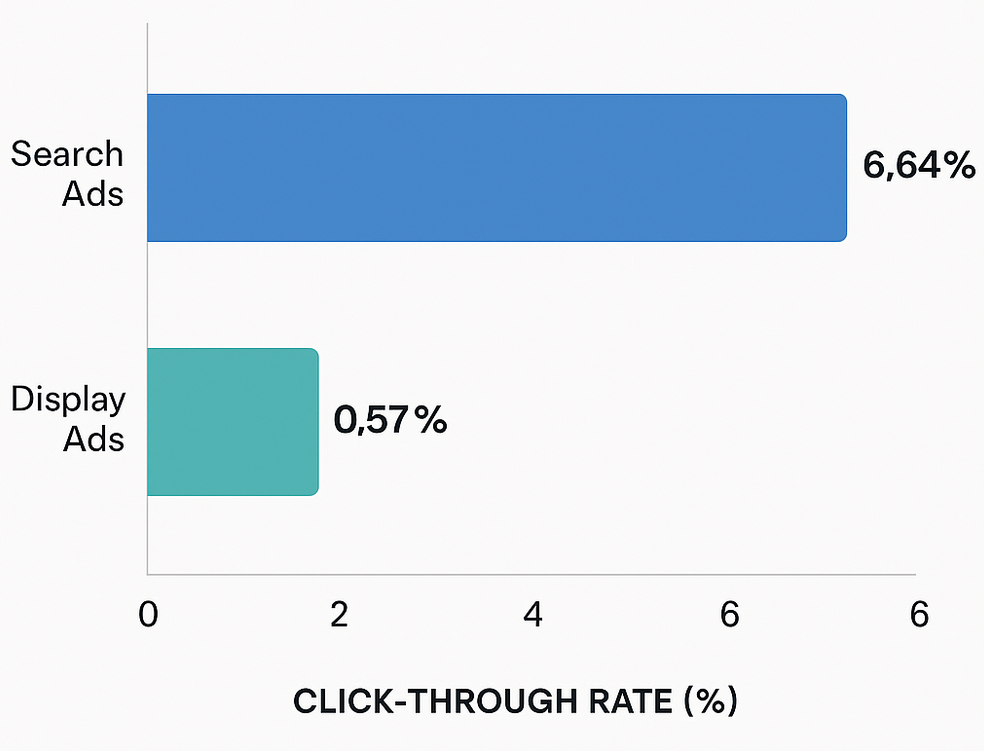
Audience selection accounts for a major share of campaign performance variance.
Instead of predicting a single CTR or CPA, define ranges:
-
Expected CTR range (e.g., 0.8%–1.2%)
-
Expected conversion rate range
-
Acceptable CPA ceiling
According to growth marketing benchmarks, teams that launch with predefined performance ranges are 2× more likely to scale winning audiences and 40% less likely to kill viable tests too early.
Common Prediction Mistakes to Avoid
-
Relying on audience size alone
-
Assuming interest equals intent
-
Ignoring frequency and fatigue risk
-
Overfitting forecasts to one past campaign
-
Treating early results as final conclusions
Audience prediction is probabilistic—not deterministic. The goal is smarter starting points, not perfect foresight.
Turning Prediction Into Advantage
The strongest advertisers don’t guess. They model, score, and validate audiences systematically before committing budget. By combining intent analysis, saturation checks, proxy metrics, and structured scoring, you can dramatically increase the odds that your first dollar is spent in the right place.
Over time, these prediction habits compound—leading to faster launches, cleaner tests, and more consistent performance across channels.