B2B sales rarely close after one click. Decisions take time, especially when several people are involved. One person shows interest, but others must approve the budget. Smart retargeting keeps the deal moving instead of letting it stall.
Retargeting is not about repeating the same ad. It is about showing the right message at the right moment. When you match ads to buyer intent, decisions happen faster.
Why B2B Deals Take So Long
Long sales cycles are normal in B2B. The problem starts when nothing moves the prospect forward. Leads sit in the pipeline without clear next steps.
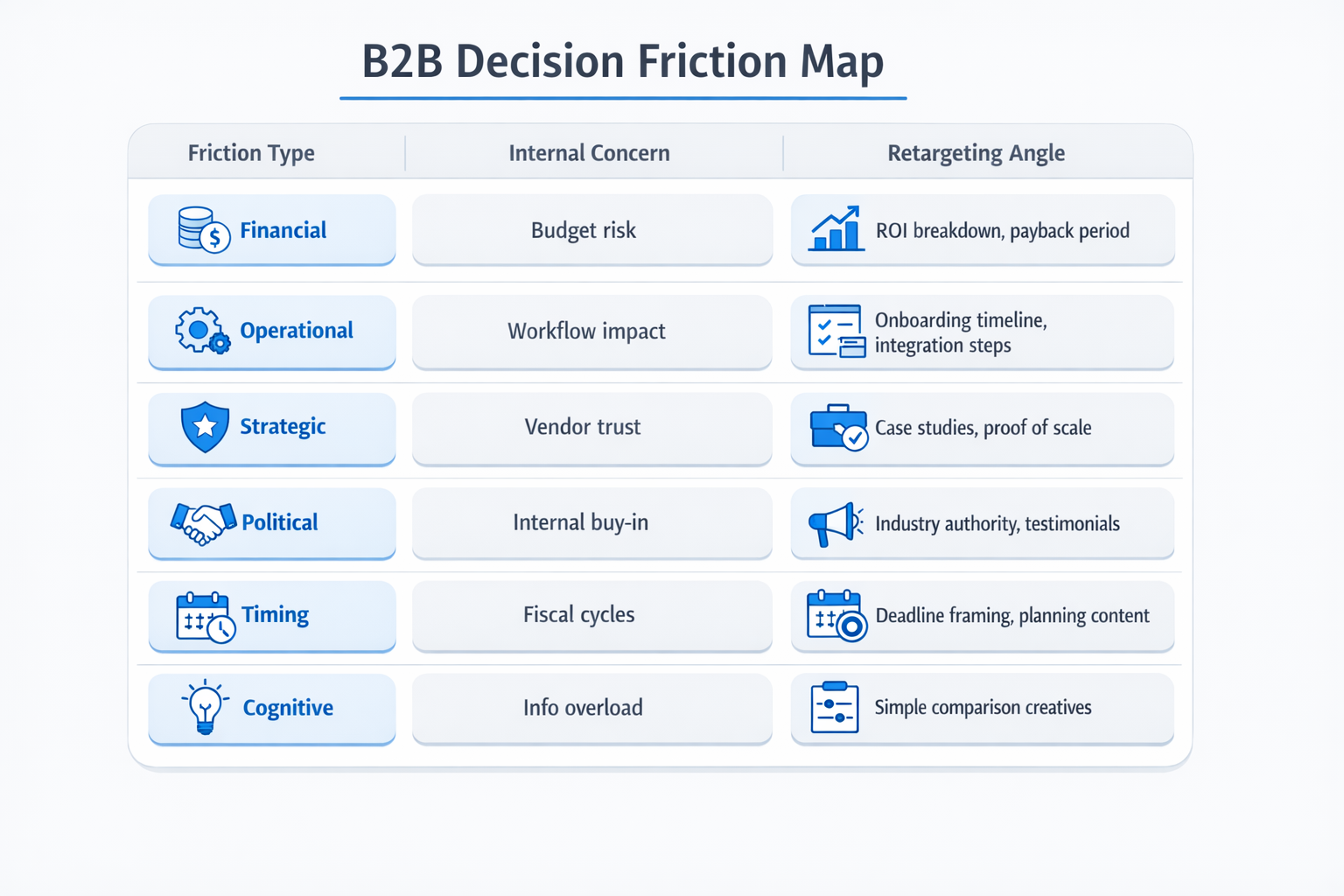
Here is what usually slows things down:
-
Too many decision-makers; marketing likes your offer, but finance or operations need separate reassurance.
-
Fear of risk; buyers worry about switching costs or failed implementation.
-
Budget timing; approval windows do not always match campaign timing.
-
Too much information; buyers compare vendors and delay action.
Retargeting works when it answers these specific concerns. If you want a broader framework, review these practical tips on paid traffic for long sales cycles.
Segment by Intent, Not Just Website Visits
Many advertisers retarget everyone the same way. A blog reader sees the same ad as someone who viewed pricing. That slows progress instead of speeding it up.
Segment audiences by behavior:
-
Blog or content readers; show ads that explain the problem more clearly and position your solution.
-
Pricing page visitors; address cost, ROI, and implementation effort directly.
-
Demo viewers; reinforce trust with real results and client examples.
-
Form starters who did not submit; remove friction and clarify what happens next.
Each group needs a different message. Relevance shortens the decision path. If you want to refine your structure, explore how to map audiences to funnel stages.
Align Retargeting with Sales Activity
Your ads should support what your sales team is doing. If sales sends a case study, your ads should reinforce that proof. Mixed messaging creates confusion.
Match ads to CRM stages:
-
Early qualification; focus on the core problem and value.
-
Active evaluation; highlight proof and real outcomes.
-
Proposal stage; explain onboarding and next steps clearly.
-
Late-stage negotiation; emphasize long-term impact and support.
When ads and sales speak the same language, buyers move faster. This approach works best inside a structured Facebook lead generation funnel from cold traffic to paying customers.
Use Sequential Messaging
Instead of running all creatives at once, guide prospects step by step. Each ad should answer one question. This creates clarity instead of overload.
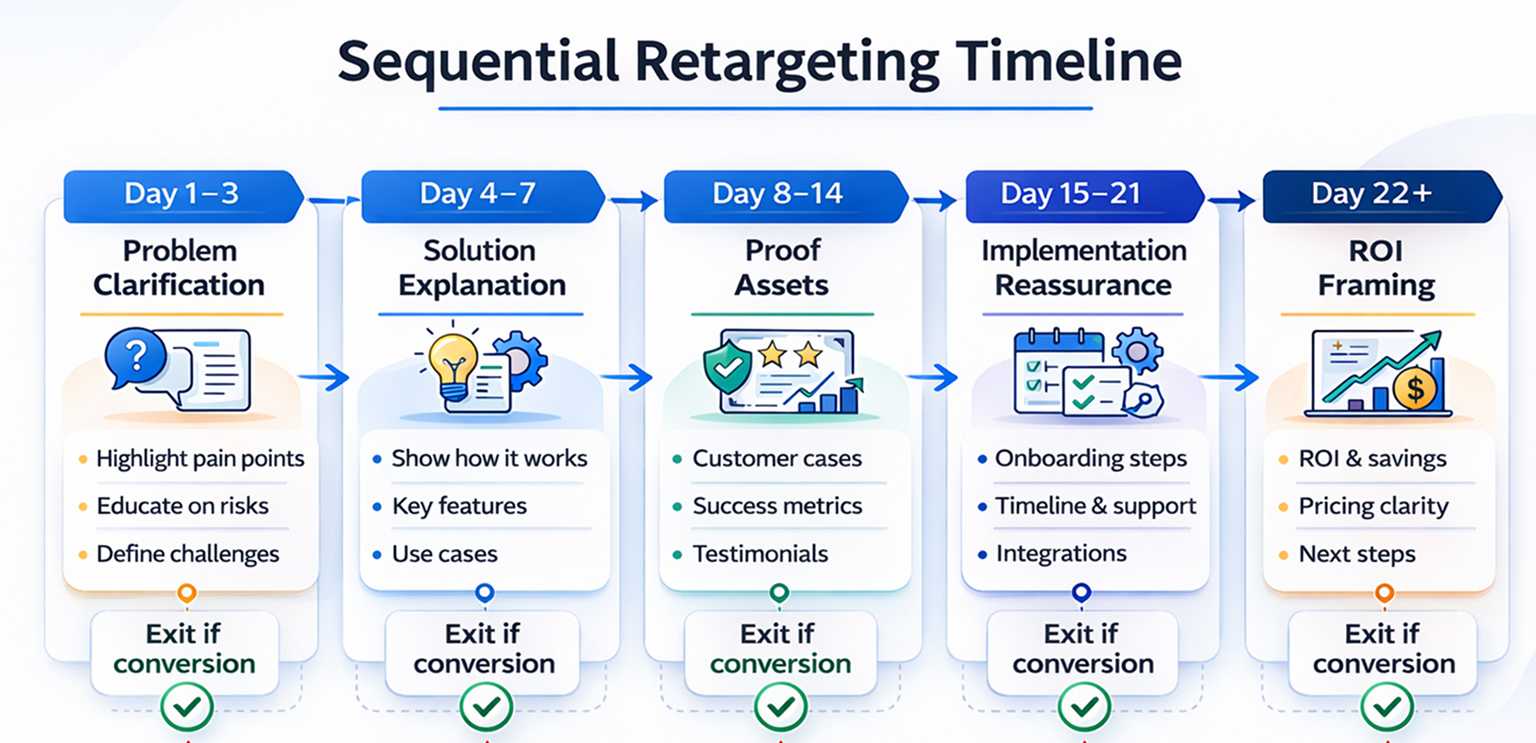
A simple sequence might look like this:
-
Define the problem clearly so stakeholders agree internally.
-
Explain how your solution works in practical terms.
-
Show proof from similar companies.
-
Break down onboarding and timeline.
-
Present expected financial results.
This structure reduces internal debate. People make decisions faster when questions are answered in order. For deeper tactics, see this guide on building a retargeting sequence that doesn’t feel repetitive .
Control Frequency Carefully
More impressions do not always mean better results. Too much exposure creates fatigue. Too little exposure leads to forgetfulness.
Adjust frequency based on engagement:
-
Highly engaged users; allow more follow-up impressions with new angles.
-
Short page visitors; limit frequency to avoid waste.
-
Returning visitors; rotate creatives instead of repeating the same message.
-
Inactive users; pause after a defined limit.
If frequency feels out of control, review practical advice on ad frequency and finding the right balance .
Go Beyond Website Retargeting
Website traffic is only part of the picture. Many B2B buyers research inside social platforms before clicking to a site. You can build audiences based on that behavior.
Consider targeting:
-
People who engage with industry content.
-
Followers of competitor pages.
-
Users who watch a high percentage of your videos.
-
Members of relevant professional communities.
These audiences often move faster because they already show interest.
Speak to Different Roles
B2B decisions involve different priorities. Marketing, finance, and operations do not care about the same things. One message rarely convinces all of them.
Adjust your messaging by role:
-
Marketing leaders; focus on growth and measurable results.
-
Operations teams; show workflow efficiency and time savings.
-
Finance; present cost structure and ROI clearly.
-
Technical stakeholders; explain integrations and security.
When each role sees its concern addressed, internal approval speeds up.
Use Real Proof, Not Generic Claims
Proof reduces hesitation. Vague testimonials do not help much. Specific results do.
Use detailed proof elements:
-
Case studies with clear metrics and timelines.
-
Industry examples that match the buyer’s niche.
-
Process explanations that show how implementation works.
-
Quotes from people with similar job titles.
Clear proof builds trust and shortens review time.
Remove Friction During Evaluation
Many deals slow down at the consideration stage. The buyer likes the solution but fears disruption. Retargeting can remove that fear.
Address common concerns directly:
-
Show a clear onboarding timeline.
-
Explain how support works.
-
Clarify data migration or setup steps.
-
Define contract terms in simple language.
The more transparent you are, the easier it is to move forward.
Use Timing to Your Advantage
Timing matters in B2B. After a webinar or meeting, interest is high. That is when retargeting should reinforce the message.
Use time-based triggers such as:
-
Follow-up ads right after an event.
-
Special messaging after repeated content engagement.
-
Reminders shortly after a proposal is sent.
-
Campaigns aligned with common budgeting periods.
Relevant timing reduces delays.
Track What Actually Shortens the Cycle
Clicks alone do not measure progress. You need metrics tied to sales movement.
Focus on:
-
Time from first visit to demo request.
-
Days between CRM stages.
-
Assisted conversions from retargeting campaigns.
-
Average frequency before conversion.
These metrics show whether retargeting speeds up decisions.
Common Mistakes That Slow Everything Down
Even strong campaigns fail when structure is weak. Small errors can add weeks to a sales cycle.
Avoid these issues:
-
Retargeting everyone with the same ad.
-
Ignoring feedback from the sales team.
-
Running creatives too long without rotation.
-
Focusing only on top-of-funnel traffic.
Smart retargeting keeps prospects moving. It answers questions in the right order and supports internal approval. When each impression has a purpose, sales cycles become shorter and more predictable.