Many Meta campaigns underperform because they rely on static targeting. Demographics and interests rarely reflect real buying intent, especially in competitive markets. What people actually do is far more predictive than who they are on paper.
Intent data focuses on behavior. It highlights users who are actively exploring, comparing options, or preparing to buy. When structured properly, it turns paid social into a demand-capture system instead of a broad awareness tool.
What Intent Data Means in Meta Advertising
Intent data is behavioral evidence of consideration. It reflects actions that suggest a user is moving closer to a decision rather than casually browsing.
Meta does not provide keyword-level intent like search platforms. Instead, it captures engagement patterns and on-site events that signal interest depth. When those signals are segmented correctly, they reveal how serious someone is about your offer.
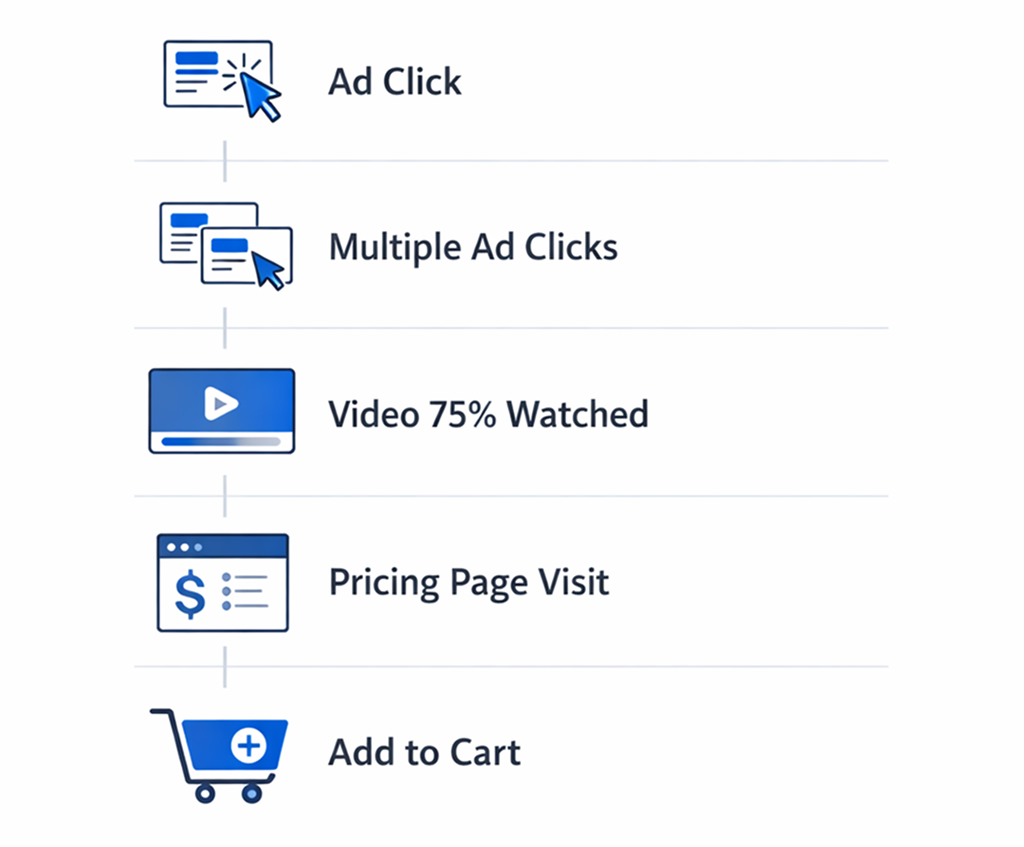
Strong intent signals include:
-
Watching most of a product demo video; sustained attention suggests active evaluation.
-
Visiting a pricing or comparison page; users at this stage are weighing options.
-
Adding a product to cart; this indicates clear purchase consideration.
-
Clicking multiple ads related to the same offer; repetition signals intent, not curiosity.
For a deeper breakdown of how intent influences paid media performance, see The Role of Intent in Paid Advertising.
The more effort a user invests, the stronger the signal becomes.
The Main Sources of Intent Data
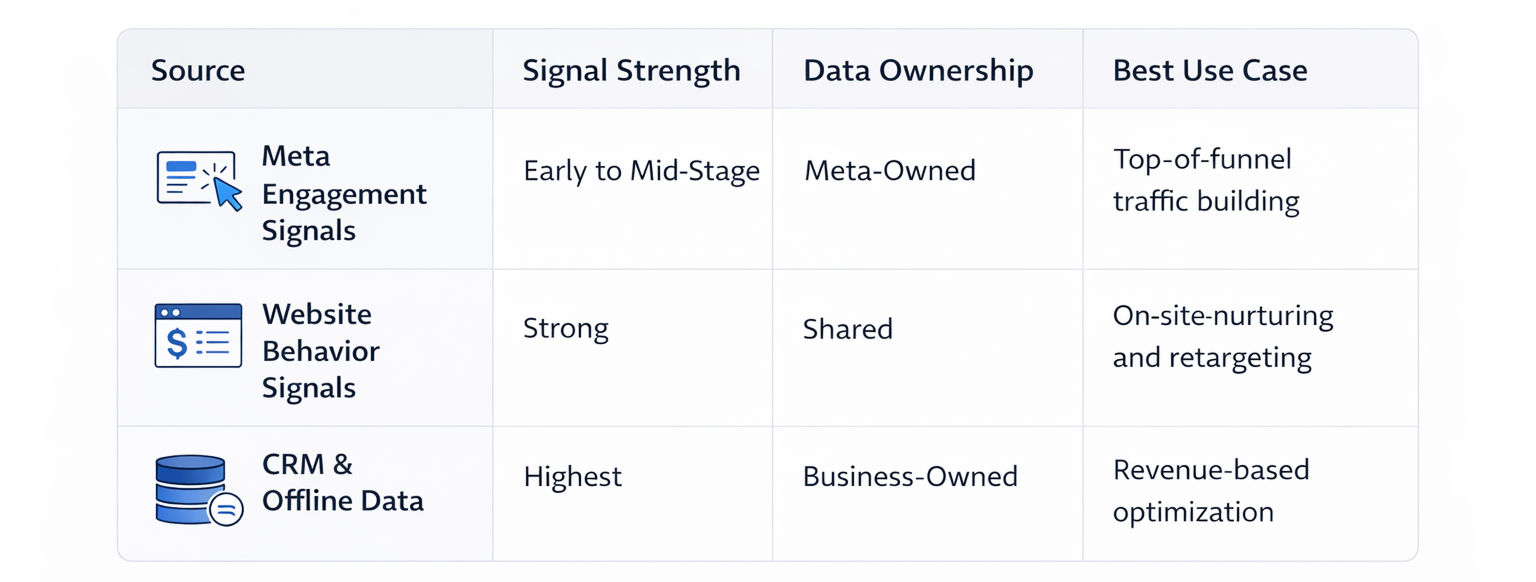
In Meta campaigns, intent data usually comes from three structured sources. Each source represents a different level of buying readiness and should be treated separately.
Engagement Signals Inside Meta
Engagement within Facebook and Instagram provides early to mid-stage intent signals. These users have interacted, but they may still be researching.
Common examples include:
-
Video viewers at 50 percent or higher; they engaged beyond passive scrolling.
-
Ad clickers who return more than once; repeated interaction suggests comparison behavior.
-
Lead form openers who do not submit; this often indicates friction rather than lack of interest.
-
Instagram profile visitors; profile checks frequently happen before a website visit.
If you want to refine these audiences further, review Using Engagement Signals to Refine Targeting for practical segmentation approaches.
These audiences are warm but not ready for aggressive sales messaging. They respond better to structured nurturing and proof-driven content.
Website Behavior Signals
On-site behavior usually indicates stronger purchase intent than platform engagement. Users who visit your website have taken a deliberate step.
Segment users based on:
-
Product page views, especially repeated visits within short timeframes.
-
Time on site that exceeds your average session duration.
-
Add-to-cart actions that do not result in checkout.
-
Pricing or plan comparison page visits, which often correlate with higher conversion rates.
If you need guidance on technical setup, consult The Complete Guide to Facebook Pixel Setup and Optimization to ensure your tracking captures these signals accurately.
Accurate tracking and event prioritization protect the quality of your intent data.
CRM and Offline Data
Advanced advertisers connect CRM and offline conversion data to Meta. This adds revenue context to behavioral signals and improves optimization quality.
Valuable intent sources include:
-
Closed deals uploaded as custom audiences; these represent proven revenue.
-
High lifetime value customers used as lookalike seeds; this trains the algorithm on profitability.
-
Email subscribers who click sales-focused content; their engagement shows active consideration.
-
Offline purchases matched back to ad interactions; this closes attribution gaps.
If you want to go deeper into CRM-based targeting, review When CRM Data Works Best for Building Facebook Custom Audiences for practical implementation advice.
CRM-based intent shifts optimization from volume to margin and long-term value.
How to Structure Intent-Based Campaigns
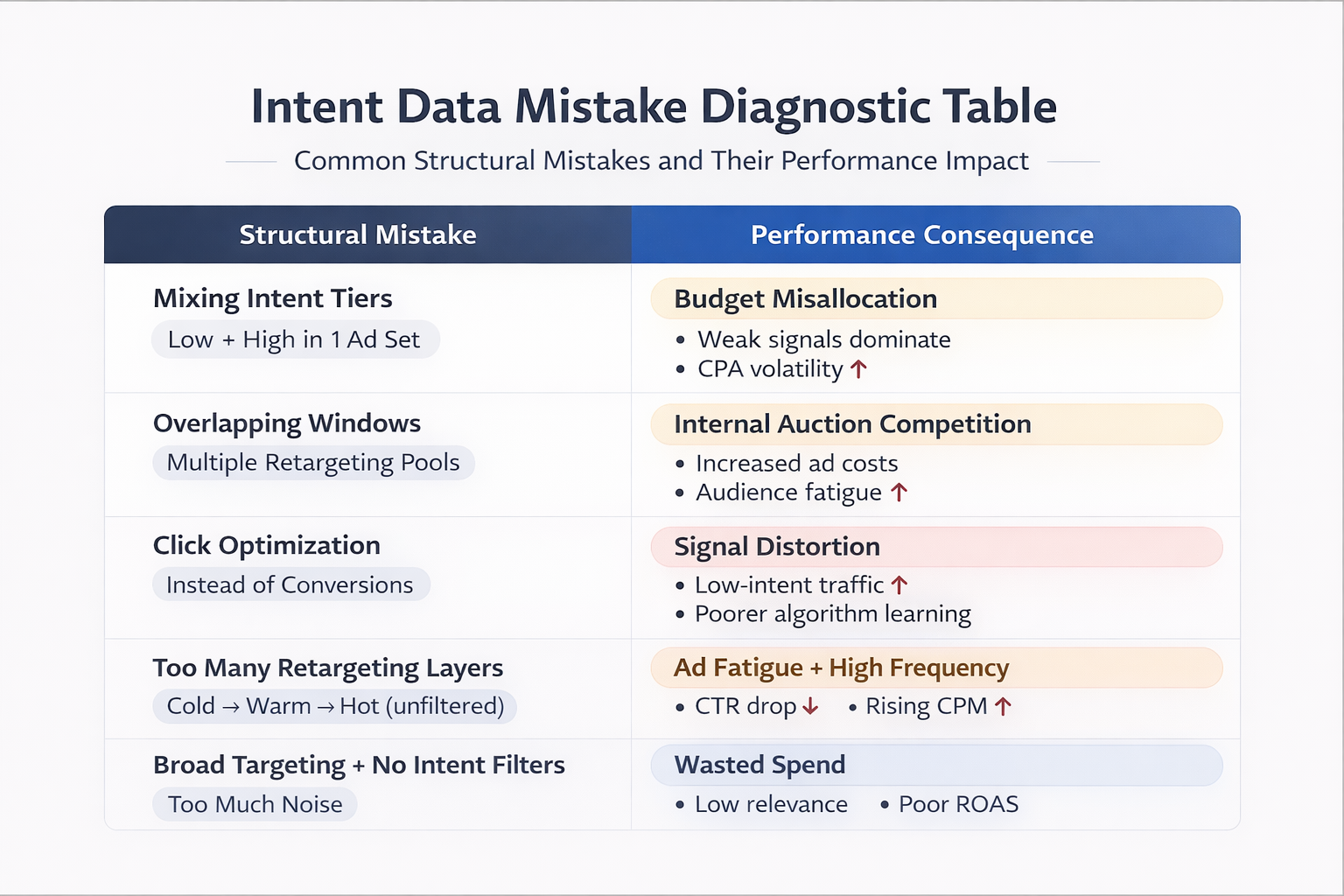
Intent data becomes effective only when segmented clearly. Mixing different intent levels in one ad set weakens delivery signals and distorts budget allocation.
Create Clear Intent Tiers
Divide audiences based on behavioral depth. This ensures each group receives messaging that matches its readiness level.
For example:
-
Low intent; short video views or general website visits with minimal engagement.
-
Medium intent; product page visitors or repeat ad clickers who are comparing options.
-
High intent; add-to-cart users or pricing page visitors close to a decision.
Each tier should have its own ad set and controlled budget. This structure allows Meta to optimize within a consistent intent range instead of blending conflicting signals.
Align Creative with Intent Stage
Creative alignment determines whether intent converts. Messaging must reflect what the user already knows and what they still need.
Use stage-based messaging such as:
-
Low intent; clarify the problem and introduce your solution clearly.
-
Medium intent; address objections and highlight differentiators.
-
High intent; reinforce trust with proof elements and direct calls to action.
Reusing identical creative across all tiers reduces relevance and slows decision-making.
Using Intent Data in Prospecting Campaigns
Intent data is not limited to retargeting. It can also improve cold acquisition when used strategically.
Build Lookalikes from High-Intent Sources
The quality of your seed audience directly affects lookalike performance. Broad or low-quality seeds often produce unstable results.
Follow these principles:
-
Use closed customers whenever possible; they represent validated revenue.
-
Remove low-value or discount-driven buyers from seed lists.
-
Refresh source audiences regularly to prevent modeling fatigue.
Lookalikes trained on strong intent data typically exit the learning phase faster and maintain more stable CPAs.
Combine Broad Targeting with Smart Exclusions
Broad targeting can perform well when paired with disciplined exclusions. This protects efficiency while allowing algorithmic exploration.
Exclude:
-
Recent purchasers to avoid redundant spend.
-
Recent lead converters from prospecting campaigns.
-
High-frequency visitors who are already saturated with ads.
This structure reduces internal overlap and protects funnel health.
How to Measure the Impact of Intent Data
Intent-based campaigns often influence performance across multiple touchpoints. Measuring them requires looking beyond last-click CPA.
Monitor Time to Conversion
High-intent users usually convert faster than low-intent audiences. Compare median days to purchase across segments to validate signal strength.
If high-intent audiences convert slowly, review:
-
Offer clarity and pricing transparency.
-
Landing page friction or unclear messaging.
-
Frequency caps that may be too restrictive.
This analysis often reveals operational issues rather than targeting problems.
Review Assisted Conversions
Examine multi-touch attribution paths inside Ads Manager and external analytics tools. Intent audiences often contribute earlier in the journey.
Look for patterns such as:
-
Video viewers converting after structured retargeting.
-
Pricing page visitors converting after proof-driven ads.
-
CRM-based lookalikes converting after multiple exposures.
Intent signals often accumulate influence across several interactions.
Final Thoughts
Intent data reflects real behavior and real consideration. It shows who is evaluating seriously and who is close to acting.
When segmented clearly and paired with aligned creative, it reduces wasted spend and improves conversion efficiency. Meta already provides strong intent signals, but performance depends on how precisely you structure and prioritize them.