
Ad accounts collect clutter over time. Campaigns stack up, audiences overlap, and tracking drifts out of sync. Performance drops, yet the root cause stays hidden. A structured clean-up reveals what still works and what silently wastes budget.
This guide walks through a systematic audit of Meta campaigns. The focus is practical and data-driven. Each step fixes a common structural issue that hurts performance.
Why Ad Accounts Decay Over Time
Most advertisers rarely reset their structure. They keep adding new campaigns on top of old logic. The result is fragmentation, internal competition, and unclear learning signals.
Meta’s delivery system rewards clarity. When the structure becomes chaotic, the algorithm struggles to allocate budget efficiently. Costs rise, and stability disappears.
If you suspect structural problems, review your setup against this checklist: What to Include in Your First Facebook Ad Campaign Audit.
Hidden Performance Killers Inside Mature Accounts
A few recurring problems appear in older accounts:
-
Audience overlap across campaigns; two ad sets compete for the same users, which drives CPM higher and splits learning signals.
-
Legacy conversion events; campaigns optimize for outdated events that no longer reflect real revenue.
-
Budget dilution; too many active ad sets prevent the algorithm from exiting the learning phase.
-
Creative fatigue masked by scaling; performance drops gradually, but spend increases hide the decline.
These issues rarely trigger warnings. You must actively look for them.
For a deeper explanation of structural conflicts, see Why Audience Overlap Is Killing Your Facebook Ad Performance.
Step 1: Audit Campaign Structure
Start with a structural inventory. List all active campaigns and group them by objective and funnel stage. Many accounts mix cold, warm, and remarketing traffic inside one objective.
A clean structure separates intent clearly. Awareness, consideration, and conversion each need distinct logic.
Structural Audit Checklist
Use this framework to evaluate your setup:
-
Objective alignment; confirm each campaign uses the correct objective for its real goal, not just historical preference.
-
Funnel mapping; verify that every ad set targets a defined stage, such as prospecting or remarketing.
-
Budget concentration; ensure enough budget flows into each ad set to generate stable learning signals.
-
Redundancy removal; pause duplicate campaigns that chase the same conversion event and audience pool.
If two campaigns solve the same task, keep the stronger one. Archive the rest.
If you struggle with objective mismatches, review Choosing the Right Facebook Ad Objective: What Most Advertisers Get Wrong.
Step 2: Fix Audience Chaos
Audience sprawl is common in growing accounts. Advertisers test interests, custom lists, and lookalikes without pruning older segments. Overlap increases, and delivery becomes inconsistent.
Open the Audience Overlap tool inside Meta. Check cold audiences first. Then inspect retargeting pools.
Signs Your Audience Setup Is Broken
-
Prospecting campaigns share more than 30 percent overlap.
-
Retargeting windows stretch beyond realistic buying cycles.
-
Lookalike audiences are built from low-quality seed lists.
-
Customer lists are outdated and not refreshed monthly.
Tighten your segmentation. Shorten retargeting windows to match actual sales cycles. Rebuild lookalikes from high-value purchasers instead of all leads.
Use CRM Data to Improve Segmentation
Raw CRM exports often contain mixed lead quality. Uploading them directly reduces performance. Clean the data before creating custom audiences.
Segment contacts by revenue, purchase frequency, or lifetime value. Exclude low-intent leads from seed lists. This approach improves lookalike accuracy and reduces wasted impressions.
For practical guidance, see How to Turn CRM Lists Into Effective Facebook Campaigns.
Step 3: Revalidate Conversion Tracking
Tracking errors silently distort optimization. Many campaigns optimize toward incomplete events because of pixel misfires or Aggregated Event Measurement misconfiguration.
Open Events Manager and compare event counts with backend data. Large discrepancies signal tracking drift.
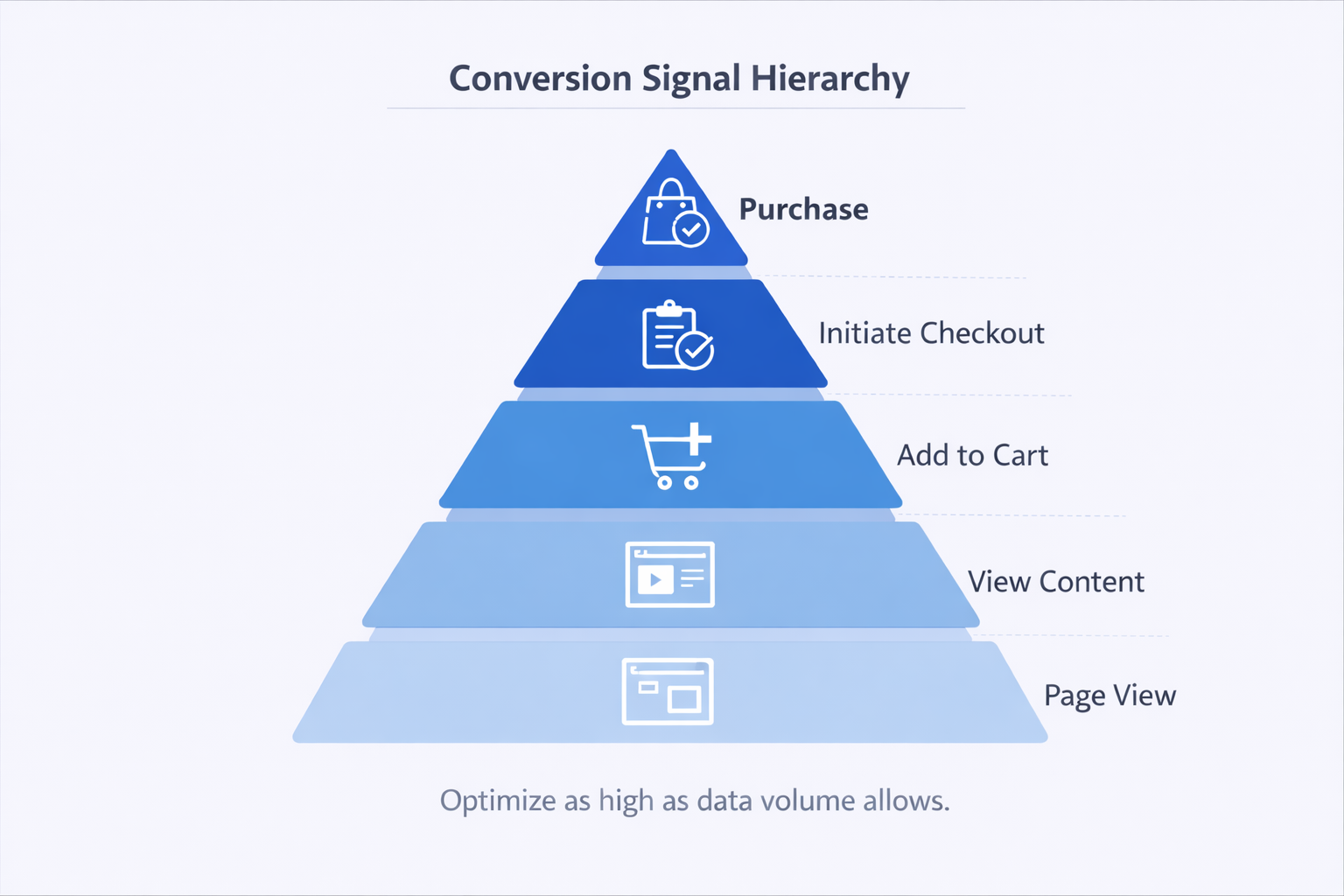
Conversion Tracking Audit Points
-
Event priority order; confirm high-value events rank above micro-conversions.
-
Duplicate events; check if both browser and server events fire without proper deduplication.
-
Domain verification status; verify that the correct domain controls event prioritization.
-
Attribution settings; ensure reporting windows reflect your actual buying cycle.
If purchase volume is low, optimize for a meaningful proxy event. That event must strongly correlate with revenue.
Step 4: Refresh Creative With Intent
Creative fatigue often hides behind stable frequency metrics. Even moderate frequency can produce declining click-through rates.
Analyze performance by first impression ratio. If first-time impressions underperform, creative relevance has dropped.
For a detailed breakdown of fatigue signals, review Creative Fatigue: Early Signals and Fixes.
Creative Clean-Up Framework
-
Message alignment; confirm each ad matches the audience stage, not just the product benefit.
-
Format variation; test video against static and carousel formats within the same offer.
-
Hook clarity; review the first three seconds of video ads and the first line of primary text.
-
Offer positioning; compare value framing against competitor messaging in your niche.
Rotate creatives based on impression thresholds, not calendar dates. For example, refresh when an ad crosses 40,000 impressions and CTR declines consistently.
Align Creative With Funnel Stage
Prospecting ads should educate or provoke curiosity. Retargeting ads should address objections or provide proof. Conversion ads must reduce friction through guarantees or urgency.
When messaging matches intent, conversion rates improve without increasing budget.
Step 5: Reallocate Budget Based on Data
Budgets drift over time. Some campaigns receive historical allocations that no longer reflect performance.
Export performance data for the last 30 days. Rank campaigns by cost per acquisition and return on ad spend.
Budget Optimization Process
-
Pause underperforming ad sets with statistically significant losses.
-
Increase budget gradually on proven campaigns, avoiding sudden jumps.
-
Consolidate small ad sets into larger pools to stabilize learning.
-
Rebalance spend toward audiences with higher average order value.
Avoid spreading budget thin across experiments. Focus spend where signal density is strongest.
Step 6: Rebuild Testing Discipline
Many accounts lose structured testing after scaling. New creatives launch without hypotheses. Results become harder to interpret.
Define one variable per test. Control budget and audience while isolating creative or offer changes.
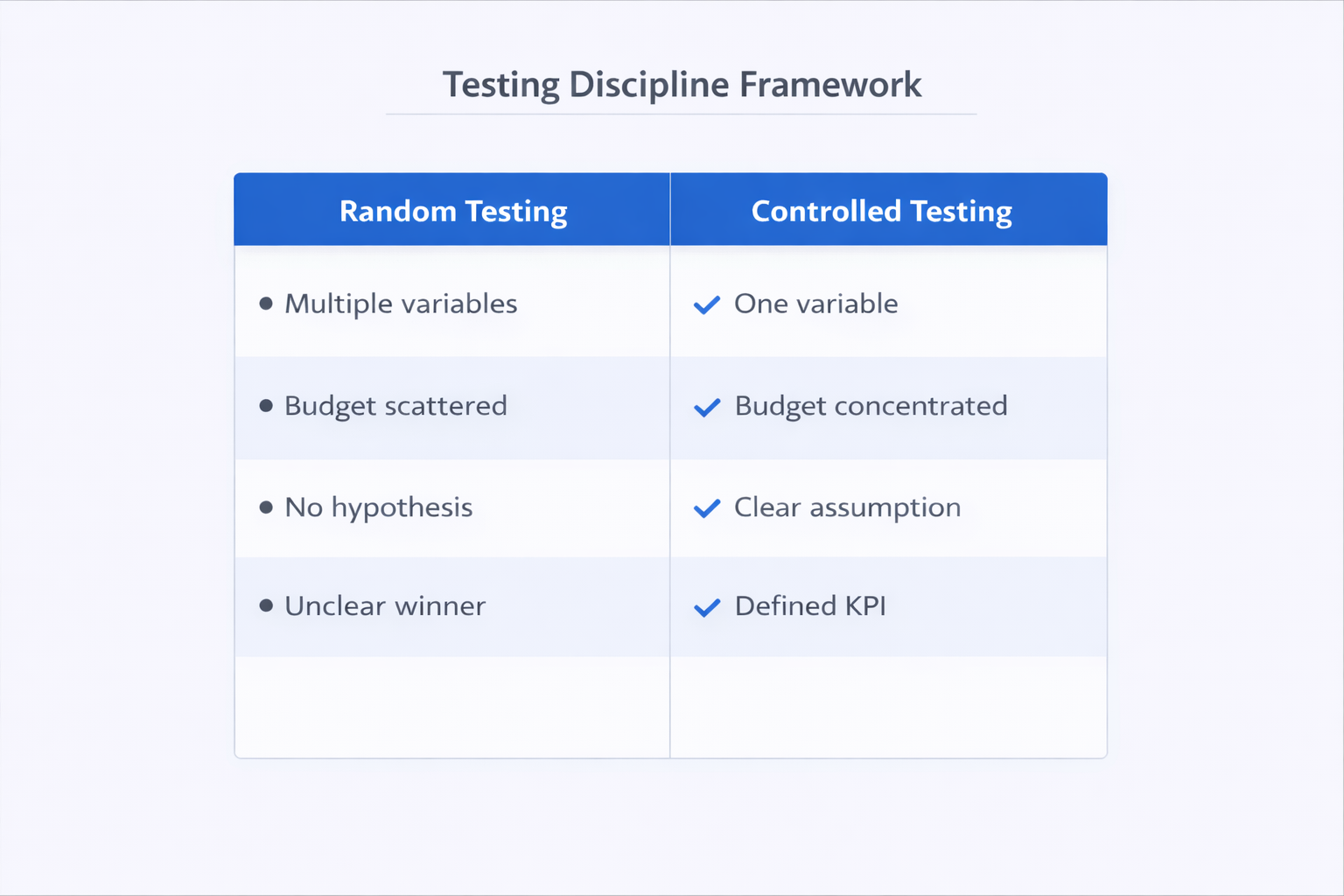
Testing Reset Checklist
-
Hypothesis clarity; write a clear assumption before launching a test.
-
Measurement window; choose a consistent evaluation period.
-
Success metric; define a primary KPI such as cost per purchase.
-
Documentation; log outcomes and insights to prevent repeated experiments.
A disciplined testing framework prevents repetitive cycles and random scaling decisions.
Final Structural Review
After completing the clean-up, review the entire funnel as one system. Each campaign should support a defined stage. Audiences must flow logically from cold to warm to conversion.
Spring cleaning is not cosmetic. It restores signal clarity, removes internal competition, and strengthens optimization. When structure improves, performance usually follows.