Many Instagram advertisers misread campaign intent because they treat all clicks as equal.
A campaign may show strong outbound activity, stable CPC, and healthy CTR. But those numbers often hide what users actually wanted to do after seeing the ad. A profile tap, website tap, product page click, and DM start all signal different levels of intent.
When those actions get blended into one click metric, optimization decisions become unreliable.
Problem: Standard Click Metrics Hide the Real Goal Behind Each Tap
Instagram campaigns generate multiple types of actions, but most reports compress them into broad engagement metrics.
That creates false confidence.
Two ads can produce similar CTRs while driving completely different user behavior. One may send users to the profile for trust validation. Another may create website exits from people who clicked out of curiosity. A third may open DMs but fail to generate qualified conversations.
Inside Ads Manager, all three can look active before the business impact becomes visible.
That is why click-through rate can be misleading when advertisers do not separate destination behavior.
The issue becomes more expensive during scaling. Meta can start finding more users who repeat the strongest early interaction, even if that interaction does not predict purchases, qualified leads, or sales conversations.
At that point, the campaign may show strong engagement while CPA rises and lead quality weakens. The platform sees activity, but the advertiser needs intent.
Solution: Track Button Taps by Destination Before Judging Campaign Success
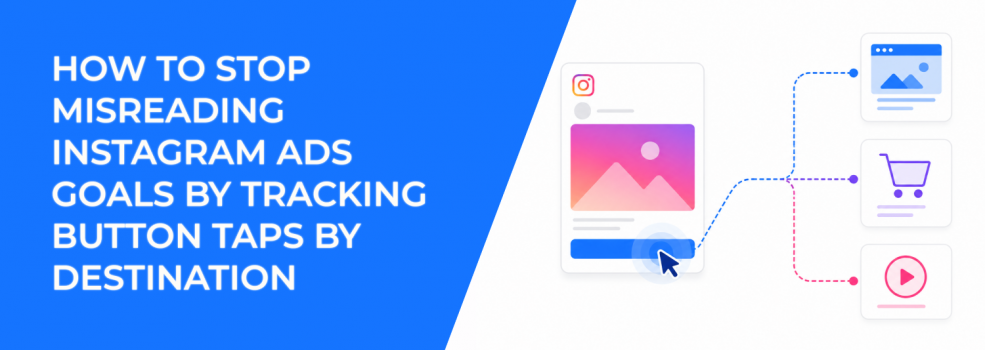
Destination-level tracking turns a vague click report into a clearer intent map.
Instead of asking whether users clicked, evaluate which destination they chose and what happened afterward. This helps separate casual curiosity from buying behavior.
The main destinations to compare are:
- Profile taps, which often show trust-checking or early-stage interest.
- Website taps, which test whether users are willing to leave Instagram and engage with the offer.
- DM starts, which often show question-driven intent or the need for human clarification.
- Product page clicks, which usually carry stronger commercial intent when followed by add-to-cart activity.
- Instant form opens, which show low-friction lead interest but still need quality checks.
These actions should not receive the same weight.
A profile tap may be useful for a cold audience but weak for a retargeting campaign. A DM start may be valuable for a service offer but inefficient for a low-priced product. A product page tap may look strongest, but only if users continue toward cart or checkout.
Read Profile Taps as Validation Behavior
Profile taps often mean users want proof before taking the next step.
They may check posts, highlights, comments, tagged content, reviews, or posting consistency. This behavior is not worthless. For cold traffic, it can show that the ad created enough interest for the user to investigate the brand.
But profile taps become a weak signal when they do not lead to follows, saves, DMs, website visits, or later conversions. In that case, users are browsing without enough motivation to act.
Read Website Taps as Friction Tests
Website taps show whether users are willing to leave Instagram.
That matters because leaving the app increases friction. If users tap through but exit quickly, the landing page may not match the ad promise. The issue could also be load speed, weak above-the-fold messaging, or a conversion step that asks for too much too soon.
This is where misunderstood metrics in Facebook Ads Manager often lead advertisers in the wrong direction. A website tap looks useful until post-click behavior proves the user had no real commitment.
Read DM Starts as Conversation Intent
DM starts usually signal that users need more information before committing.
For service businesses, high-ticket offers, local services, and consultative products, this can be a strong action. The user may want pricing, availability, fit, or reassurance before submitting a form.
The quality of the conversation matters more than the message start itself. If users open DMs but stop after one reply, the campaign may be attracting curiosity rather than qualified intent.
Match Each Destination to the Campaign Goal
Button taps only become useful when they are judged against the right goal.
If the campaign goal is sales, product page taps and checkout behavior matter more than profile views. If the campaign goal is lead quality, DM replies and form completion quality matter more than click volume. If the campaign goal is early-stage audience warming, profile taps and repeat visits may be more relevant.
This is why high buying intent matters more than raw tap volume.
A smaller number of high-quality destination actions can outperform a large number of cheap clicks. The point is not to maximize taps. The point is to identify which taps predict real business outcomes.
Final Takeaway
Instagram campaigns become difficult to optimize when every tap gets treated as the same signal.
Tracking button taps by destination shows whether users want to validate the brand, ask a question, inspect the offer, or move toward purchase. That distinction helps advertisers diagnose weak intent earlier and avoid scaling shallow engagement.