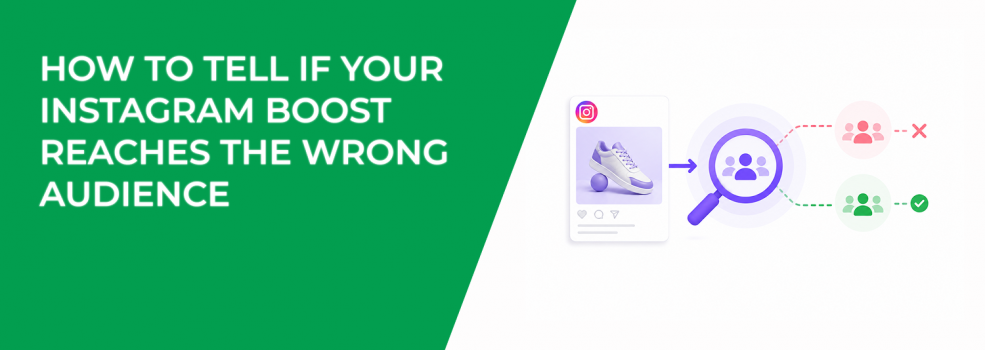
The wrong audience usually leaves clues before the campaign fully fails.
You may see strong reach, normal CPC, or steady engagement. On the surface, the boost looks active and healthy. But the quality of the response tells a different story.
The key is to inspect who is responding, not just how many people respond.
The first clue is engagement that does not match the offer
Wrong-audience delivery often shows up as mismatched engagement. The post gets reactions, but the users do not behave like likely buyers.
A SaaS demo post may attract freelancers who want free tips. A local service post may attract users outside the service area. An e-commerce product post may attract comments about the design, but no add-to-cart behavior.
That does not always mean the creative is bad. It may mean the creative is clear enough to earn attention, but the audience is not close enough to the problem.
This is why you should measure audience relevance alongside engagement. Relevance asks a better question: are the people reacting to this post the people we can actually serve?
Comments and DMs reveal intent faster than dashboards
Ads Manager reports numbers. Comments and DMs show user quality.
If comments are vague, off-topic, price-shocked, or location-confused, the audience may be wrong. If DMs ask questions that disqualify the user immediately, the boost is probably attracting curiosity instead of demand.
For example, a B2B lead generation agency might boost a post about reducing CPL. If most DMs come from people asking how to run their first $5 ad, the post is reaching beginners, not active advertisers. The engagement is real, but it is not aligned with the offer.
Read the first 10 to 20 comments and messages with a media buyer’s eye. They often show audience drift before the CPA report becomes obvious.
Post-click behavior confirms whether the audience is useful
A user can like the post and still have no reason to convert. The landing page or form behavior usually confirms this.
Wrong-audience traffic tends to create short sessions, low scroll depth, weak form starts, poor appointment completion, or high bounce rates. On Instagram, this is common when the post is visually strong but the offer needs more trust or context.
Look for this diagnostic pattern:
- High profile visits, low website clicks. Users are curious about the brand, but not ready for the offer.
- Low CPC, weak form starts. The click is cheap because the user is lightly interested, not actively evaluating.
- Good CTR, poor conversion rate. The post earns attention, but the landing page reveals a mismatch.
- Many leads, low sales acceptance. The form is too easy, or the audience does not match the buyer profile.
This is where Meta ads metrics advertisers often misread become dangerous. CTR, CPC, and engagement rate can look useful while the real funnel is leaking.
Check whether the boost is learning from the wrong early users
The first wave of engagement matters because it shapes the next wave of delivery. If the first users who respond are poor-fit users, Meta may continue finding similar users.
This can happen when the audience is broad, the post is entertainment-heavy, or the CTA is too soft. The system sees people interacting and keeps moving in that direction. The campaign becomes efficient at the wrong job.
You can catch this early by reviewing the first day of engagement quality. Do not wait until the full budget is spent. If the post is pulling in the wrong region, age group, language, or buyer type, the issue is not just performance. It is delivery direction.
A quick way to sanity-check this is to diagnose targeting issues in under 3 minutes before making creative changes.
Sales feedback is part of the targeting report
For lead generation, sales feedback should be treated as campaign data. If sales says the leads are unresponsive, underqualified, outside the service area, or not decision-makers, the boost is reaching the wrong people.
Do not wait for a large sample if the pattern is obvious. Five poor-fit leads with the same problem can reveal more than 500 likes.
For SMBs and agencies, this is especially important. A boosted post can make marketing look active while sales wastes time. That raises CAC because the business is paying twice: once for the lead, then again for the manual follow-up that goes nowhere.
Pause when the signal is wrong, not only when cost is high
A boosted post does not need to be expensive to be wasteful. It only needs to attract people who cannot buy.
Pause or rebuild the boost when engagement quality is clearly misaligned. Adjust the audience, tighten the CTA, add qualifying language, or switch the post into a warm-up role instead of a lead-generation role.
The final test is simple: are the people engaging with the post more likely to become customers than a random Instagram user?
If the answer is no, the boost is not just underperforming. It is teaching the campaign to find the wrong crowd.