Lead qualification is a critical step in the revenue pipeline. It determines which prospects are worth pursuing and ensures that sales teams focus their time on high-value opportunities. However, manual qualification processes are often inconsistent, time-consuming, and prone to bias.
Automation addresses these challenges by standardizing criteria, accelerating response times, and enabling scalable decision-making. According to industry research, companies that implement lead qualification automation can reduce response times by up to 80% and increase conversion rates by 10–20%.
This article explores best practices for implementing lead qualification automation effectively.
1. Define Clear Qualification Criteria
Before implementing automation, it is essential to establish clear and measurable qualification criteria. These criteria should align with your ideal customer profile (ICP) and buyer personas.
Common frameworks include:
-
Demographic data (industry, company size, location)
-
Firmographic attributes (revenue, growth stage)
-
Behavioral signals (website visits, content downloads)
-
Engagement metrics (email opens, clicks, responses)
Organizations with clearly defined qualification criteria experience up to 68% higher lead-to-opportunity conversion rates.
2. Implement Lead Scoring Models
Lead scoring is the backbone of automated qualification. It assigns numerical values to leads based on their attributes and behaviors.
Best practices for lead scoring include:
-
Use both explicit (form data) and implicit (behavioral) signals
-
Assign higher weights to high-intent actions (e.g., demo requests)
-
Continuously refine scoring models based on performance data
Studies show that companies using advanced lead scoring generate 77% more ROI from lead generation compared to those that do not.
3. Leverage Real-Time Data Enrichment
Accurate data is essential for effective automation. Data enrichment tools enhance lead profiles by adding missing or updated information.
Benefits of real-time enrichment:
-
Improved segmentation accuracy
-
Better personalization
-
Reduced manual data entry
Poor data quality costs businesses an average of 15–25% of their revenue annually, making enrichment a critical component of any automation strategy.
4. Use Behavioral Triggers for Qualification
Behavioral triggers allow systems to qualify leads dynamically based on real-time actions.
Examples include:
-
Visiting pricing or product pages
-
Repeated engagement with specific content
-
Interaction with sales emails or chatbots
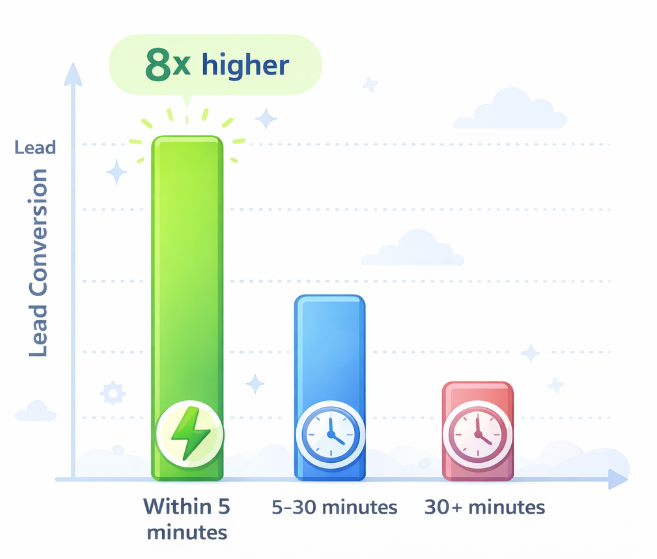
Responding within the first five minutes can increase conversion rates by up to eight times compared to delayed follow-ups
Leads that are contacted within five minutes of a qualifying action are 21 times more likely to convert compared to those contacted later.
5. Integrate Sales and Marketing Systems
Automation is most effective when sales and marketing systems are fully integrated. This ensures seamless data flow and consistent lead handling.
Key integration points:
-
CRM platforms
-
Marketing automation tools
-
Email and communication systems
Organizations with strong sales-marketing alignment achieve 36% higher customer retention rates and 38% higher sales win rates.
6. Automate Lead Routing and Assignment
Once leads are qualified, they should be automatically routed to the appropriate sales representatives.
Best practices include:
-
Assign leads based on territory, expertise, or workload
-
Use round-robin distribution for fairness
-
Prioritize high-scoring leads for immediate follow-up
Automated routing can reduce lead response time by up to 50% and significantly improve customer experience.
7. Continuously Monitor and Optimize
Lead qualification automation is not a one-time setup. Continuous monitoring and optimization are essential for long-term success.
Key metrics to track:
-
Lead-to-opportunity conversion rate
-
Sales cycle length
-
Cost per qualified lead
-
Revenue per lead
Organizations that regularly optimize their processes see up to 30% improvements in pipeline efficiency.
8. Ensure Compliance and Data Privacy
Automation must comply with data protection regulations such as GDPR and other regional laws.
Best practices:
-
Collect and store consent properly
-
Maintain transparent data usage policies
-
Regularly audit data handling processes
Compliance not only reduces legal risk but also builds trust with prospects.
Conclusion
Lead qualification automation is a powerful driver of efficiency and revenue growth. By defining clear criteria, leveraging data-driven scoring, and integrating systems, organizations can create a scalable and consistent qualification process.
As competition intensifies and customer expectations evolve, automation is no longer optional—it is a strategic necessity. Teams that adopt and refine these best practices will be better positioned to capture high-quality leads and convert them into long-term customers.
Recommended Reading