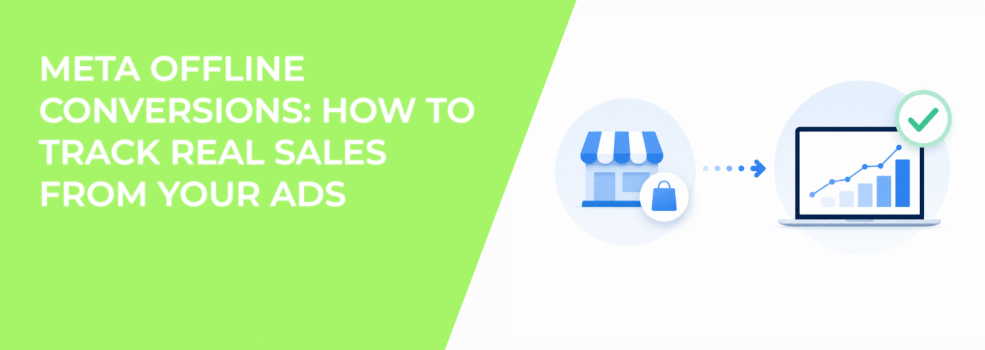
Many advertisers still judge Facebook and Instagram campaigns only by online conversions. That works for simple e-commerce funnels, but it breaks down when customers purchase offline.
A person may click an ad, call your business three days later, visit a store next week, and finally make a purchase after speaking with sales. Without offline conversion tracking, Ads Manager may never connect that sale to the campaign.
This creates a major reporting gap for businesses that rely on:
- Phone orders.
- In-store purchases.
- Consultations.
- Sales teams.
- Offline bookings.
As a result, campaigns that generate real revenue can look unprofitable inside Meta reports.
Why Online Reporting Often Undervalues Campaigns
Many customer journeys do not end with an immediate online purchase. This is especially common in industries with longer buying decisions or higher prices.
A local clinic, for example, may receive form submissions from Meta ads, but most revenue comes later through scheduled consultations and follow-up calls. A furniture retailer may drive showroom visits that never appear as website purchases.
You can usually spot this reporting gap when:
- Sales teams say lead quality is strong while Ads Manager shows weak ROAS.
- Store traffic rises after campaigns launch but website purchases stay flat.
- Higher CPL campaigns produce better customers than cheaper lead campaigns.
- CRM revenue grows while Meta attribution remains inconsistent.
This is one reason many advertisers scale the wrong campaigns and pause the profitable ones too early.
The article about why Facebook Ads data alone can’t explain true ROI explains this problem in more detail.
How Offline Conversions Work Inside Meta
Offline conversions connect real-world customer actions back to ad exposure across Meta technologies.
The setup process usually works like this:
- First, the business creates a dataset inside Events Manager. This dataset becomes the central location where offline activity gets stored and processed.
- Next, the dataset gets connected to an ad account. Without this connection, Meta cannot match offline activity to campaigns correctly.
- During the campaign, the business uploads offline interaction data. This can include purchases, bookings, CRM stages, or sales activity from physical locations.
- Meta then compares that information against people who saw or clicked the ads. If a match is found, the conversion appears inside reporting.
This gives advertisers a more complete view of how campaigns influence actual revenue.
Which Businesses Benefit Most From Offline Conversions
Offline conversions matter most when purchases happen outside the website.
Some of the strongest use cases include:
- Retail stores that generate physical purchases after users interact with online ads. Without offline tracking, Meta may only see product-page visits instead of actual store sales.
- Service businesses that close leads through calls or consultations. Law firms, clinics, agencies, and contractors often convert customers days after the first click.
- B2B companies with longer sales cycles. Leads may move through demos, CRM pipelines, and sales meetings before becoming customers.
- Automotive or real estate businesses where customers rarely purchase immediately online. The ad influences the decision long before the final transaction happens.
These businesses usually see the biggest reporting improvements after connecting offline data.
Why Offline Data Improves Optimization
Offline conversions do not only improve reporting. They also improve optimization quality.
Meta’s algorithm learns from conversion signals. If the platform only receives website actions, it may optimize toward cheaper clicks or lower-quality leads.
Offline events provide stronger business signals because they reflect real customer outcomes.
For example:
- A furniture retailer can optimize around completed showroom purchases instead of product-page visits.
- A clinic can optimize around booked appointments instead of form submissions.
- A B2B company can optimize toward qualified pipeline stages instead of raw leads.
That usually improves long-term CPA stability because Meta receives better feedback about which users actually generate revenue.
The guide on align sales and marketing data explains how advertisers can organize these signals properly.
How Advertisers Upload Offline Data
Meta allows advertisers to upload offline event data either automatically or manually.
Automatic uploads usually happen through:
- Conversions API integrations connected to CRM or sales systems.
- Partner integrations that sync offline purchases automatically.
- Backend systems that regularly send updated sales data into Meta.
Manual uploads involve importing offline interaction data directly into Events Manager.
Automation is usually more reliable for businesses with large sales volume because reporting stays current. Manual uploads can still work for smaller advertisers with lower transaction frequency.
The most important factor is consistency. Meta’s optimization system performs better when offline events arrive regularly and follow a stable structure.
Common Offline Conversion Mistakes
Many advertisers set up offline conversions but still struggle with unreliable attribution because the uploaded data quality is poor.
The most common problems include:
- Uploading incomplete customer information. Weak matching data makes it harder for Meta to connect offline sales back to users who interacted with ads.
- Sending offline data too late. If uploads happen weeks after purchases, optimization signals arrive too slowly to help active campaigns.
- Using inconsistent CRM stages. One sales rep may label a lead “qualified” while another uses different naming conventions, which weakens reporting clarity.
- Connecting datasets to the wrong ad account. This often causes missing attribution even when uploads technically succeed.
These issues usually appear as unstable ROAS reporting or inconsistent offline attribution numbers inside Ads Manager.
The article on multi-touch attribution setup explains how advertisers can measure customer journeys more accurately across multiple touchpoints.
Final Takeaway
Offline conversions help advertisers connect Meta campaigns with the sales activity that happens outside websites. That includes store purchases, phone calls, consultations, CRM deals, and bookings.
Without offline tracking, many businesses optimize campaigns using incomplete information. The result is often misleading ROAS reporting and poor scaling decisions.
Advertisers who feed offline revenue data back into Meta usually gain a much clearer picture of which campaigns truly drive profitable growth.