Paid social ads can drive impressive results when managed properly. But even experienced marketers lose money to avoidable mistakes. Some of these are well known, but others are harder to spot — they hide in your campaign structure, data setup, or team processes.
This article covers both common and less obvious ways businesses waste ad spend on platforms like Meta, TikTok, LinkedIn, and X. Fixing just a few of these issues can improve your results without increasing your budget.
Relying too much on automation
Ad platforms like Meta and TikTok make it easy to launch campaigns. They encourage advertisers to use features like auto placements, campaign budget optimization, or broad targeting. These tools are helpful — but only when they support your goals.
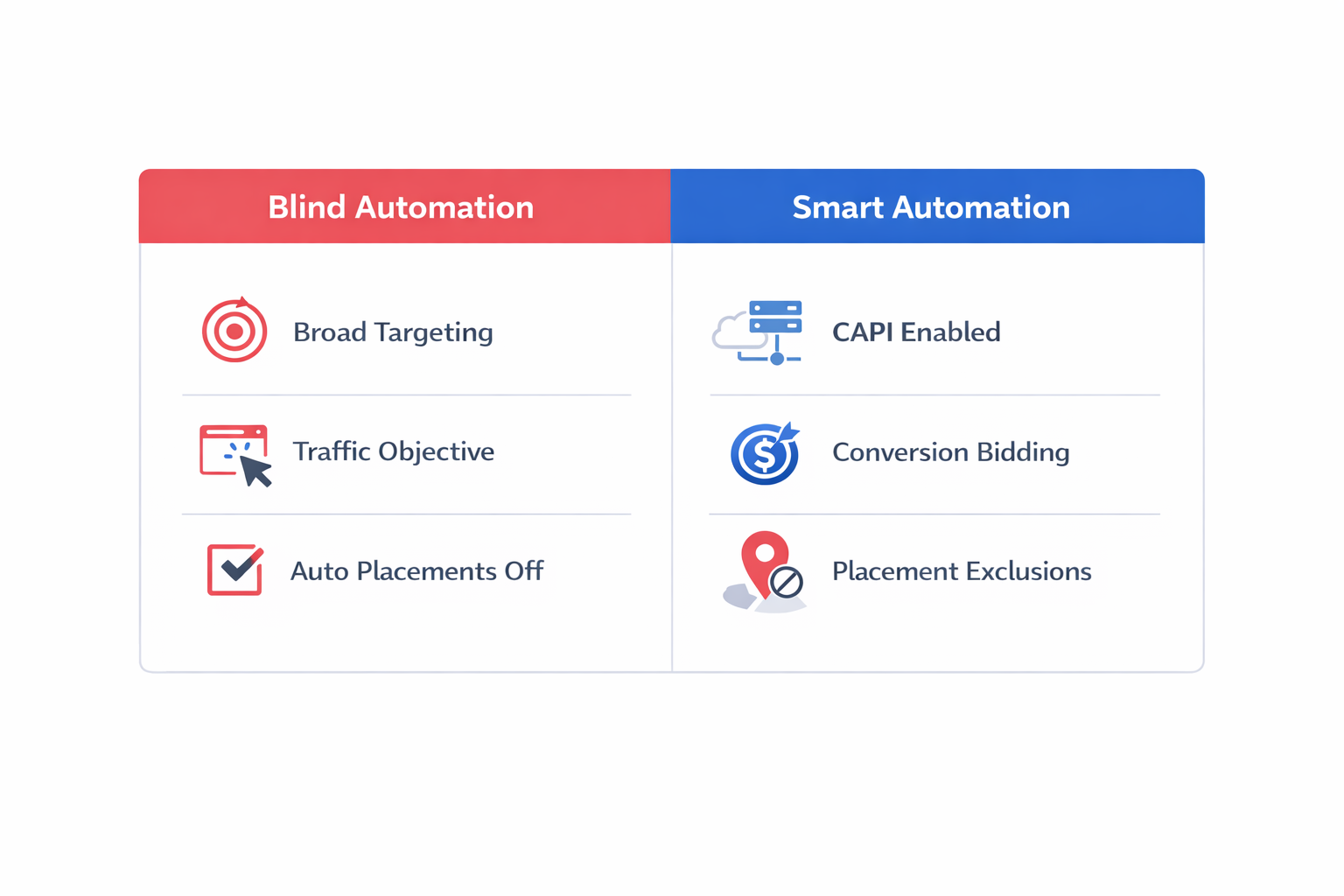
Here’s where automation often goes wrong:
-
Platforms shift spend to low-cost, low-quality clicks;
-
Objectives like "link clicks" or "traffic" drive quantity, not quality;
-
Auto placements send ads to formats where users don’t convert.
If you're not checking where your money is going, you may be paying for activity that doesn't lead to sales. Use automation, but set boundaries. For example, cap spend on weaker placements, or choose conversion-based objectives instead of traffic.
For a more strategic approach to automation, see how to scale Facebook Ads without losing profit margin.
Stopping campaigns too early
Many advertisers judge campaigns too quickly. They look at results after a day or two and pause anything that doesn’t perform right away. But most platforms need time to optimize. Early results are often unreliable.
Here’s why premature decisions waste money:
-
You interrupt the learning phase before performance stabilizes;
-
Campaigns restart from zero when relaunched;
-
You might kill ads that could have worked with more data.
Instead of relying on fixed timeframes, base decisions on data volume. For example, wait until a campaign collects at least 50 conversions before evaluating performance. Rushing can cost more than waiting.
Learn more from how long Facebook ads should run before judging results.
Over-segmenting your audience
Breaking your audience into detailed segments may seem like a smart way to improve targeting. But on paid social, this often backfires. Platforms need data to optimize. Smaller audiences mean fewer signals.
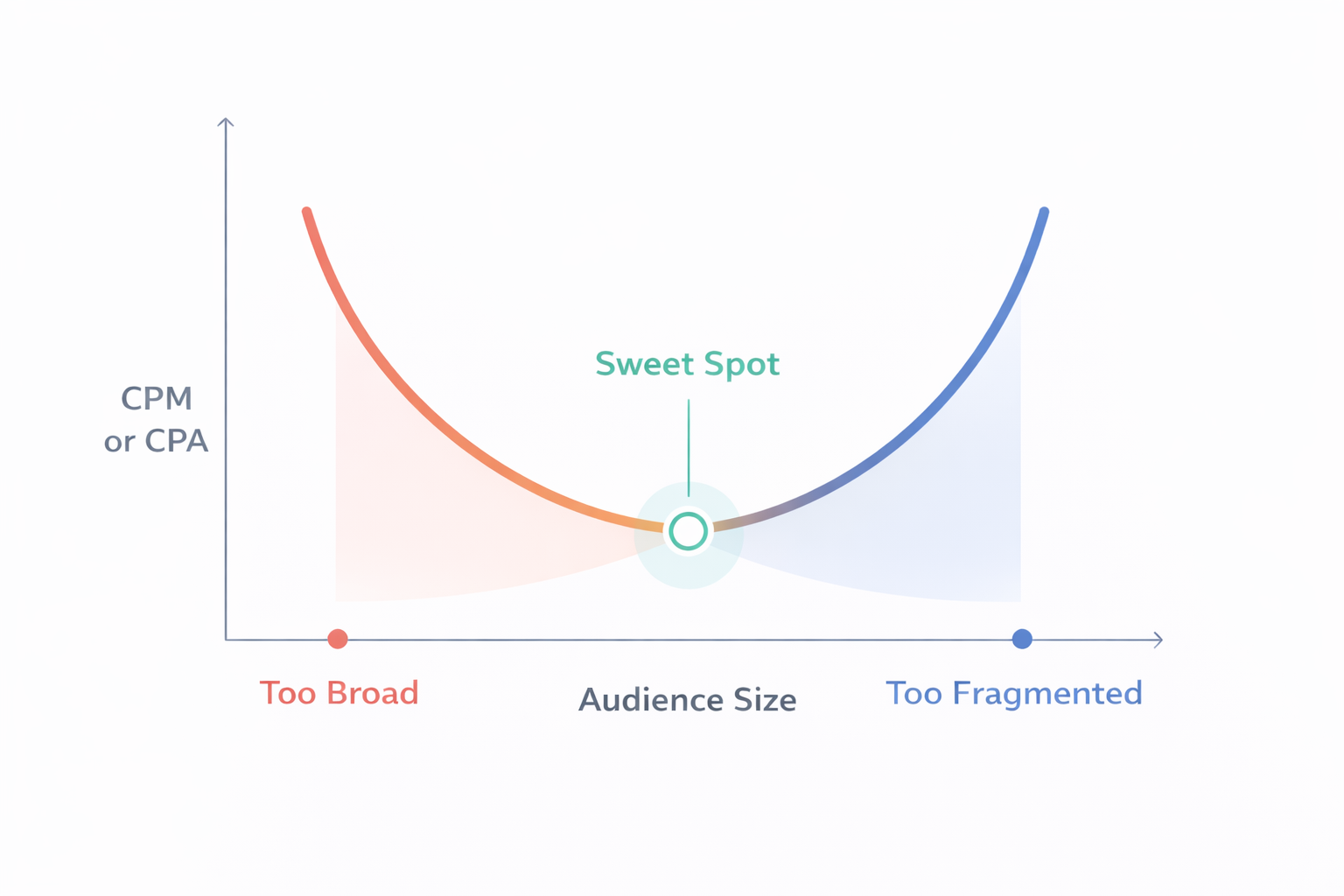
What happens when segmentation goes too far:
-
Budgets are spread thin across too many ad sets;
-
Learning takes longer or never completes;
-
Similar audiences compete with each other, raising costs.
A better approach is to start broad and let the platform find patterns. Add exclusions or layering later, once you know what works. In most cases, fewer, better-built audiences outperform long lists of micro-targets.
If you're still unsure, read why fewer audiences perform better.
Treating creative like a one-time task
Great creative can make or break a campaign. But most advertisers treat it as a one-off project. They launch a few ads and don’t revisit them unless results fall off.
The problem is, platforms use early engagement data to decide how your ads get delivered. If people aren’t responding, delivery suffers. And if you don’t test variations, you never learn what actually works.
Where many creative strategies fail:
-
Using the same assets across all platforms without adapting format or tone;
-
Only changing visuals, not the message itself;
-
Testing too many things at once, making results unclear.
Instead of creating more ads, build a flexible system. Use modular components (hooks, offers, CTAs) that can be mixed and matched. Track which parts drive results and optimize from there.
Want to catch problems sooner? Review creative fatigue: early signals and fixes.
Using metrics that don’t tell the full story
It’s easy to focus on the numbers inside your ad platform. But not all metrics reflect real business impact. Some can be misleading, especially if you don’t track what happens after the click.
Examples of misleading signals:
-
A high CTR that doesn’t lead to conversions;
-
ROAS that ignores returns from future purchases or offline revenue;
-
Engagement rates that look good but don’t map to sales.
Use metrics that connect to actual profit, not just platform success. This means syncing data from your CRM, analytics tools, and ad accounts. If you're optimizing only by what the ad manager shows you, you’re probably missing the full picture.
Learn how to go deeper in how to read Facebook ad reports like a growth marketer.
Weak or missing back-end tracking
Your ads are only as smart as the data they collect. If your tracking is broken or incomplete, platforms can’t learn what works. This slows optimization and hides true performance.
What to watch out for:
-
Pixel-only setups that miss events blocked by browsers;
-
No server-side tracking (CAPI or Events API);
-
Undefined conversion values, which limit bid strategies.
Fixing your back end won’t improve results overnight, but it gives your campaigns the foundation they need to scale. Better inputs mean better decisions from the platform.
More on this in understanding the difference between click-through and view-through conversions.
Applying the same strategy across platforms
A campaign that works on one channel may flop on another. That’s because each platform has its own rules, formats, and user behavior. If you treat them all the same, performance will suffer.
What to watch for:
-
Over-polished creatives on TikTok, where raw videos perform better;
-
Playful hooks failing on LinkedIn, where tone needs to be more professional;
-
Long-copy Instagram posts repurposed as short-form X ads.
Adapt your core message to each platform’s style and user expectations. This doesn’t mean starting from scratch. It means translating your idea, not just duplicating the asset.
For smarter adaptation tips, explore the ultimate guide to cross-platform ad optimization.
Other hidden causes of wasted spend
Some mistakes happen outside the ad platform. They don’t show up in dashboards, but they drain performance just the same:
Inconsistent goals across teams. Marketing counts leads. Sales counts qualified leads. Finance counts revenue. Without shared definitions, your reports won’t align.
Testing too many changes at once. When multiple things change, you can't tell what caused the result. Keep tests clean and log everything.
Uneven budget pacing. Spending a full month’s budget in a week may trigger learning resets and skew results. Spread spend evenly when possible.
Ad-to-page mismatch. When your landing page doesn’t match your ad’s promise, people drop off fast. Align the message and tone across the full journey.
Final thoughts
Most wasted budget in paid social comes from gaps in structure, data, or process. It’s not about working harder or spending more — it’s about creating strong signals and reducing confusion.
Ask yourself:
-
Are we feeding platforms the right data?
-
Are we judging results too soon?
-
Are we adapting per platform or copy-pasting?
Answer those honestly, and you’ll uncover opportunities to cut waste and grow smarter.